Shoot Self with You · Film passages
Half a Second Changes the Scale of Looking
Position in the film 01:02:17 — 01:02:26
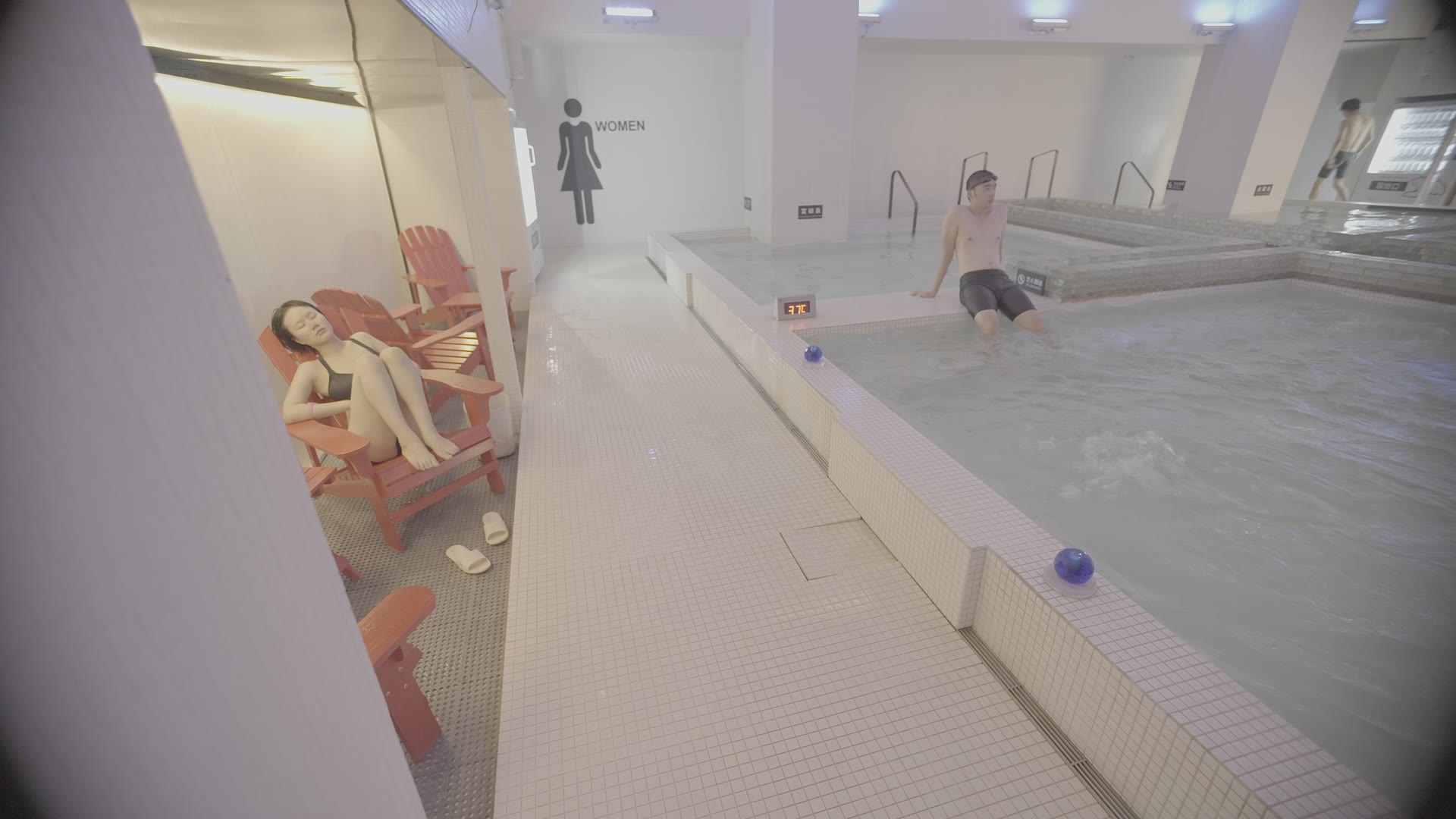
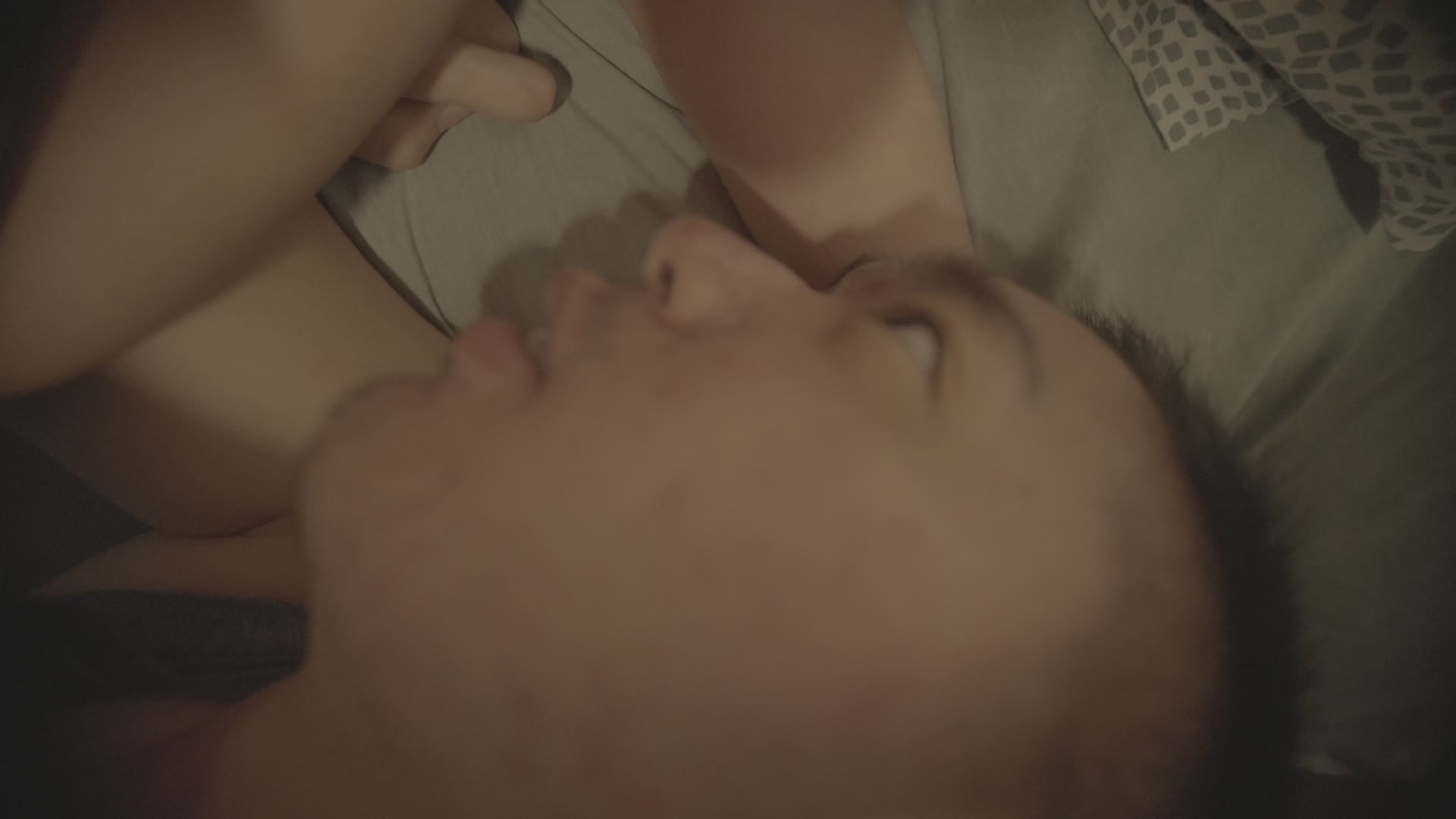
The pool and reclining chair are still at a distance; half a second later, the image is close to the bed and bodies. The change of space also changes the distance from which we look.
Original sound · Clip duration 00:09 Open video separately
Selected dialogue is presented below in English and Chinese; omissions are marked.
The Exchange
Bilingual dialogue excerpts · In their original order
- Zi Chou
- I can.我能
- A Meng
- Then—then why are there so many reasons?那 那为什么还有那么多理由呢
- A Meng
- Because right now you’re very—your feelings are complicated?因为你现在很 心情很复杂
Dialogue and Timing Notes
The wording and speaker attribution follow the human-confirmed record of 6 May 2026. Dialogue timestamps are historical navigation points; they have not been recalibrated line by line for this edition. Still-image times are actual sample positions in the fixed 4K master. A single image cannot establish who is speaking or being addressed.
Two stills sampled half a second apart from the same fixed master show a shift in scale and space. The nearby dialogue allows a comparison of sound and image; it does not establish an unbroken action across the two images.
Stills
Watch the full film from near this passage ↗Public 4K version without subtitles
Return to the Book
In Shoot Self with You, near the dialogue about embracing and temperature, the image shifts from a wide shot of the bathing pool to a close view of bodies on a bed. The wide shot places the bodies within their surroundings; the closer view gives weight to faces, arms, and cushions. As these two scales meet, viewing shifts from the space the people occupy to parts of their bodies and nearby objects.
← Chapter 6 · The Camera Separates Us · Return to this paragraph