The early montages assemble photographs from different positions and times into recognizable wholes. Yet seams, repetitions, file sizes and enlarged skin keep the process of construction visible. In projection, language experiments and theatre, the problem becomes harder: photographs can be moved, while living people respond, misunderstand and disagree.
This portfolio begins with six questions rather than one triumphant story of development. Rules can open possibilities and distribute power. Proximity can reveal detail without guaranteeing understanding. Recording makes an encounter available to later viewers while fixing a particular account of it. The works matter in the differences between these acts.
He Fa’s position changes too: making images, proposing structures, performing, organizing spaces, editing footage and initiating work with others. Naming those positions accurately shows how one person enters a shared world of work without turning everyone else’s authorship into background for his biography.
1. Seeing more without seeing everything
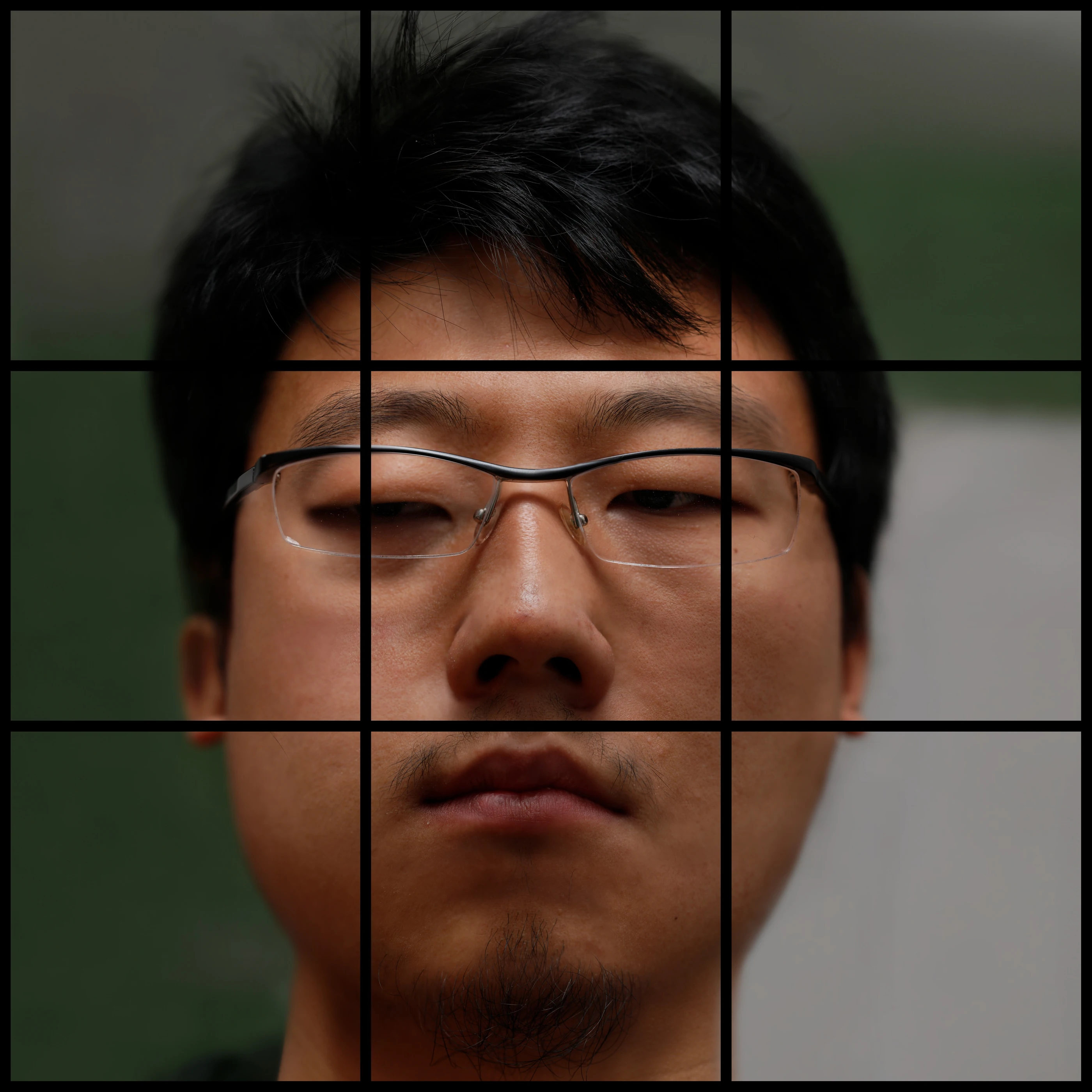
I enlarges skin, hair and pores into terrain that asks to be read closely. Yet the nearer one moves, the harder it becomes to recognize a complete person. Stepping back restores an identity while compressing the bodily material that was just visible. Both ways of looking are valid, and each gives up another kind of clarity. Scale therefore has an intellectual consequence: completeness is not the accumulation of every detail, but an image temporarily organized by a particular distance.
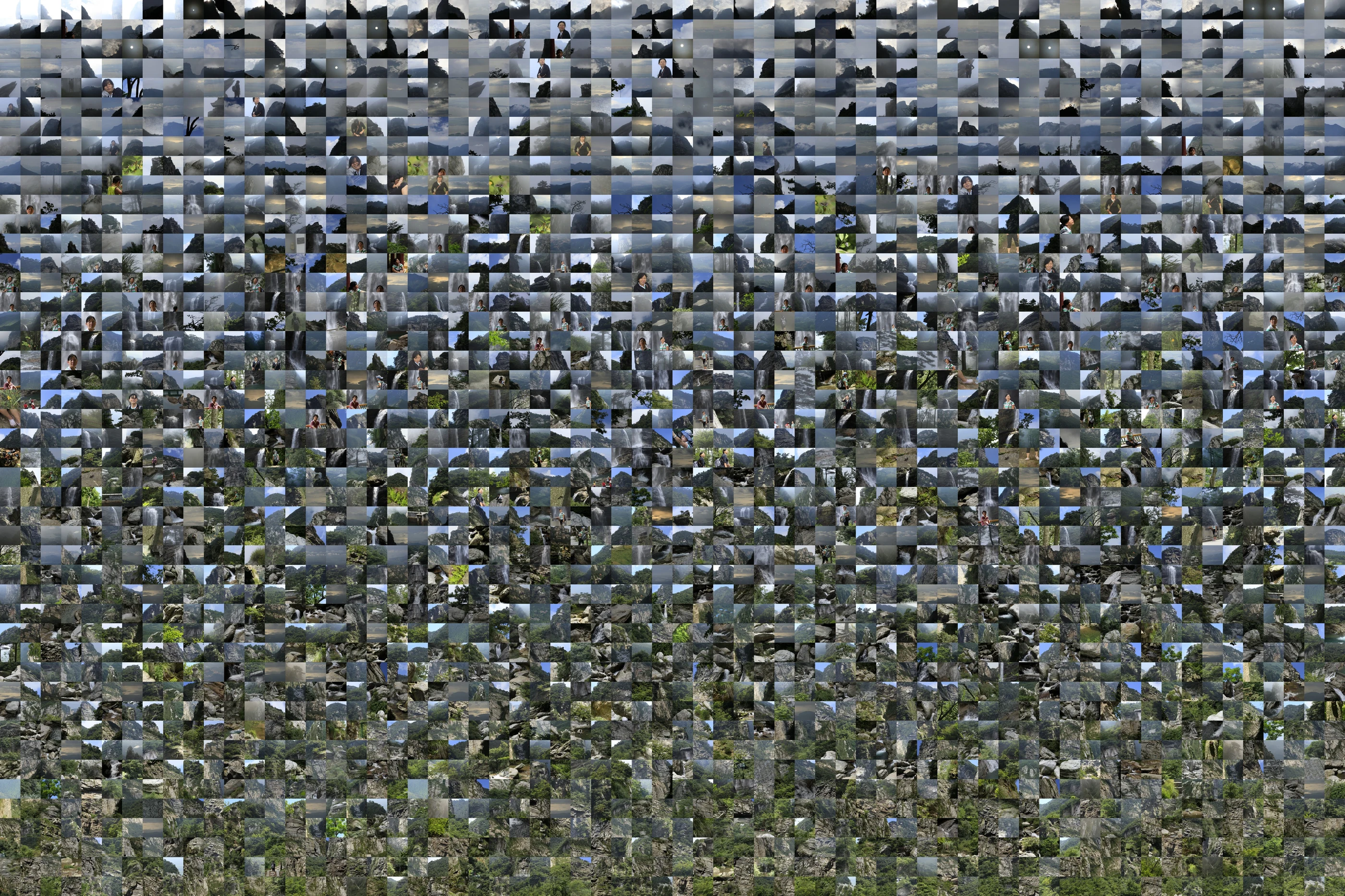
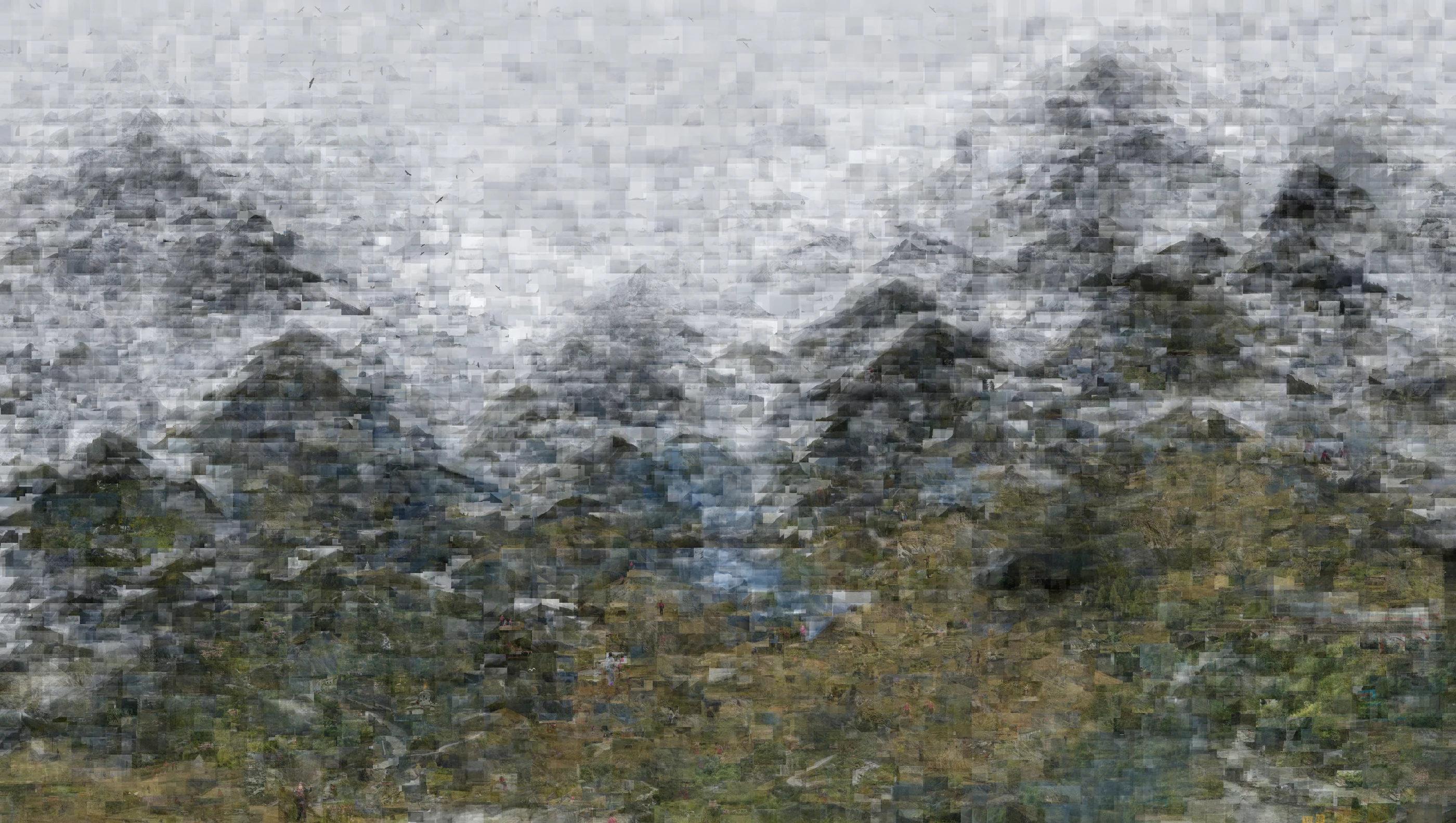
Shanshui carries a related difficulty into landscape. The climbing body has direction, fatigue and a sequence of experiences; montage places many moments on one plane. It compensates for a single frame while turning lived duration into a simultaneously browsable surface. There is a gain and a loss: we can compare formerly dispersed views, but do not thereby possess the climber’s entire experience. The work retains that transformation rather than smoothing away its traces.
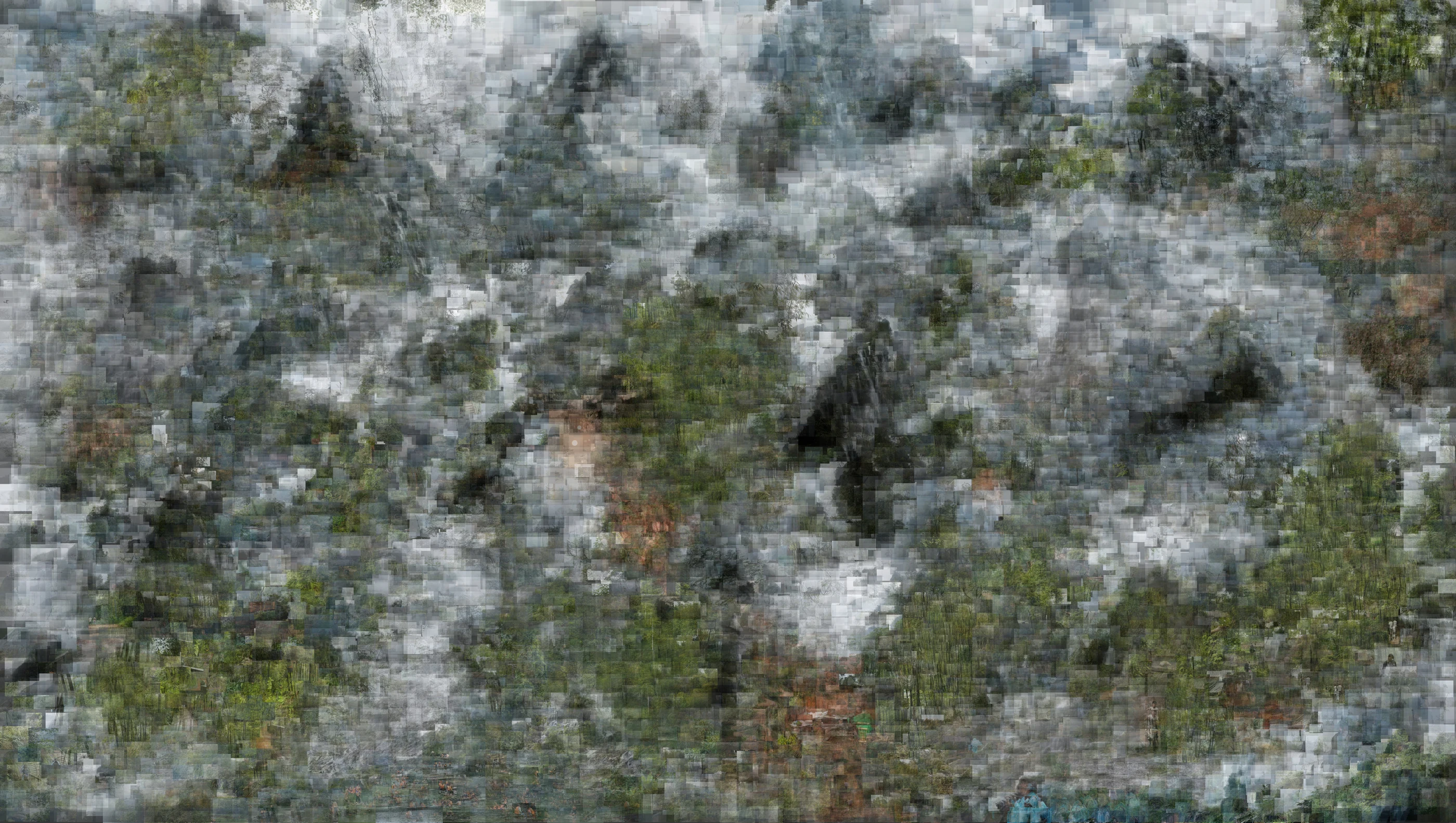
Central further shows He Fa deliberately deciding what kind of whole a viewer encounters. A sun is placed among mountains, and photographs cease to obey their original positions. The early work combines sensitivity to the limits of seeing with forceful compositional intent. A mature reading needs both: he can dismantle an image’s authority and use the same means to establish a new centre. Related works: I, Shanshui and Central.
2. Rules at work do not remove choice
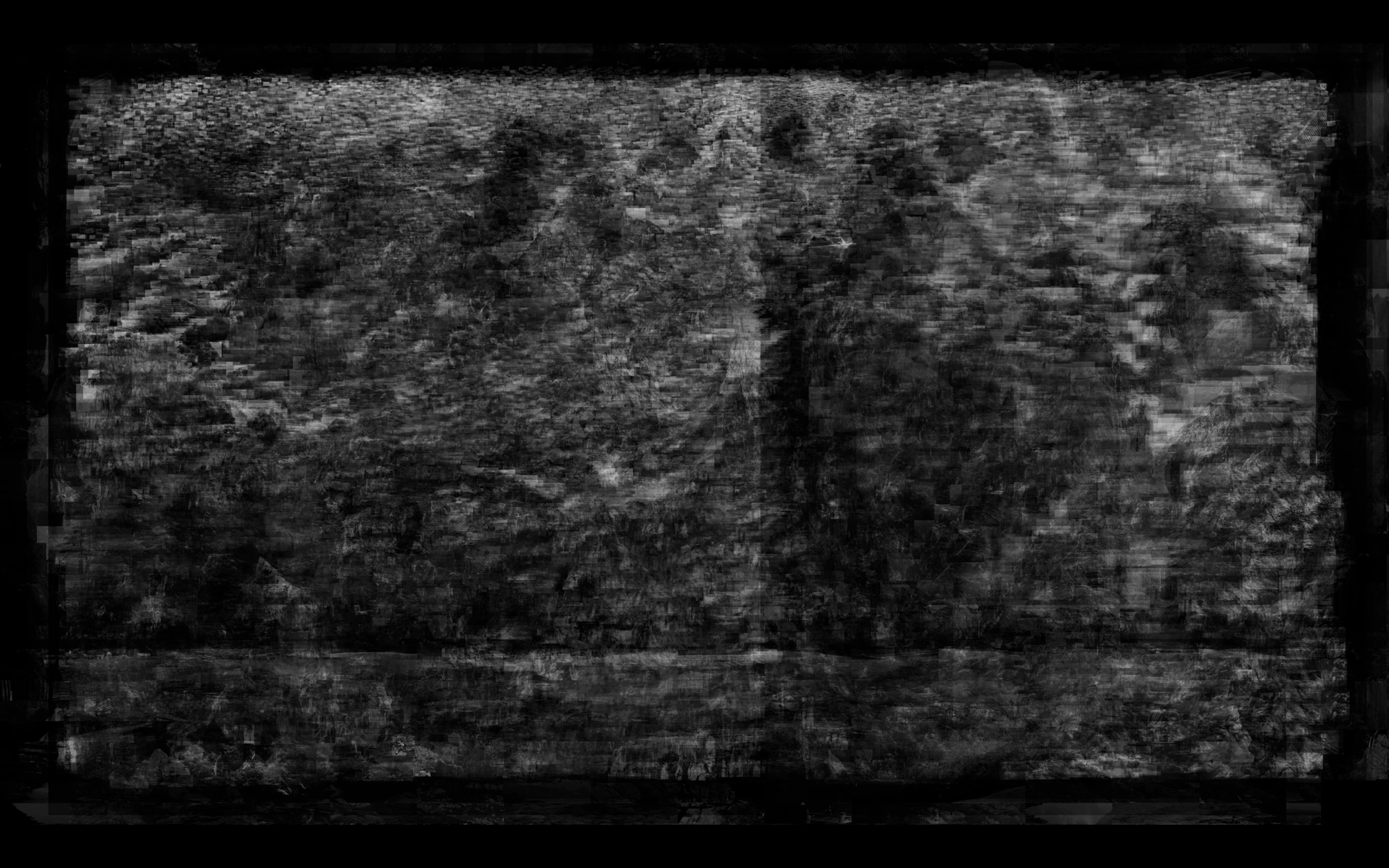
Cocktail chooses a measure that does not ordinarily belong to landscape aesthetics: file size after JPEG compression. That number is not the weight of a mountain, yet it can determine how photographs are arranged. The artistic capacity lies in inventing a delegation, handing compositional judgments to a condition that can run. Technology then does more than realize an image already imagined; it confronts the maker with results not individually arranged in advance.
Delegation nevertheless has limits. Wu pairs “free growth” with a landscape composition chosen beforehand. Studio texts for the lamps emphasize not prescribing a final form, while the product booklet records dimensions, materials and selected shapes. These need not be read as failures. A rule can produce variation, but a finished object requires a fixed moment. Deciding when to stop and what enters production remains work that the author and production collective cannot entirely delegate.
Untitled makes the decision more explicit: the artist repeatedly rejects the image and finally abandons further work. Stopping does not certify that its problems are solved. Placed beside the lamps, it reveals two temporal demands within the same period: allowing a rule to continue generating, and taking one version out of its possibilities. Explaining everything through “loss of control” would miss the choices that give the work weight. Related works: Cocktail, Wu, Untitled and Twelve Water Lamps.
3. Giving error a form that can continue
In Fafalish, a mishearing does not wait for correction at the end. It is written down and becomes the input for another conversion. Accent, letterform, habits of hearing and translation tools all rewrite a sentence; no stage guarantees an intact return. Its creativity lies in making deviation available for shared attention. Viewers can observe meaning being made without first occupying the correct position within a standard language.
YourTube places the question within the circulation of bodily imagery. Editing, phonetic play, jokes and comments make actions and sounds recognizable to a group. Shared interpretation may help people find company while regulating what can only be voiced as a joke. A frequently viewed body does not establish understanding of the person it belongs to; recognizing a shared code does not prove common desire or identity.
The connection between the works is consequently tense. Fafalish lets error open further passages; YourTube shows previous interpretations becoming thresholds for later viewing. He Fa’s works can expose those transformations, but cannot decide each spectator’s response. Their depth lies in making the conditions of reception discussable while leaving room for viewers to misread, refuse or rename what they receive. Related works: Fafalish and YourTube.
4. Inviting a person is a different kind of work
A photograph can be moved, enlarged or reordered. A person entering a theatre has wishes, a life and the capacity to refuse. When generative methods enter collaborative work, the difference in material cannot be explained away by calling both “emergence.” Shixiang matters formally because photography is followed by viewing and expression, and publication becomes a participant’s decision. An image remains, while the relation requires another response; a functioning plan cannot guarantee a person’s return.
P4’s organization enables more people to begin making and requires He Fa to work with other people’s rhythms. The contemporary Cocoon text retains demands for equal respect alongside pressure to keep rehearsing. Falling, fatigue and lateness are places where shared production actually happens. The Howler interviews show that completing a work together does not mean endorsing it together. One participant becomes more committed to conventional theatre; another values the company but dislikes the script. These different conclusions all belong to its history.
The capacity worth recognizing is the actual organization of venue, time, recruitment and documentation, giving strangers an opportunity to work together. Its limit is found in the same place: a shared opportunity does not equalize the power to affect decisions. The website needs specific credits and differing accounts so that its “we” can be tested against evidence. He Fa’s organizing labour can then become clear without turning other voices into proof on his behalf. Related works: Shixiang, Cocoon and The Rooftop Howler.
5. Recording brings a later gaze into the present
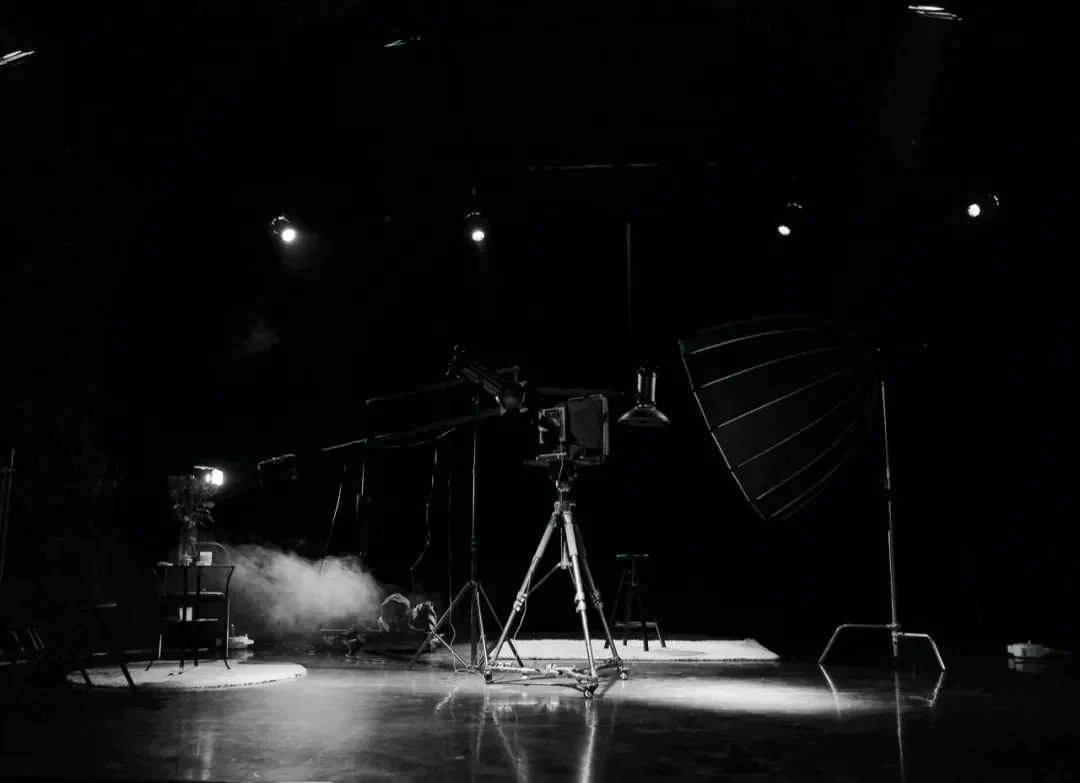
3P requires at least three publications during a month of production. Before rehearsal has ended, its images and judgments are already being read outside and may return to the room. Observers therefore enter the event’s duration instead of preserving results only afterward. Cameras, editing and publication timing affect how people act. Recognizing that intervention is a beginning, but does not settle who can edit whom or who bears the consequences of circulation.
Personal Chronicle connects recording to a future: the interviewee can initiate a project. A long account and a short circulation edit create different emphases, while a public report temporarily ends an action. Life continues. The method matters for a portfolio: place past material beside what someone wants to do, while clearly distinguishing what happened from what is wished for. A rich life need not be compressed into a causal chain already completed.
Human Surrender’s collective direction and writing credits carry shared experience into authorship; He Fa’s initiating, producing and editing roles remain concrete. Editing orders bodies and voices, and collective credit does not erase that choice. The film requires passage-by-passage discussion of how it retains different voices and establishes viewing distance. A record extends the time in which an encounter can be seen without giving later spectators the entirety of its participants’ experience. Related works: 3P, Personal Chronicle and Human Surrender.
6. Retaining what the works cannot exchange
Looking back reveals recurring questions, but should not assign every work a destination already known. The lamps’ transmitted light, volume and use are not replaced by theatrical relations; montage’s planar density does not find a superior solution in film. Obstruction in an office and free clicking on a website are not the same participation. Every medium enables some things to appear while limiting how others can appear.
He Fa’s capacity lies in repeatedly noticing such conditions, making new connections and committing to production. His limits are concrete too: a structure cannot guarantee understanding, an invitation cannot decide another’s wishes, and an archive cannot replace a vanished occasion. Retaining these limits does not diminish the work. It lets viewers see what each decision carries and what still exceeds the maker’s ability to explain or arrange.
This website must also acknowledge its choices. Image scale, article sequence, credits and accessible originals all change how He Fa is seen. It should give viewers clear entrances, concrete reasons for connections and sources they can revisit, while leaving room for other versions and authors. Depth does not require a final explanation of everything. It makes a question increasingly specific and allows a subsequent viewing to change what we understand.
A curatorial reading written in 2026. Artist statements, work dates, participant roles and version records remain on the corresponding work pages.