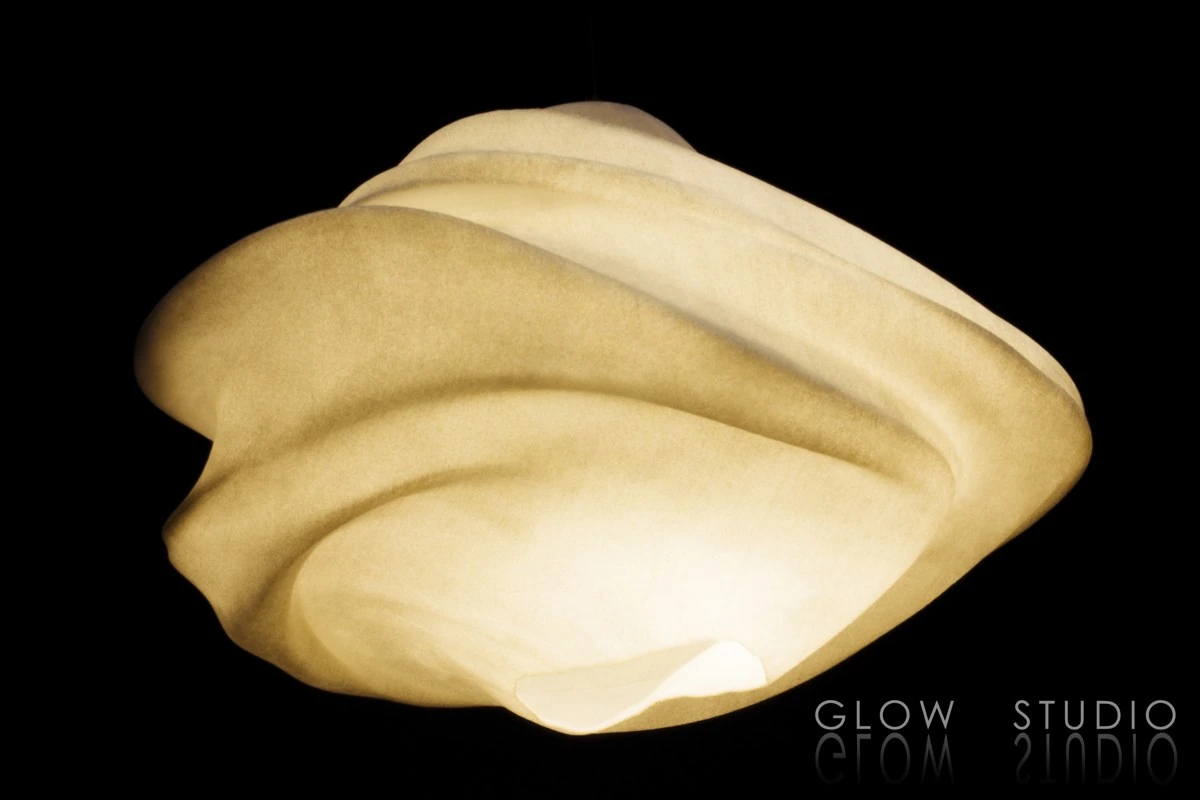
An object
The Yellow River Flows Backwards
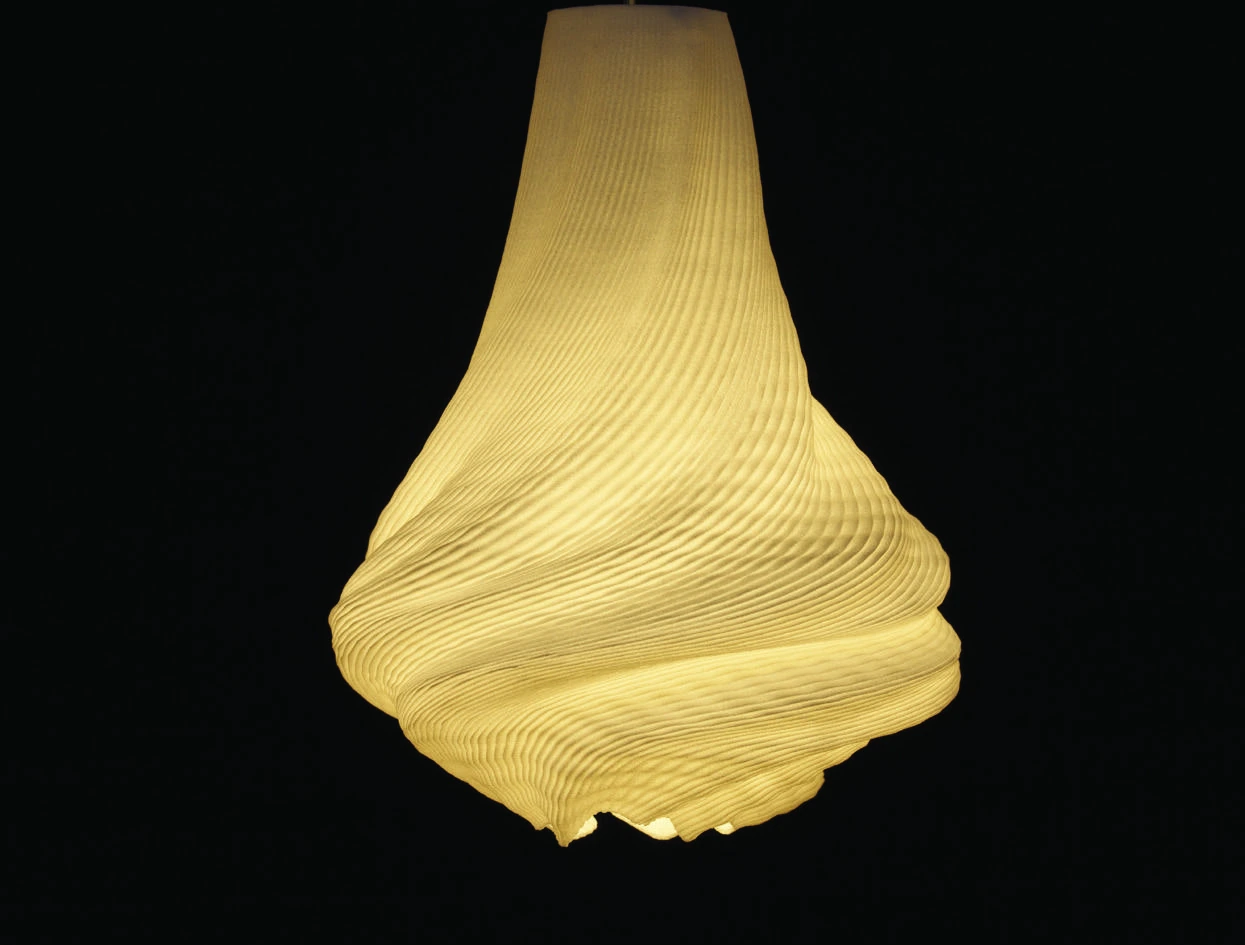
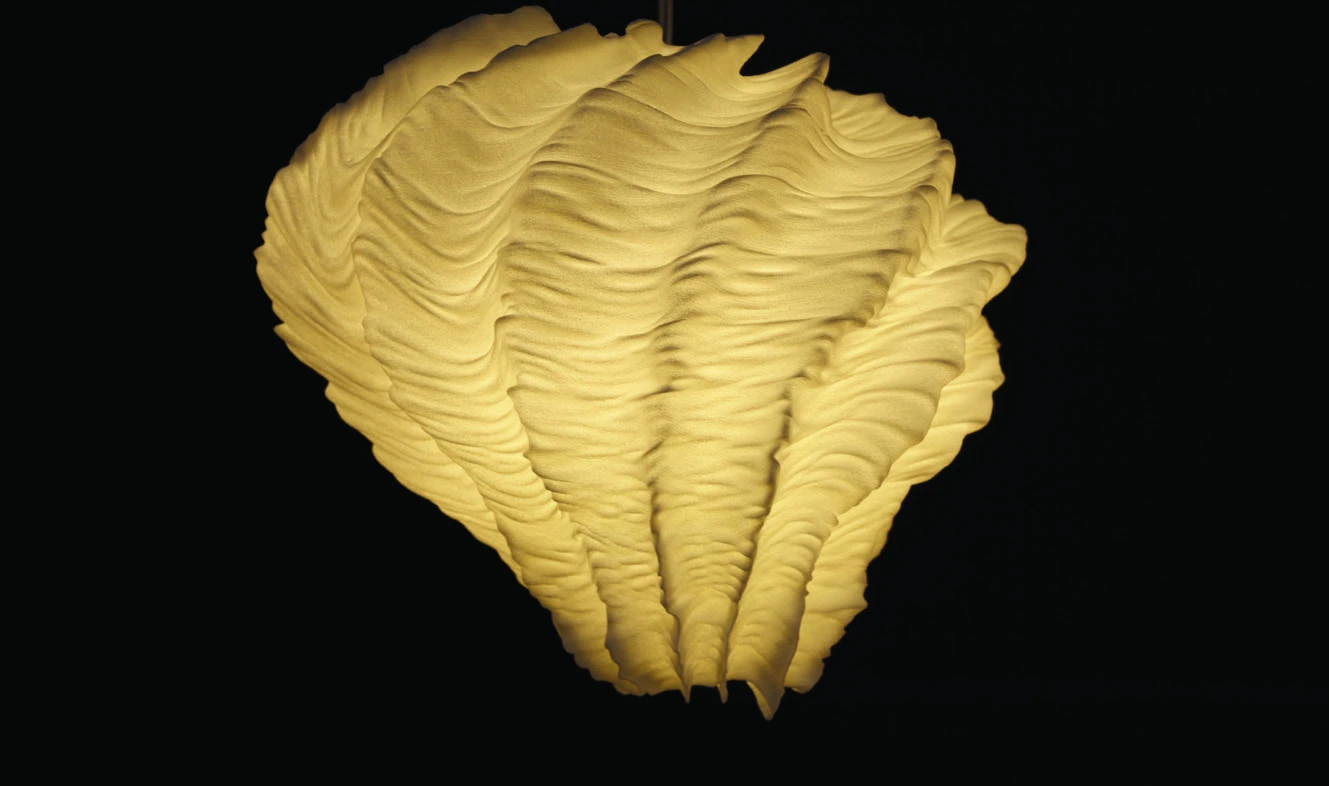
Light emerges through the surface and openings. This is an original photograph of The Yellow River Flows Backwards, illuminated.
Open the work record ↗EARLY CHAPTER / GEWU STUDIO / 2012–2013
Twelve Water Lamps. Water held in light.
Huanghe Niliu, from Twelve Water Lamps, 2012. Photograph by He Fa; lamp from the studio’s collaborative practice.
Archival photograph of the illuminated work.
GEWU STUDIO
A passage from images to objects
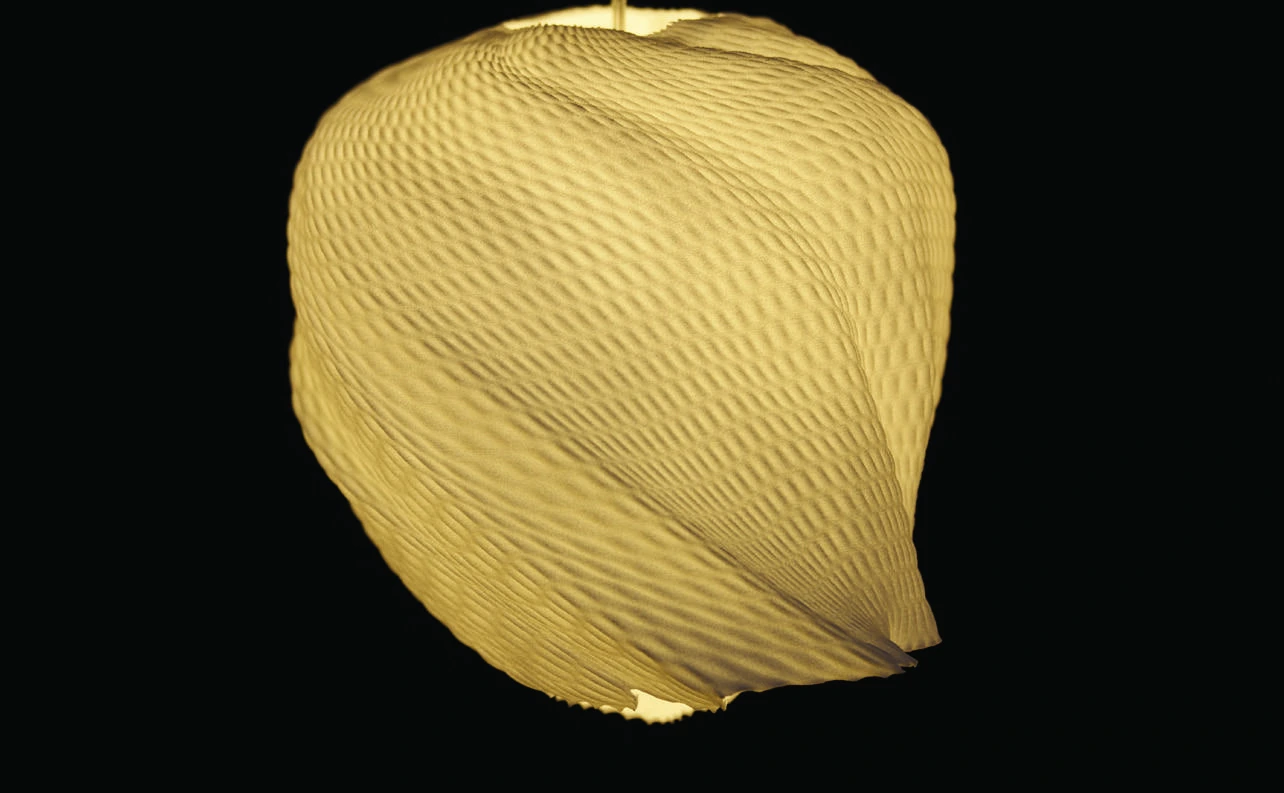
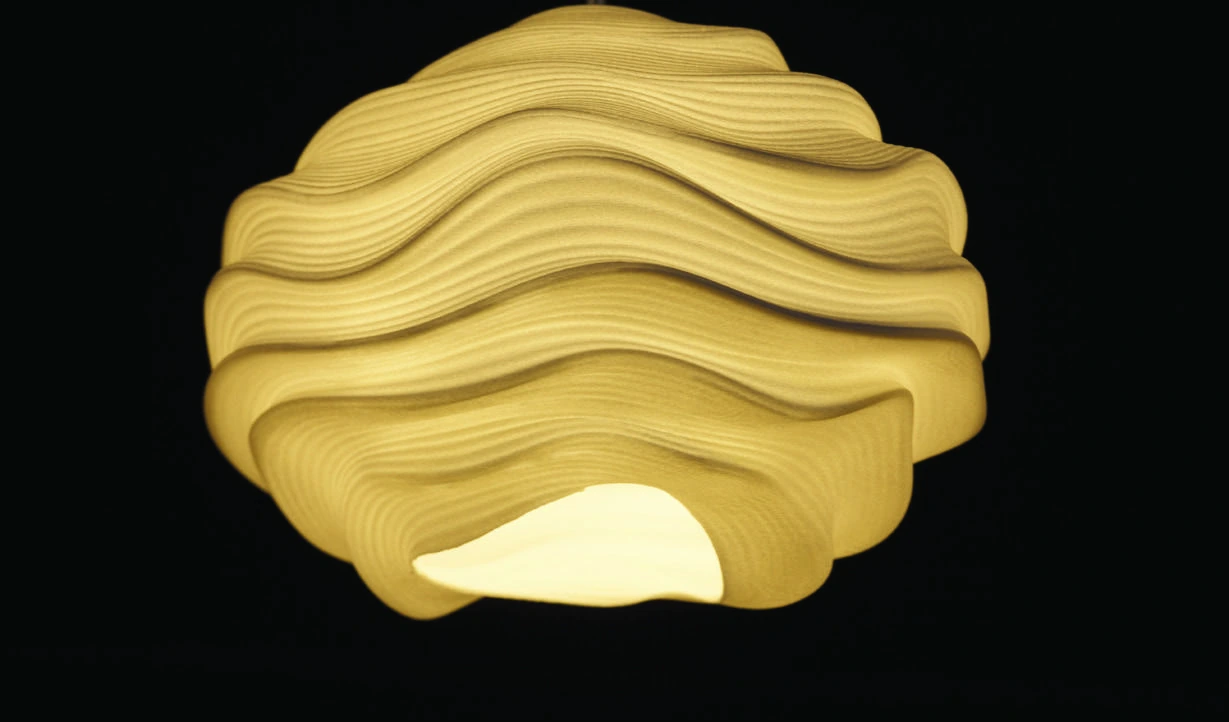
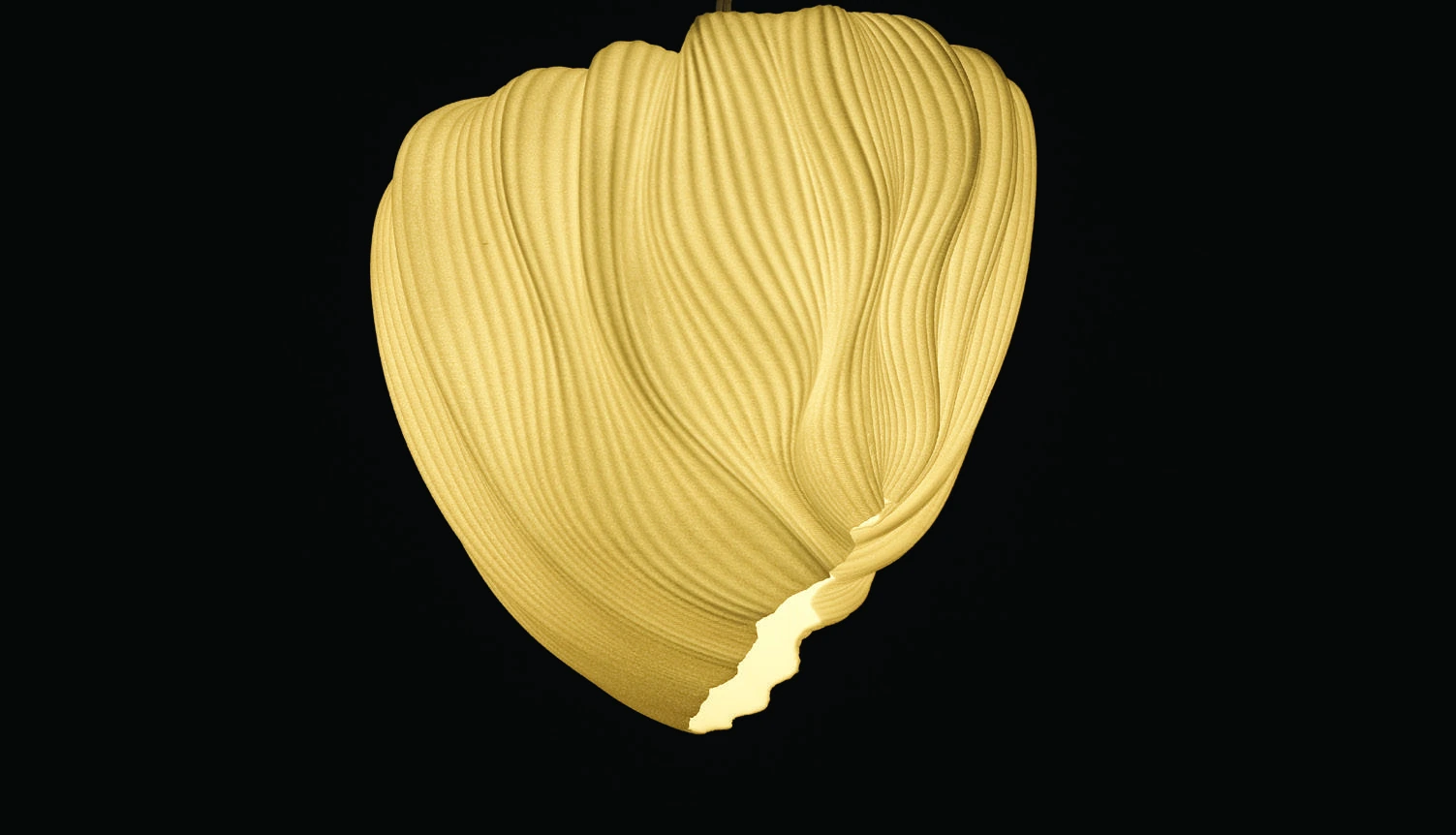
Curves gather, separate and turn. Fine ripples follow larger folds. Light passes from within, revealing depth and shade across one continuous surface. A still object holds the gesture of moving water.
At Gewu Studio, photography, objects, space and communication shared the same room. For He Fa, this early chapter left a question that remains open: how can a way of seeing become something the body encounters?
Work and collaborationFive archival photographs · Open to see each full image
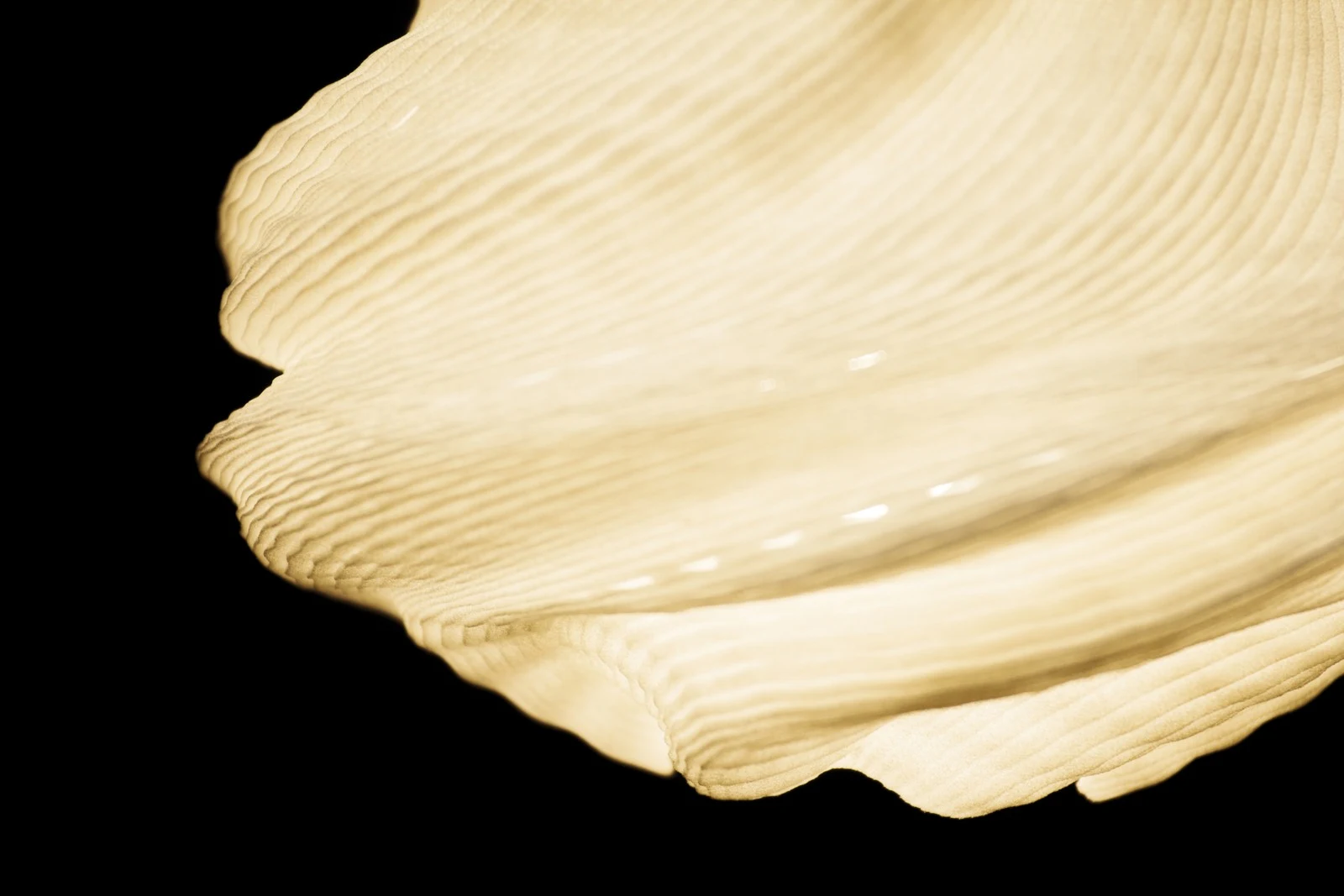
Close up, a fine ripple.
Step back, a whole movement.
Photography by He Fa. The lamps belong to Gewu Studio’s collaborative practice.
BETWEEN OBJECT AND IMAGE
From a co-created lamp to catalogue photography and another photographic work. Each passage retains its own identity.
An object
Light emerges through the surface and openings. This is an original photograph of The Yellow River Flows Backwards, illuminated.
Open the work record ↗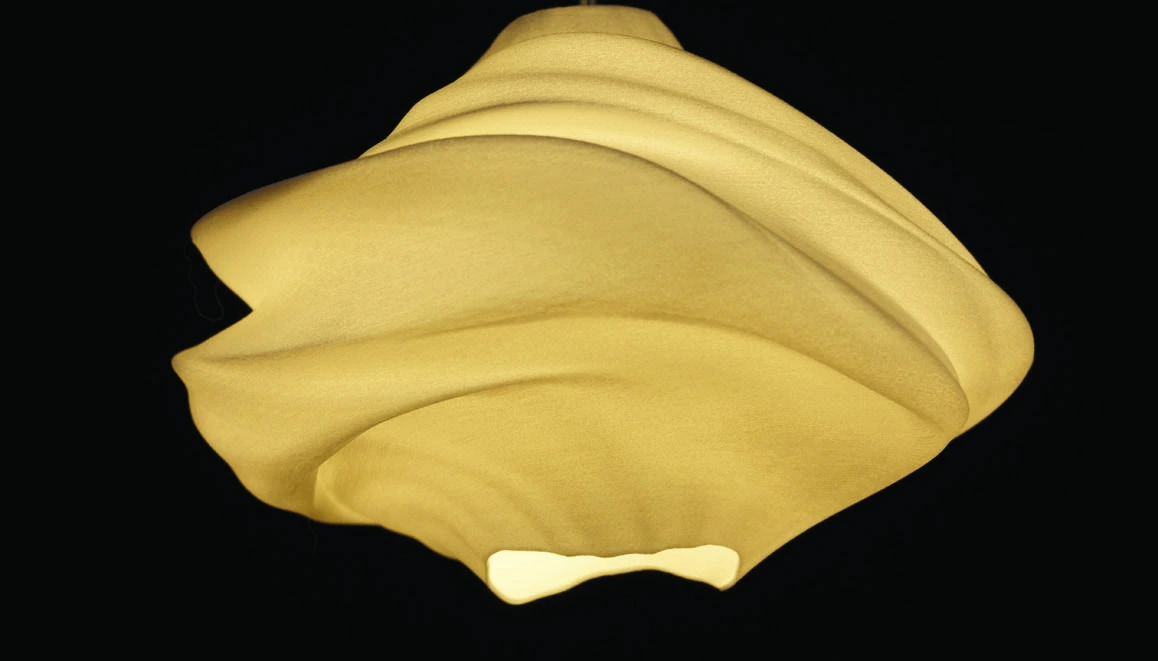
In a publication
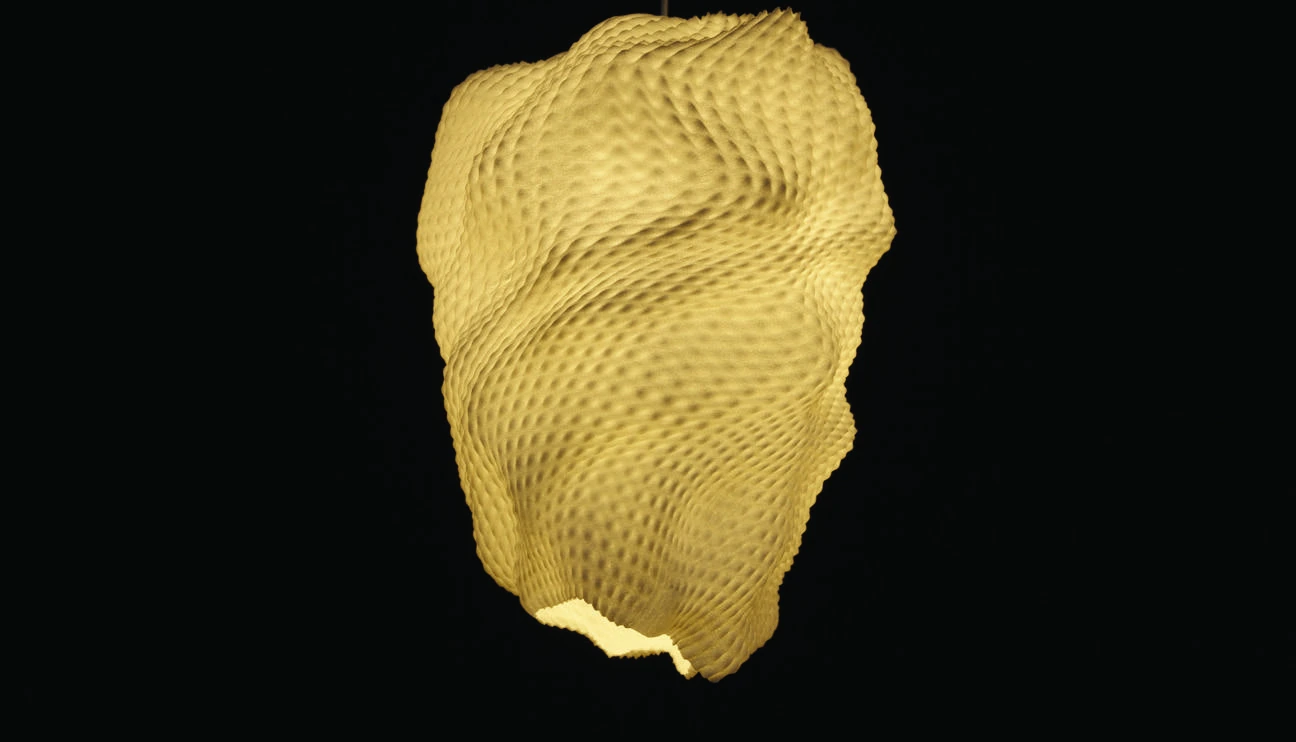
The work enters a catalogue. Photography, framing and a sequence of pages establish another viewing distance. Shown here is the photographic image from the catalogue.
Open the work record ↗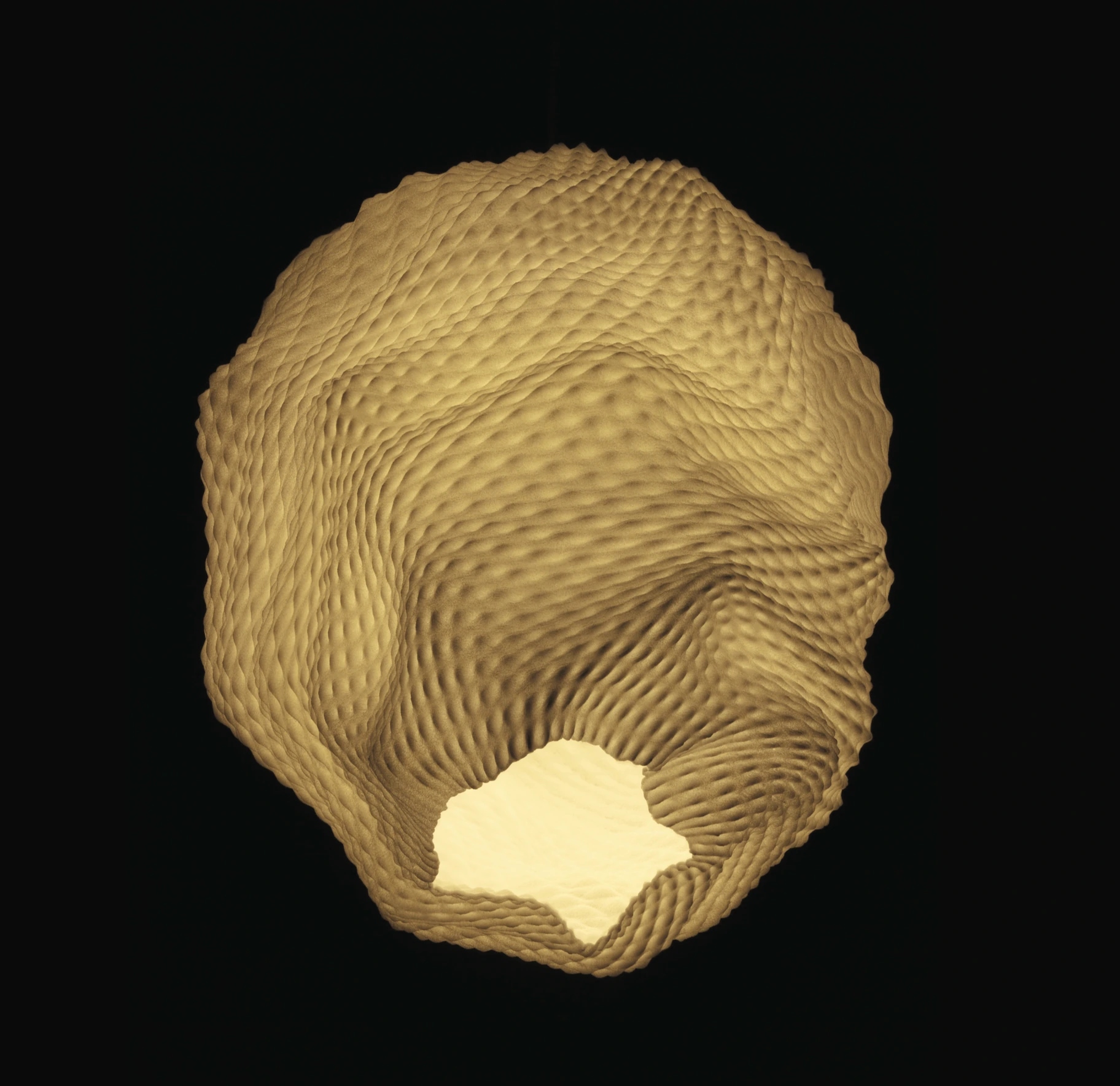
As photography
The Twelve Water Lamps series also becomes a photographic subject in Wu. This page has the photographic work’s own title, medium and dimensions. The passage follows the series; it does not identify all three images as the same lamp.
Open the work record ↗Twelve Water Lamps took shape through Gewu Studio’s collaborative practice in 2012. Referring to Ma Yuan’s Twelve Views of Water, it used parametric modelling and 3D printing to turn water patterns into lighting forms. The work was exhibited at Beijing’s LiangDian Design Center from December 2012 to January 2013.
He Fa co-founded Gewu Studio in 2012 and served as its artistic director, contributing photography, conceptual development, form exploration and artistic direction. The photographs on this page are by He Fa and hold his inquiry into form, light and viewing distance.
GLOW STUDIO, visible in the photographs, is an early studio wordmark. The photographs retain their original appearance and the work names follow the archive. Photographic authorship and the collaborative making of the objects are recorded separately.
The retained GEWU Studio catalogue Looming Source is marked “2012–2013, Beijing.” It is organized around twelve lamps, with a catalogue, images and texts. Its sequence comprises Qiushui Jiongbo, Dongting Fengxi, Huanghe Niliu, Huanlang Piaopiao, Hantang Qingqian, Yunshu Langjuan, Yunsheng Canghai, Cengbo Dielang, Xiaori Hongshan, Huguang Lianyan, Changjiang Wanqing and Wuming; each has an English title in the source.
Looming Source credits He Fa as its photographic artist. Light, curved surfaces and openings enter a sequence of pages through changing viewpoints; photography becomes a way of looking across the twelve objects. The lamps belong to the studio’s collaborative practice, with photographic authorship and the making of the objects recorded separately.
Source documents: 源隐·源现, pp. 3, 5.
The Concept Catalogue cover records an exhibition from 1 to 8 June 2012 at the fourth-floor gallery of Building 7, Central Academy of Fine Arts. Chapters titled “More Is Different,” “Arithmetic and Geometry in Nature,” “Making” and “Life Processes” connect natural forms, mathematical methods and the growth of form.
The contemporaneous Product Catalogue arranges the work into Twelve Water Lamps, pens and hats. Lamp entries record white 3D-printed nylon, the 220 V / 5 W energy-saving bulbs used at the time and different dimensions for individual examples. These entries preserve specific versions as the works took material and exhibition form.
Source documents: 概念图册(2012毕业设计展); 产品图册(2012毕业设计展).
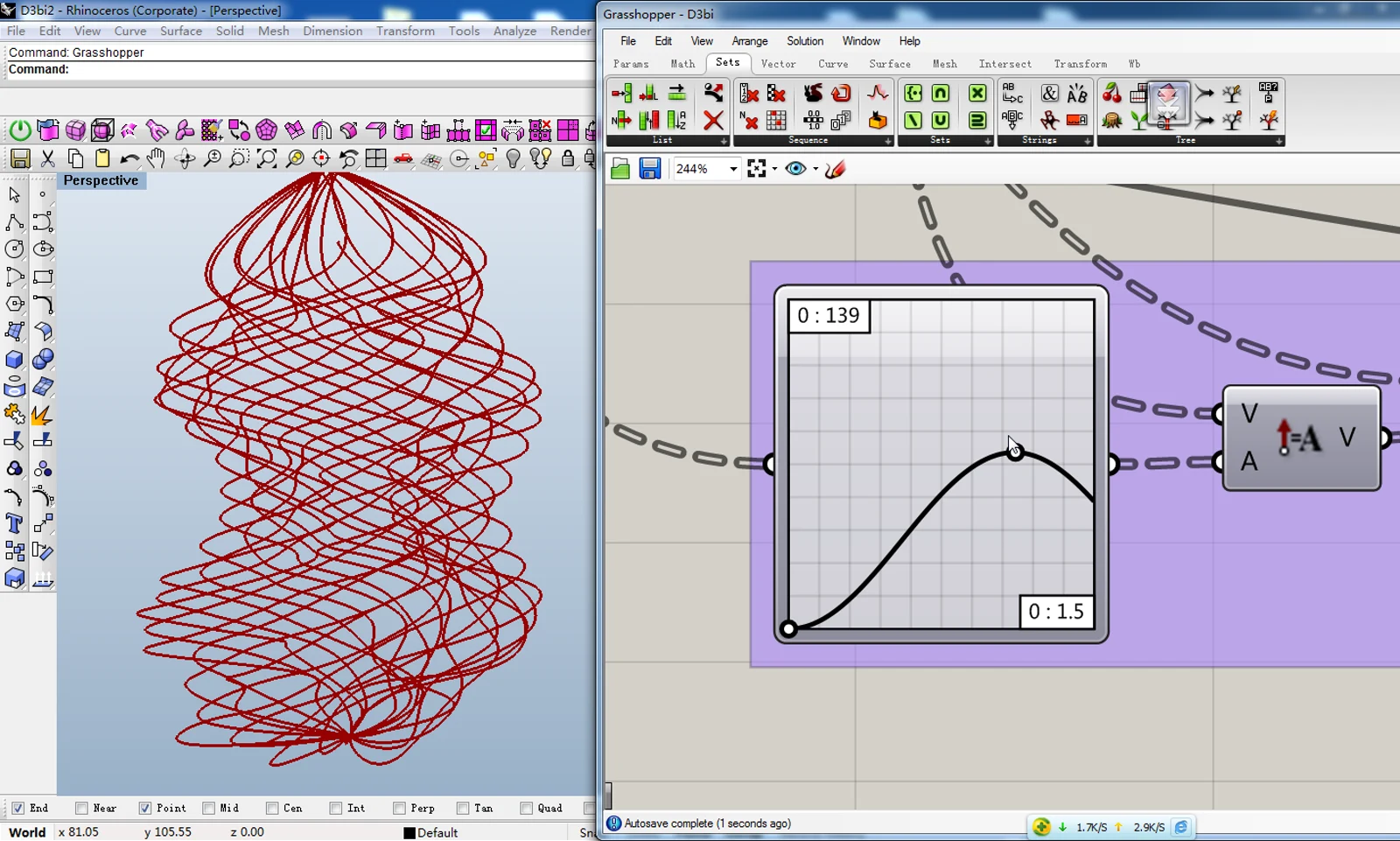
The making statement in He Fa’s retained portfolio describes a sequence from parametric model to physical object and assembly: numerical relations define points and generate a model; volume and thickness are added and damaged faces repaired to prepare a print file; the printed parts are then adjusted, combined and tested. Three studio installation drafts preserve the assembly relationship between a slot in the shade, an upper ring and a copper light holder.
These texts connect the development of form with specific components. The installation drafts retain repeated specification entries and older template fields, so they are preserved as process documents.
Source documents: 何发作品集(出国之前目录版); 洞庭风细说明书; 秋水迥波说明书; 黄河逆流说明书.
The Twelve Water Lamps source directory contains two recordings of Rhino and Grasshopper. “capture-1(1).avi” runs 3 minutes, 0.467 seconds and moves among nodes, parameter sliders and changing curve-based forms. “yanshi 1.mp4” runs 2 minutes, 53.500 seconds and retains related operations. They return the visible process of parameters acting on form to the archive of the collaborative work.
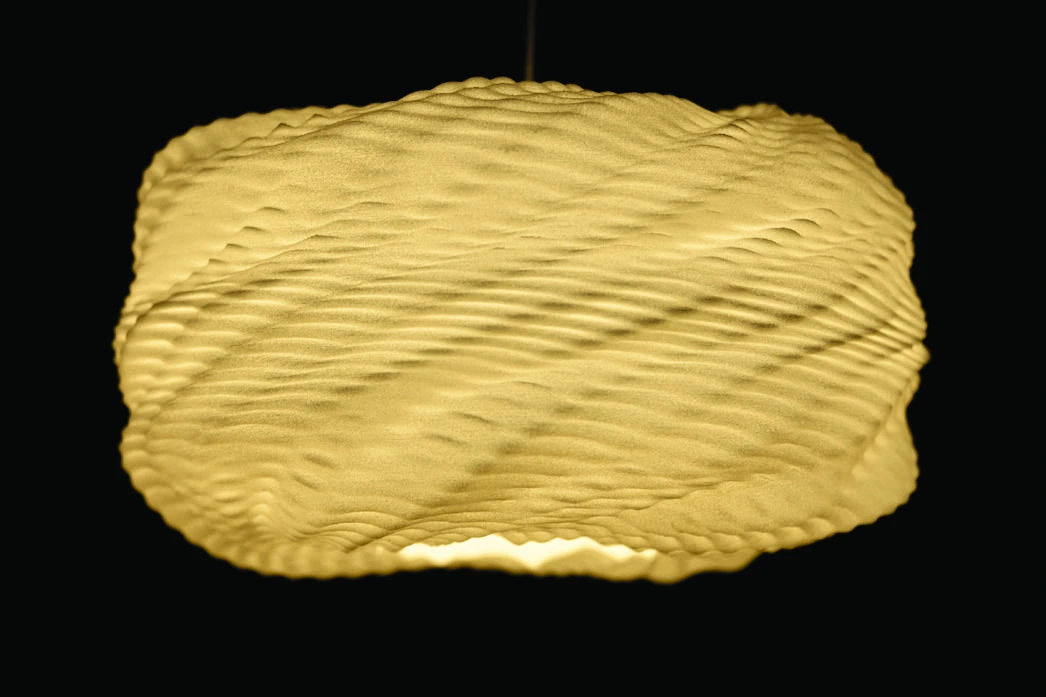
“格物工作室 1.mp4” is a 4-minute, 55.458-second studio film. Sampled frames include the early Glow Studio wordmark, rocks in a landscape, curve models and illuminated surfaces. A close-up photograph brings these formal changes to the physical object, where the internally lit, undulating shell reveals variations in thickness and texture.
Source documents: capture-1(1).avi; yanshi 1.mp4; 格物工作室 1.mp4; 20120501-_MG_8772 1.jpg.
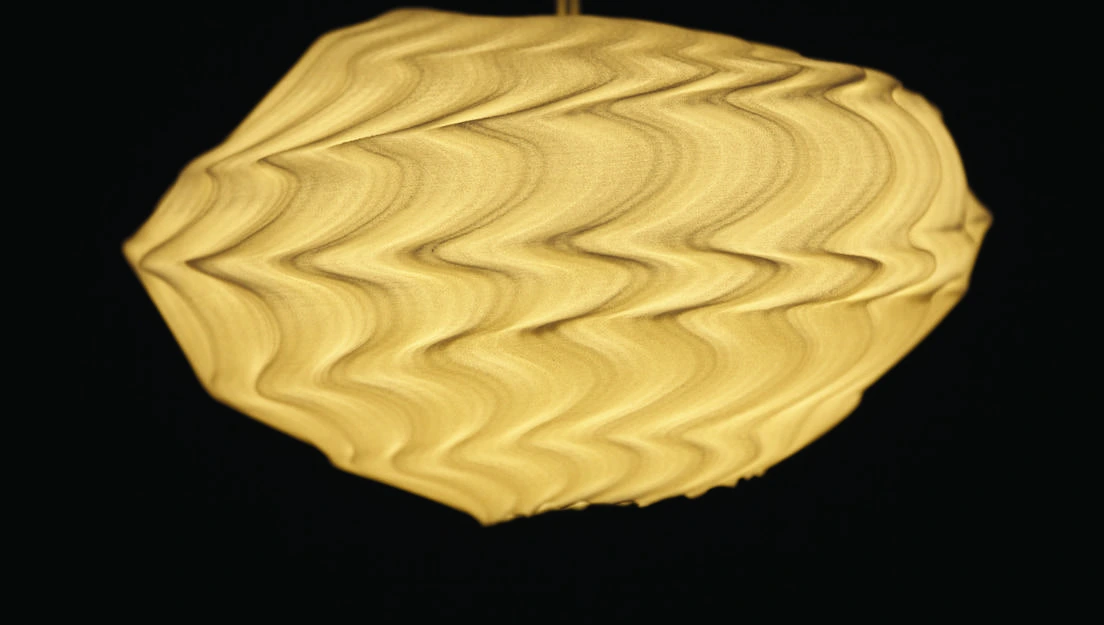
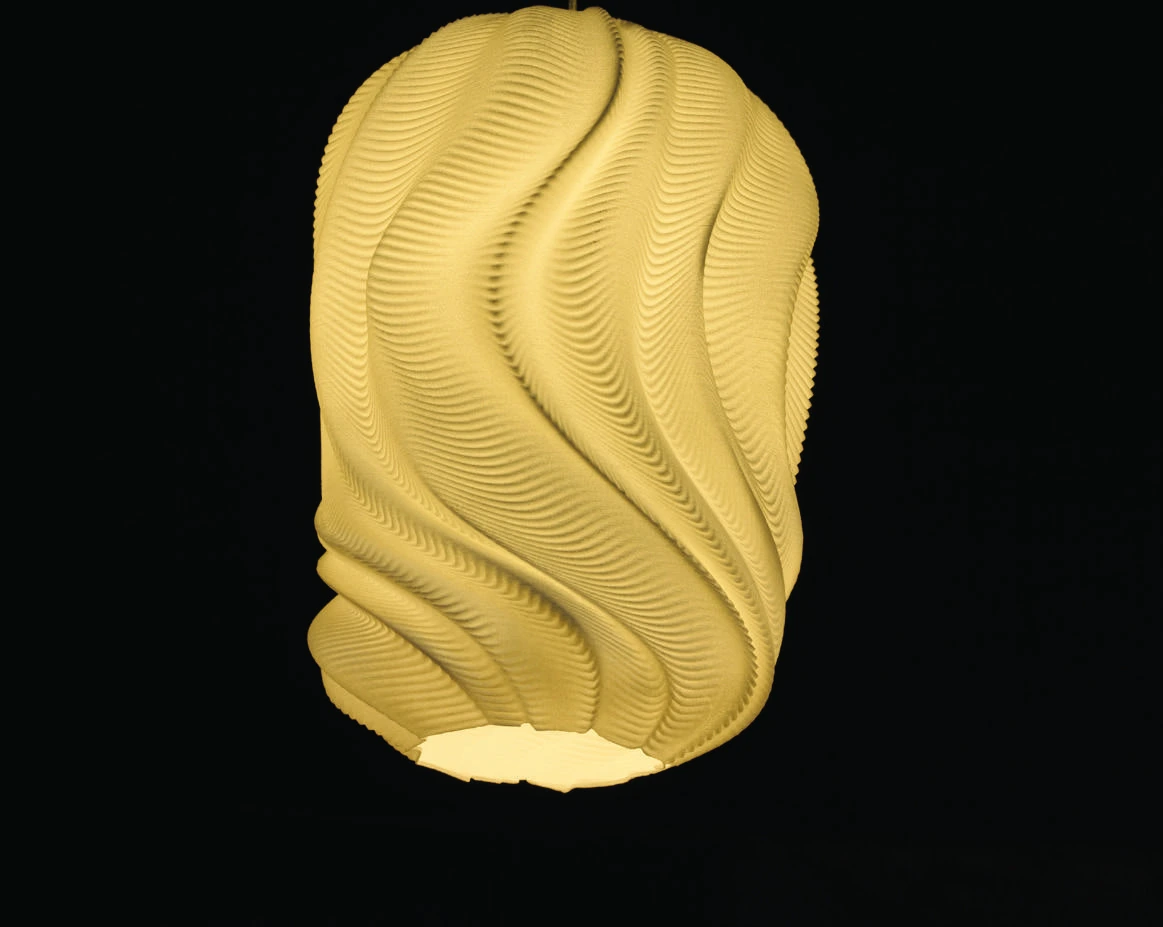
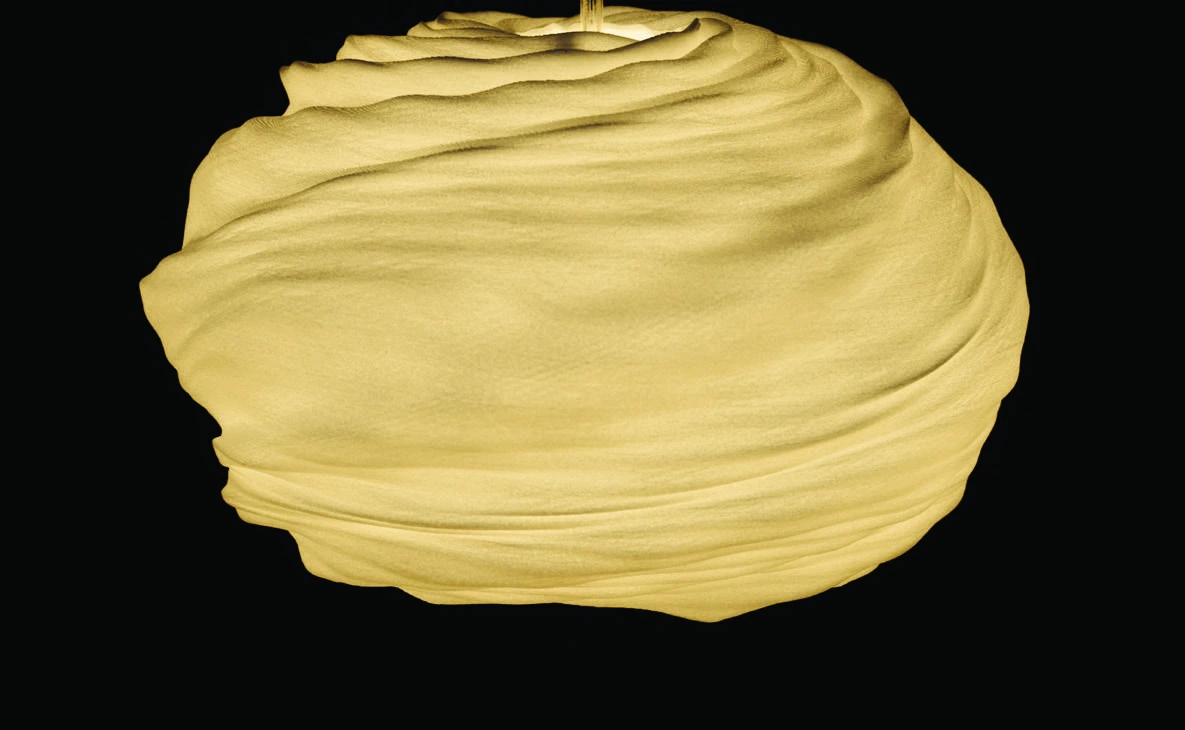
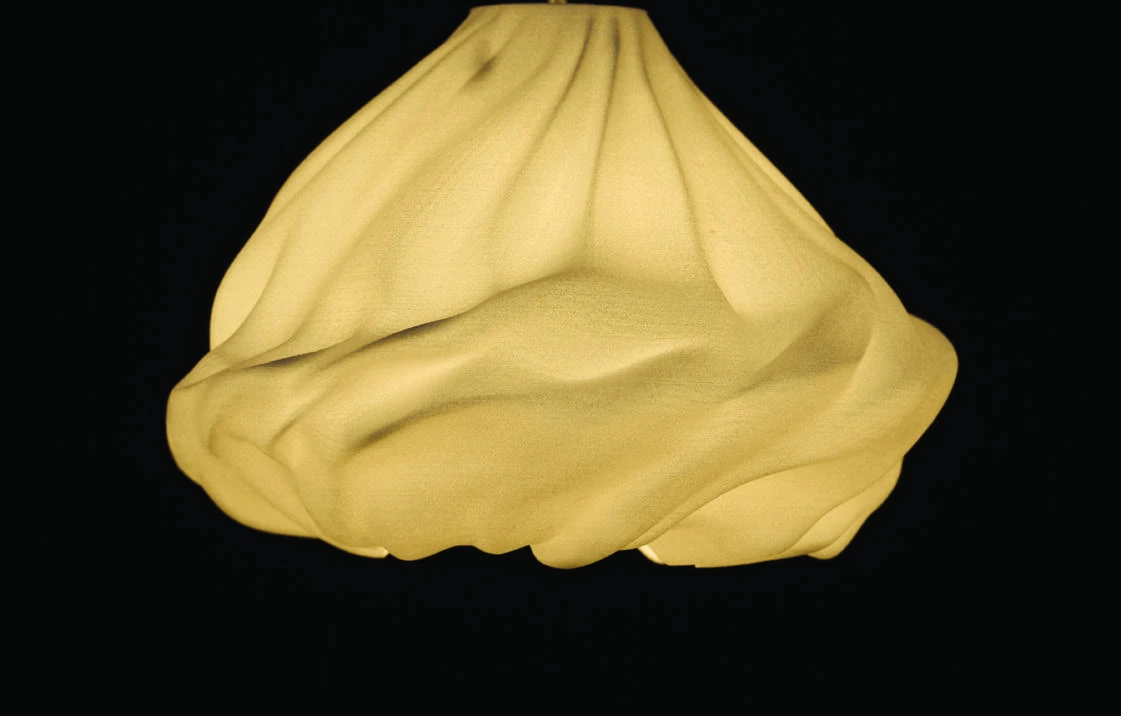
CLOSE READING / 2026 CURATORIAL INTERPRETATION
When water is preserved, is it a shape or a way of changing?
The lamps make something that cannot stop into an object that can be held, lit and placed. The crucial change is not the application of a water motif to a lampshade. Flow enters curvature, openings and thickness; transmitted light lets a solid be read as movement again. The viewer’s relation changes too. Painted water is viewed, while a lamp enters the scale of use. It is seen and illuminates other things, helping to form an environment.
Studio texts emphasize rules, autonomous variation and the refusal to prescribe a final shape. The product booklet records selected forms, dimensions and material. These sources belong together: generation offers possibilities, while manufacture fixes a version. The work need not lose its product character to acquire artistic seriousness, nor should technology replace aesthetic attention. Rules, selection, light and use together preserve a temporary form of water.
The correspondence between algorithm files and original objects requires item-by-item verification. A 2026 digital generator should not be called a reconstruction of the 2012 algorithm.
Based on the public work page, the 2012 graduation product booklet and Gewu Studio texts. Unsigned studio documents are not attributed as personal statements by He Fa.
Gewu Studio / Twelve Water Lamps, 2012–2013. Co-creation, 3D printing and product design. He Fa’s role: He Fa: photography, conceptual development, form exploration and artistic direction; collaborative studio practice.
Cite this record: Gewu Studio / Twelve Water Lamps · 2012–2013 · He Fa: photography, conceptual development, form exploration and artistic direction; collaborative studio practice · https://hefa.p4theater.cn/en/work/twelve-water-lamps
BEYOND THE PAGE
Other ways to watch and read through this work.
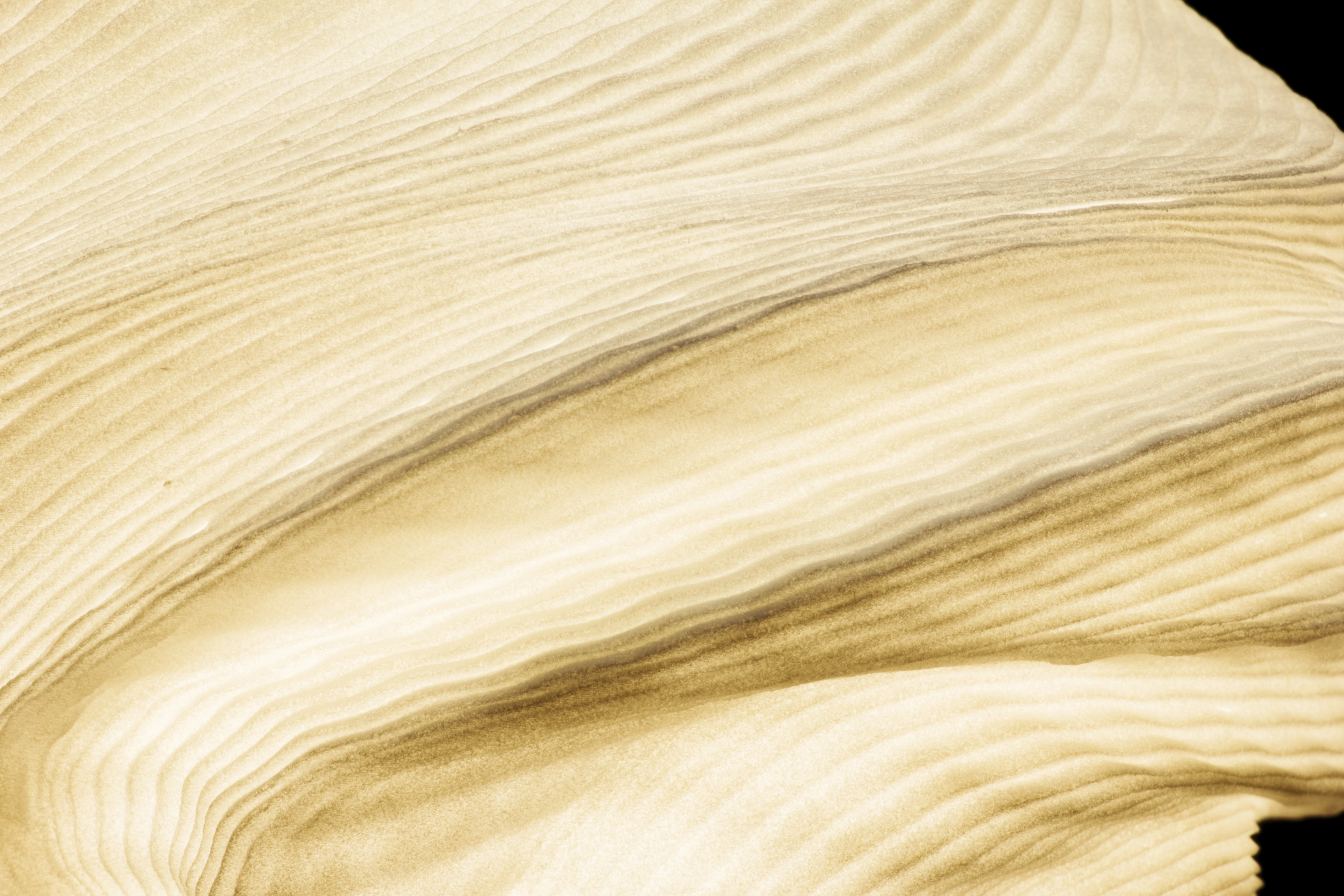
Photograph by He Fa · Dongting Fengxi · 2012
Photography, objects and space
A continuation of He Fa’s photography and thinking through making, with objects, light and space.
gewu.p4theater.cn · Chinese interactive site; bilingual introduction here
TAKE A PATH ACROSS
Language in transit
Gewu Studio / Twelve Water LampsPaper Screening
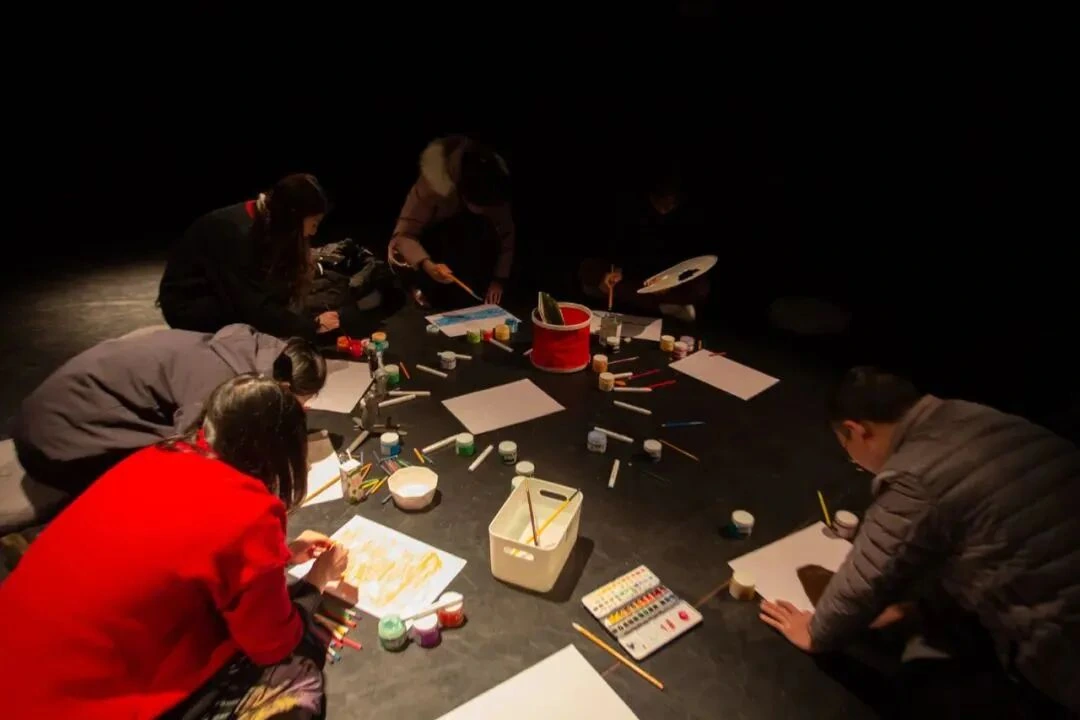
Lisa’s Paper Screening brings drawing into reciprocal accounts; Gewu’s lamps turn research on water paintings toward luminous objects. Images acquire new uses in both, while participant making and studio production retain their different authors.
The November 2020 project text and 26 November report record Lisa-led drawing, presenting drawings and participants’ responses, with individual authorship retained.
The work and collaboration record documents Twelve Water Lamps as a collaborative studio practice, identifies Ma Yuan’s water paintings as a reference, and records He Fa’s photography, conceptual development and artistic direction.
Body and presence
Gewu Studio / Twelve Water LampsHow to Eat a Banana?
The How to Eat a Banana? invitation questions a familiar action; the lamps combine illumination with looking at water forms. Both open artistic possibilities through everyday use, but a workshop invitation is not a verified account of what happened.
The original call of 24 March 2021 invites people to experience how to eat a banana together; it supplies neither complete exercises nor post-event results.
The 2012 graduation Product Catalogue records the lamps, white 3D-printed nylon and a 220V/5W source; it grounds the object and luminous structure, not ambient illumination.
Language in transit
Gewu Studio / Twelve Water LampsWu
Twelve Water Lamps turns the study of water paintings into surfaces that can be lit. Some images titled Wu photograph the lamps, returning them to a plane. Media move in both directions here, while using a lamp and viewing its photograph remain different experiences.
The 2012 graduation Product Catalogue records the lamps, white 3D-printed nylon and a 220V/5W source; it grounds the object and luminous structure, not ambient illumination.
Pages 23–25 of the 2015 preparation PPT title lamp photographs Wu, dated 2014, inkjet print, 120×120 cm; photographs and objects are catalogued separately.
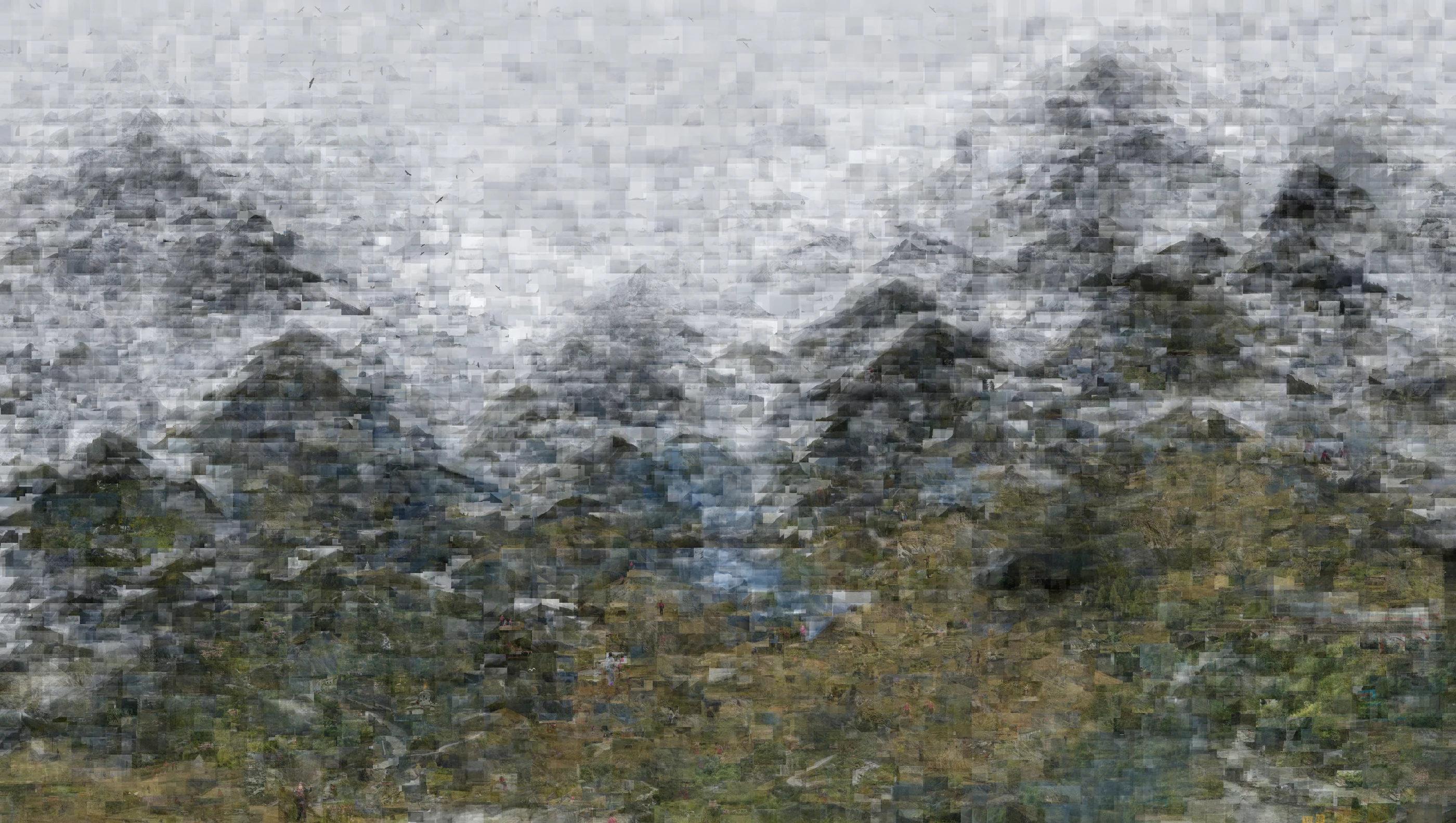
Spaces transformed
Gewu Studio / Twelve Water LampsShanshui
Shanshui lights a planar collage through a lightbox; Twelve Water Lamps places water patterns in translucent three-dimensional surfaces. Light shapes visibility in both, while viewing encounters the organization of a photographic plane or the folds, thickness and openings of an object.
The CAFA Art Museum collection record specifies C-print lightbox transparency and lightbox, grounding a backlit planar medium.
The 2012 graduation Product Catalogue records the lamps, white 3D-printed nylon and a 220V/5W source; it grounds the object and luminous structure, not ambient illumination.
2026-10-04 / ARCHIVAL ADDITION
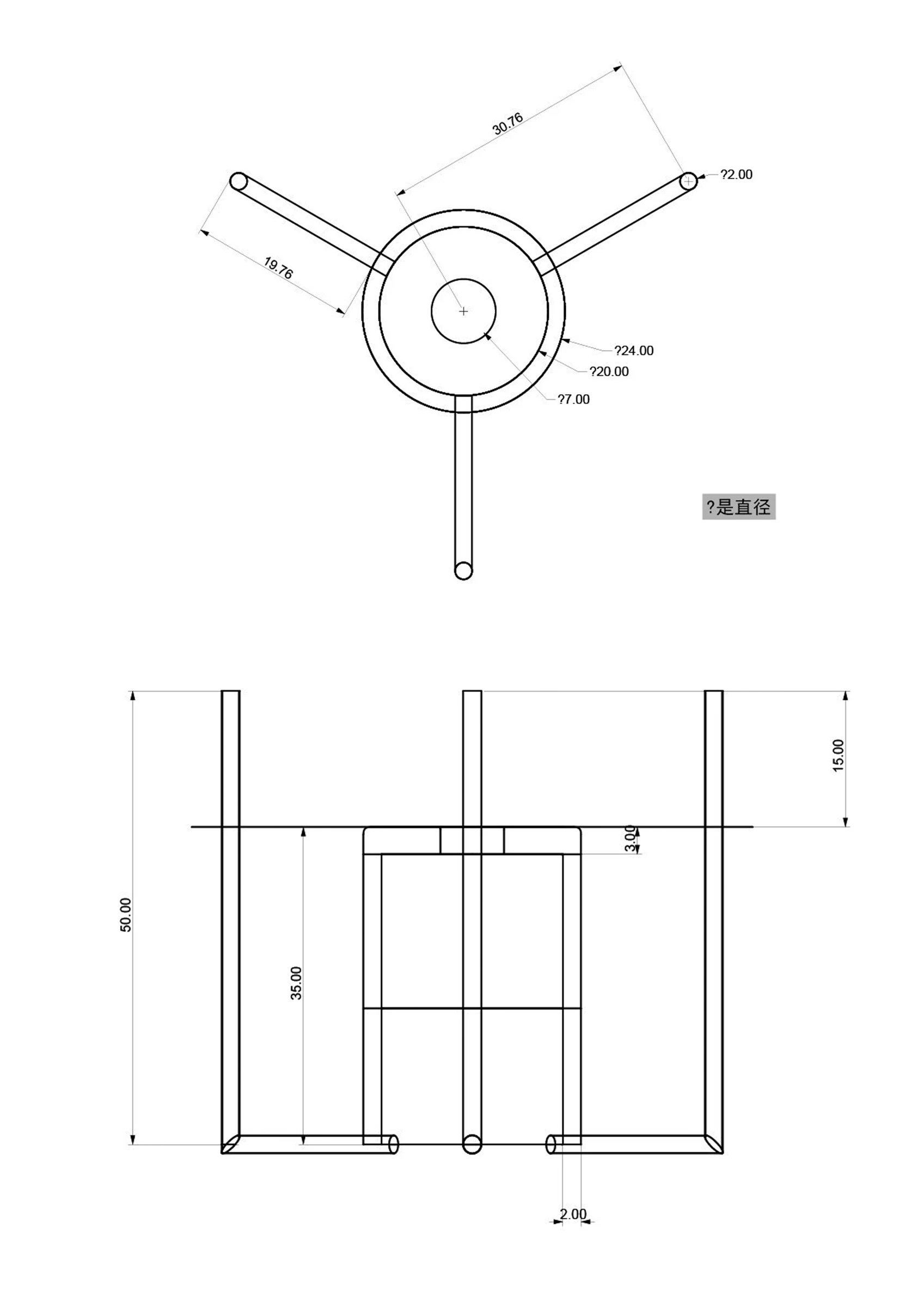
A dimensioned structural drawing is read alongside lamp-label texts. Drawings describe a proposed construction and labels retain the original language about water and form; neither is mistaken for proof of an installed exhibition.
FROM HERE, ELSEWHERE
Rules can generate many forms, but production must fix one of their possible moments.
Painted water enters generative rules and luminous objects: the subject persists while viewing and use change.
The lamps from Gewu Studio’s collaborative practice move from parametric surfaces to printable, assembled objects. The portfolio records thickening, surface repair, printing and further adjustment; installation instructions connect the shade, ring and wick holder.