LINE OF INQUIRY 07 / 07
Making and keeping
What has to happen for a work to reach us?
Photographs are arranged and printed; surfaces are repaired and assembled; screens require power and playback. Decisions made in production, surviving traces and changing versions allow a work to be encountered at different times.
01 / EDITORIAL ARGUMENT · 2026
Reading through this question
This path attends to the practical conditions through which works are made and kept. Light-box production, model repair, film processing, screen playback and film editing each involve particular operations; they also distribute decisions among people, equipment and moments. Reading original instructions, process images and later accounts together allows us to ask which processes a work makes visible, which survive indirectly, and what lets someone encounter it later.
02 / THE ARTIST LOOKS BACK · ESSAY SUPPLIED IN 2026
These complete passages are from He Fa’s How Does a Hole Become a Theatre?, supplied on 16 September 2026. They are later reflections, to be read alongside records made within the works.
We used large-format film. We didn’t retouch the water stains and scratches left by developing and scanning. The face stayed in the photograph along with traces of its making. Eyes that only meant to look at a person might be drawn away by a scratch beside them.
Editorial noteIn the essay supplied in 2026, the artist looks back at production traces in Shixiang. Read this passage alongside the portraits and the eight-and-a-half-act plan, attending to what the photograph has undergone as an object.
But every time I choose a photograph, every time I edit, I’m doing this again. What stays, what goes, who gets to have the last word again. Later I may dislike those choices. I may find better words. The photographs are already there. The film is already there. It can’t be only today’s more articulate version of me that counts.
Editorial noteThis passage connects keeping material with the choices made in selection and editing: photographs and films already bear decisions. It helps distinguish a work’s historical versions from the artist’s later explanations.
03 / WORKS AND PERIOD RECORDS
Return to the works and records
- Shanshui: layering, displacement and opacity ↗
The artist’s statement and process image on page 9 of the graduation presentation; continue to the combination of two arrangements and the light-box version records.
- Twelve Water Lamps: from model to assembly ↗
Read the portfolio’s production account alongside instructions for the shade, ring and wick holder. The work belongs to the studio’s collaborative practice.
- YourTube: installation and playback instructions ↗
The original document explains power, screen switches and MP4 selection step by step. It preserves operating conditions; the document carries no writing date.
2012 · Photography, digital montage, light boxes
Shanshui ↗
WHAT CHANGES HERE
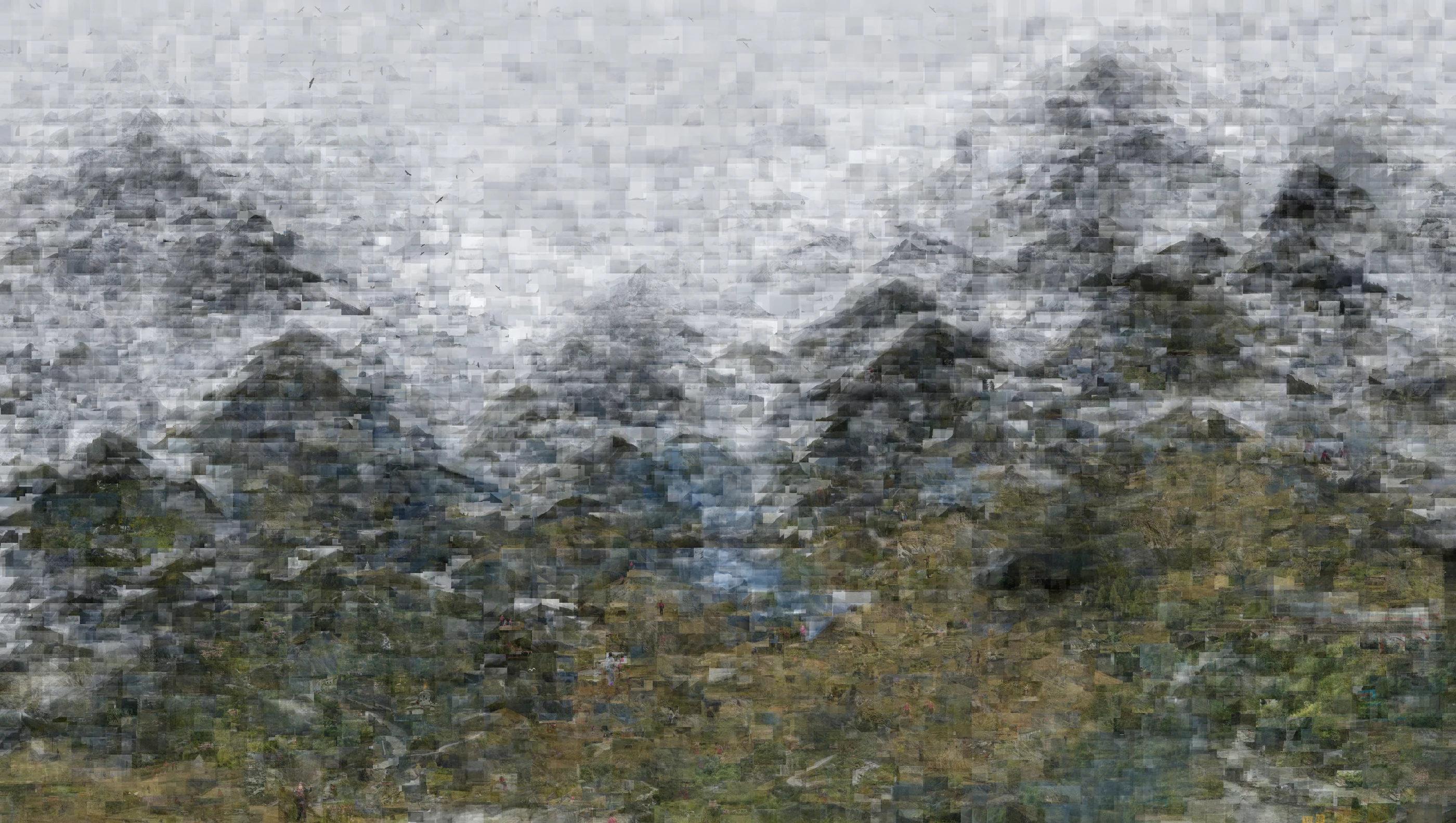
The graduation presentation records colour-based arrangement, layering, displacement and changes in opacity. Following these operations into the light-box work gives a traceable account of photographs becoming “brushstrokes”.
Artist
Can a mountain hold many acts of looking at once?
At a distance a mountain takes shape; nearby it breaks into separate acts of framing. The viewer’s movement is therefore more than an optional way to appreciate scale. It is a temporal mechanism: stepping back compresses differences into an image, while moving closer releases them again. Each photograph records something it once faced, but no individual photograph witnessed the final mountain. The whole is made and should not be mistaken for panoramic proof of a particular site.
Continue the close reading ↗2012–2013 · Co-creation, 3D printing and product design
Gewu Studio / Twelve Water Lamps ↗
WHAT CHANGES HERE
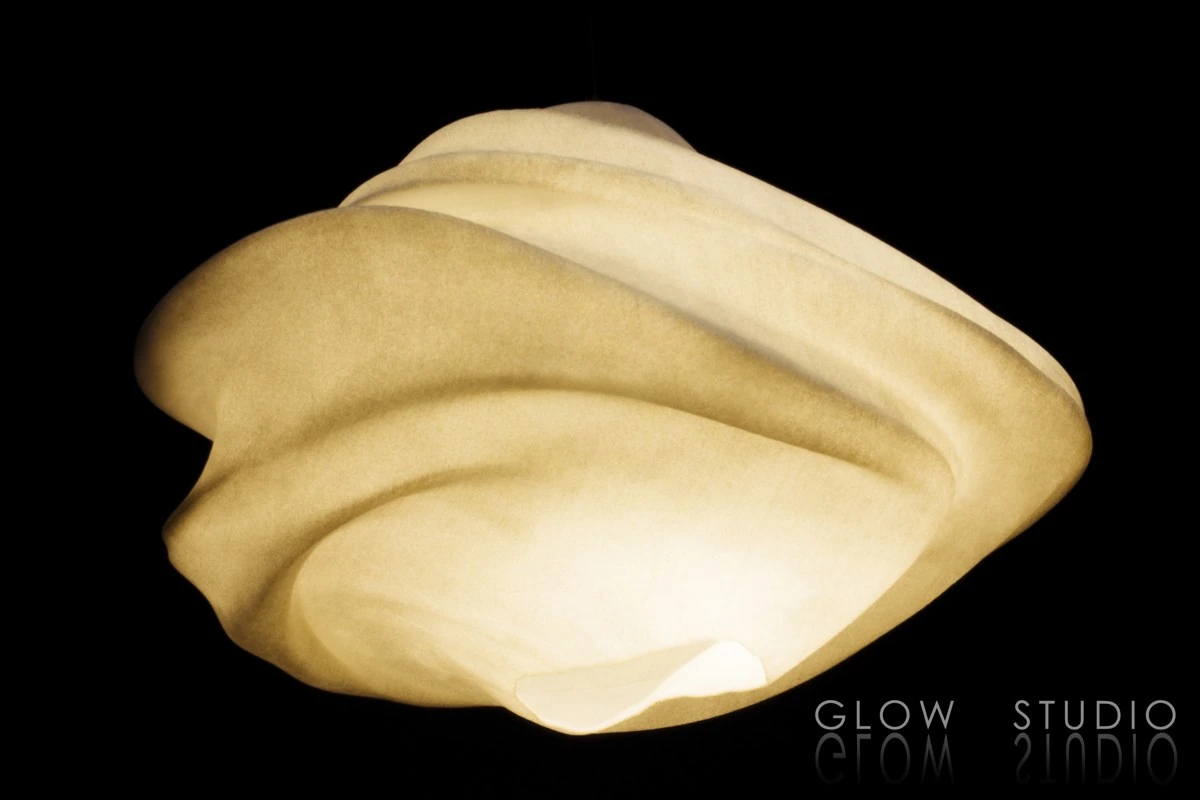
The lamps from Gewu Studio’s collaborative practice move from parametric surfaces to printable, assembled objects. The portfolio records thickening, surface repair, printing and further adjustment; installation instructions connect the shade, ring and wick holder.
He Fa: photography, conceptual development, form exploration and artistic direction; collaborative studio practice
When water is preserved, is it a shape or a way of changing?
The lamps make something that cannot stop into an object that can be held, lit and placed. The crucial change is not the application of a water motif to a lampshade. Flow enters curvature, openings and thickness; transmitted light lets a solid be read as movement again. The viewer’s relation changes too. Painted water is viewed, while a lamp enters the scale of use. It is seen and illuminates other things, helping to form an environment.
Continue the close reading ↗2019–2020 · Photography theatre
Shixiang ↗
WHAT CHANGES HERE
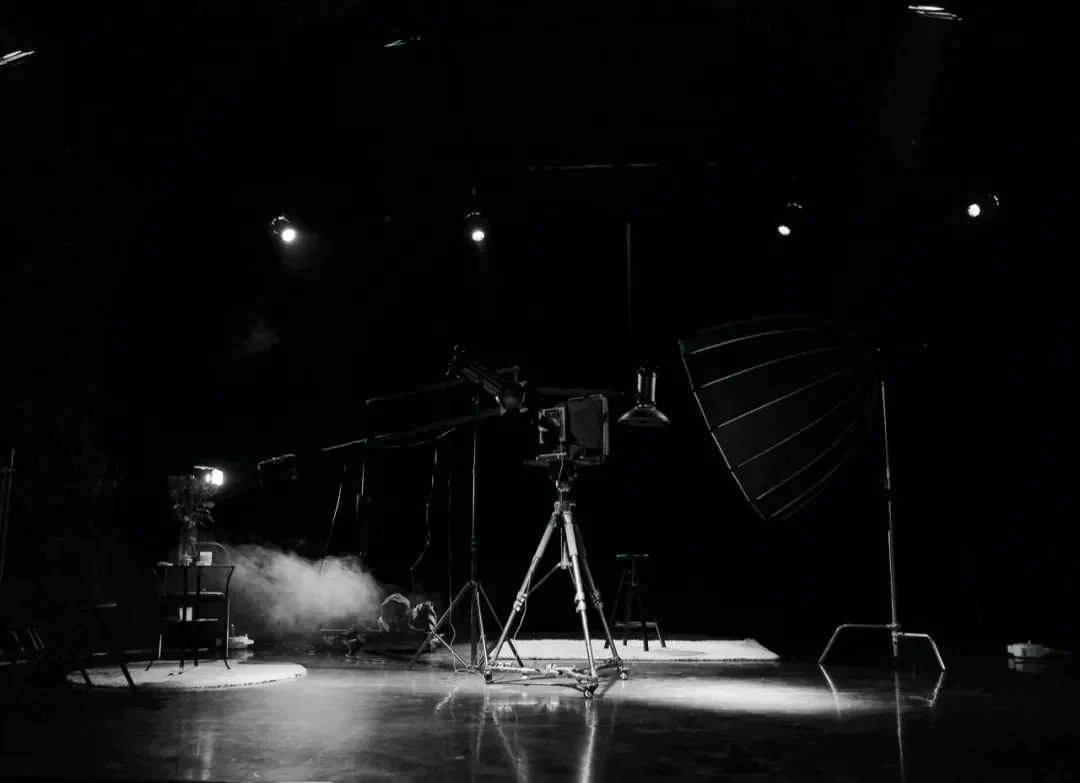
Looking back in How a Hole Becomes a Theatre, He Fa describes film processing, scanning, and water marks and scratches left unretouched in Shixiang. The portrait retains traces of its making that can redirect attention from the sitter.
Collaboration with Zhang Shaohua; theory, structure, framework and interpretation
After the portrait is made, what position remains for its subject?
An ordinary portrait session often ends when the photograph is delivered. Shixiang instead makes the previous photograph the starting point for another meeting. A person faces a preserved self again, recognizing it or finding it strange. A fixed image and an ongoing life occupy the same structure. Meeting again neither updates the earlier photograph nor guarantees acceptance of its interpretation. Photography extends from taking an image into a relation that requires further response.
Continue the close reading ↗2018 · Multi-screen video installation
YourTube ↗
WHAT CHANGES HERE
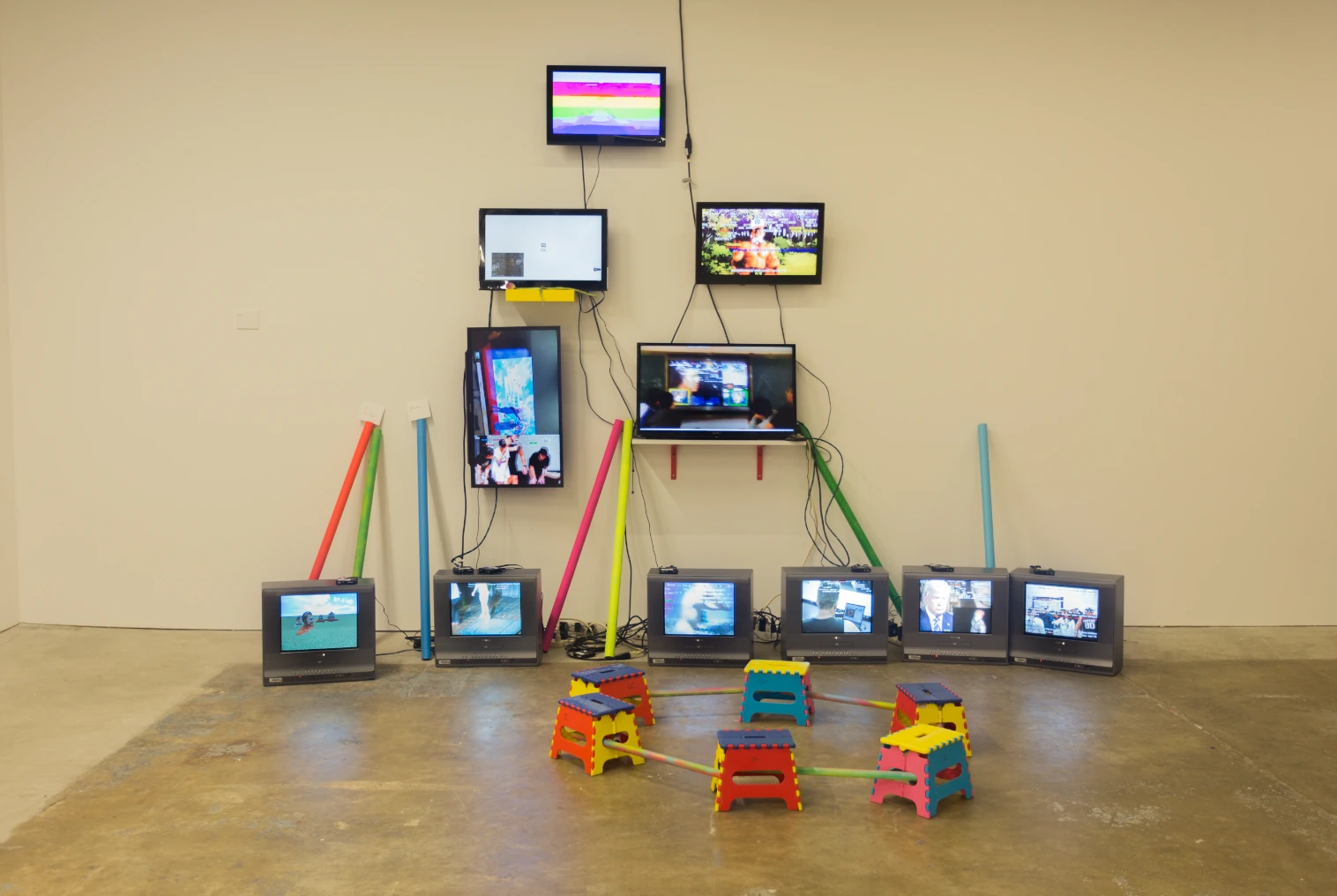
The installation instructions break operation into connecting power, switching on screens, using a media player and selecting an MP4 from a memory card. The spatial work also depends on procedures another person can carry out.
Artist; graduate thesis work
Do shared seats and visible comments already make a “we”?
One structure directs attention toward screens; another joins seats into a ring. Their centres differ. I can sit beside you while everyone watches a different screen, or share an image without knowing how my neighbour understands it. Exposed cables make equipment connections visible, and tubing physically joins the furniture. Those material connections cannot testify on behalf of human relations. The installation gives form to the distance between being connected and understanding one another.
Continue the close reading ↗2023–2024 · Film, rehearsal, live performance
Human Surrender / Shoot Self with You ↗
WHAT CHANGES HERE
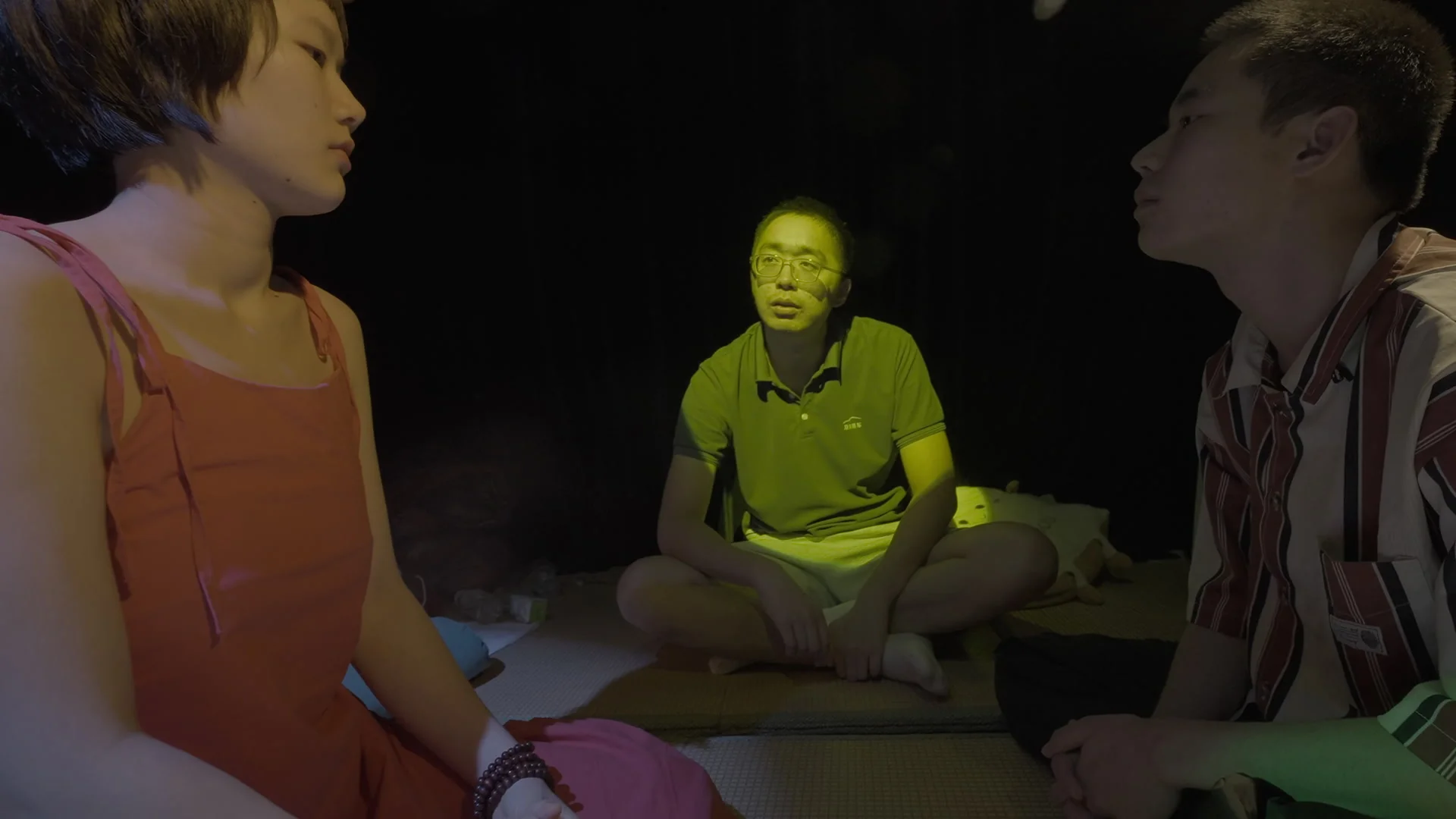
Move from the 2023 three-part film proposal through rehearsal records, the trailer and the public film, then read the artist on selection and continued editing. These stages preserve versions through which shared time during filming can be considered alongside later editing decisions.
Initiator, producer and editor; direction and screenplay collectively created by the crew
When shared experience becomes a film, who can still answer within it?
The film overlays the reciprocal looking of rehearsal with the gaze of later viewers. Cameras are present from the outset, and people know their actions may become future images. The camera is therefore not a transparent witness outside the event. The collective direction and writing credits extend this relation into authorship: shared experience is not absorbed under one director’s name, while He Fa’s initiating, producing and editing work remains specifically identifiable.
Continue the close reading ↗ANOTHER QUESTION STARTS HERE