LINE OF INQUIRY 01 / 07
After moving closer
Does seeing more detail mean understanding more?
Begin with the self as terrain, then return another person to the act of looking. Closeness is not the answer along this route: each reduction of distance reveals another kind of gap.
01 / EDITORIAL ARGUMENT · 2026
Reading through this question
Changing viewing distance first changes what can be distinguished. Skin detail in I, the component photographs of Shanshui and hesitation before being photographed and later reassessment of a photograph in Shixiang are different kinds of proximity. The first two involve scale and composition; the last also involves someone who keeps living and can judge the photograph in return. Begin with how images organize visibility, then ask why more detail does not necessarily mean knowing a person better.
02 / THE ARTIST LOOKS BACK · ESSAY SUPPLIED IN 2026
These complete passages are from He Fa’s How Does a Hole Become a Theatre?, supplied on 16 September 2026. They are later reflections, to be read alongside records made within the works.
For a long time at university, photographic collage was all I did. A book by David Hockney about photography drew me in. After that it was photograph, assemble, photograph again, assemble again. I was fascinated by this photographic alchemy. An idea takes only minutes to say aloud. Once you start making it, you can spend years without finding a way out. There were tens of thousands of photographs. Other people could already see a mountain; I was still moving one of them.
Editorial noteThis is the artist’s 2026 recollection of montage, not a 2012 exhibition label or evidence of a uniform image count for every work.
The person goes on living. The photograph doesn’t. The posture of that instant stays there; it won’t automatically change its expression because the person changes later. Today they can say, that’s not me anymore. The photograph is still there. It cannot explain who this person is, but it won’t entirely submit to their change of account either.
Editorial noteHere the distance lies between a person’s subsequent life and the instant retained by a photograph. Enlarging the image cannot remove it.
03 / WORKS AND PERIOD RECORDS
Return to the works and records
- Graduation defence, p. 8: arranging a grid by colour ↗
Read alongside the combination of two procedures on p. 12 to examine how fragments form an image.
- Shixiang: deciding whether to publish photographs ↗
The record retains participants’ publication choices. Viewing and publication require separate discussion.
Works and writing
Follow works back to signed texts, with writing at the time, later reflection and participant accounts identified separately.
Imaging with You: The Unowned Second Person and Non-Sovereign Spectatorship in Human Surrender / Shoot Self with You
Reading connectionIn this 2026 study, He Fa follows close views of eyes, cameras caught on camera and end-credit archives to ask what position proximity and replay give the viewer. The two titles open another route: shifts between self and you lead back to particular bodies, voices and moments of waiting.
Related works: Human Surrender / Shoot Self with You
What Is Shixiang?
Reading connectionWhat Is Shixiang? looks back from 2020 at Shanshui and Central, then turns to photographic roles, the naming of I, See, You and publication choices. It proposes eight and a half encounters and imagines a museum holding a thousand people’s traces: retaining images while making room for another meeting.
2012 · Archival inkjet print
I ↗
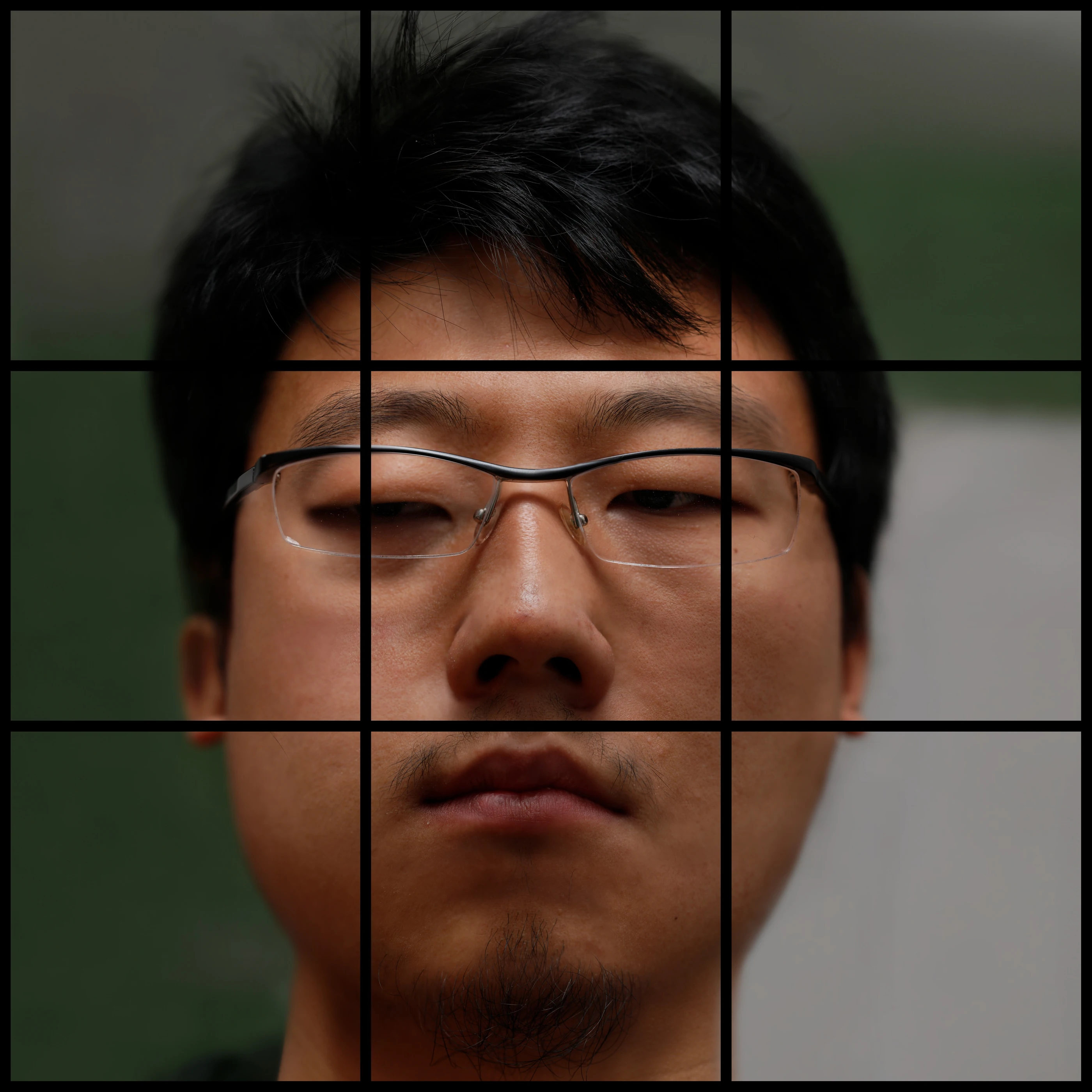
WHAT CHANGES HERE
Macro photography turns a face into skin terrain. The more detail appears, the further back one must move to recognize the whole person.
Artist: He Fa
When I become the terrain, who is looking at whom?
This face has two competing scales. Recognizing He Fa from a distance means overlooking individual pores and hairs. Approaching a fragment makes the body’s material clear while personal identity temporarily recedes. The grid is more than a trace of montage technique: it prevents these two tasks from being completed at once. The viewer must choose a distance and acknowledge what remains invisible at another one.
Continue the close reading ↗2012 · Photography, digital montage, light boxes
Shanshui ↗
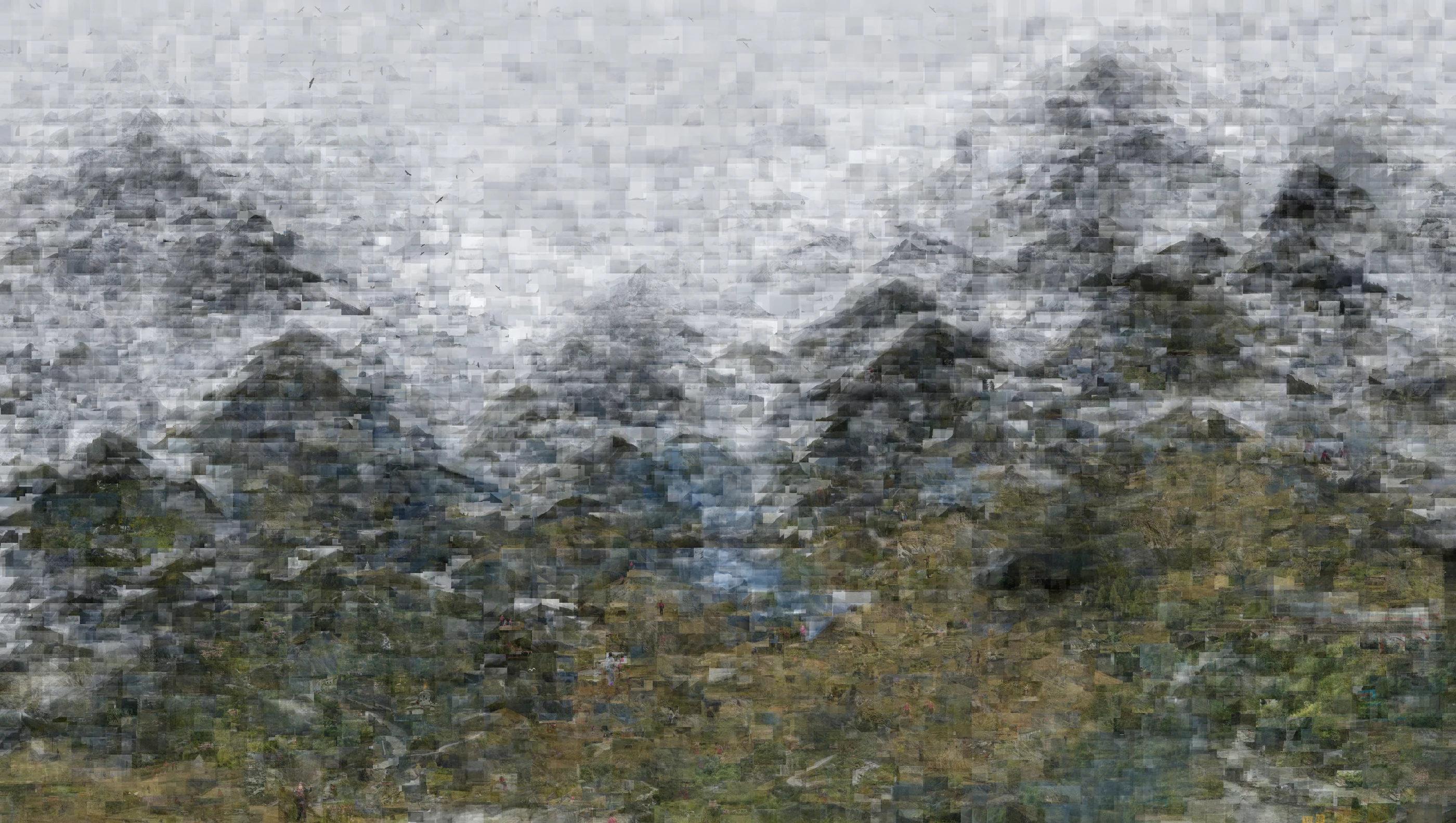
WHAT CHANGES HERE
The overall landscape and its constituent images require different viewing distances; neither view contains everything.
Artist
Can a mountain hold many acts of looking at once?
At a distance a mountain takes shape; nearby it breaks into separate acts of framing. The viewer’s movement is therefore more than an optional way to appreciate scale. It is a temporal mechanism: stepping back compresses differences into an image, while moving closer releases them again. Each photograph records something it once faced, but no individual photograph witnessed the final mountain. The whole is made and should not be mistaken for panoramic proof of a particular site.
Continue the close reading ↗2019–2020 · Photography theatre
Shixiang ↗
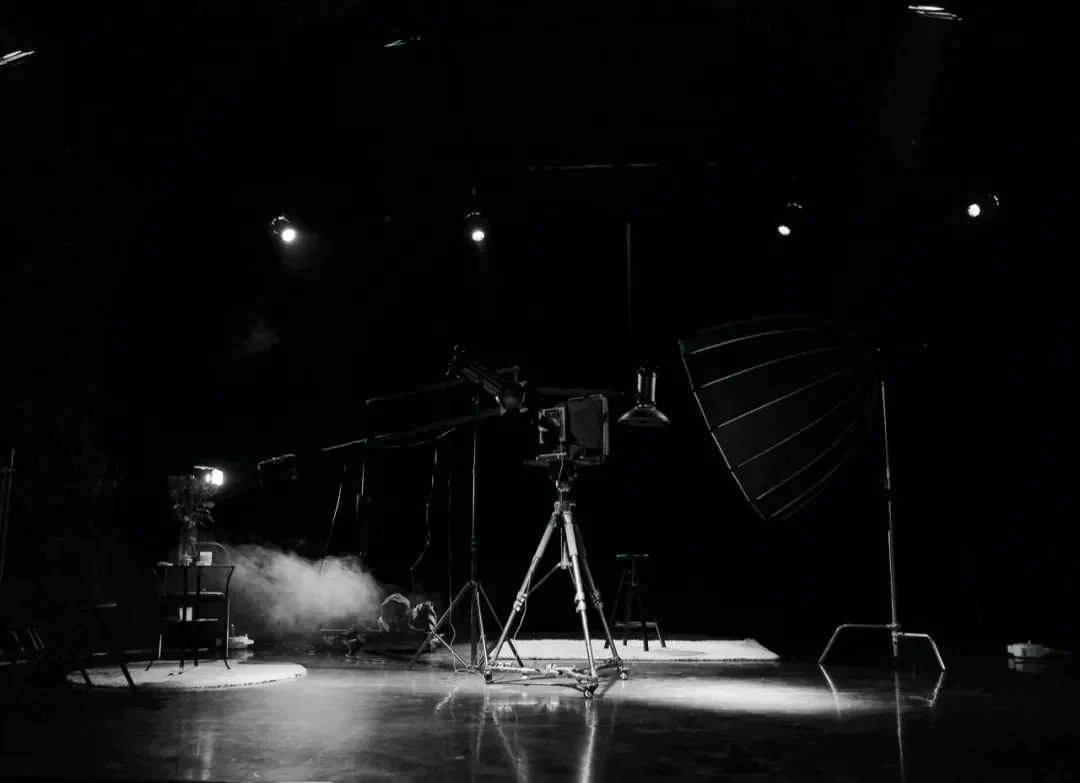
WHAT CHANGES HERE
The portrait enters another meeting, where the person can face it again and decide whether it becomes public.
Collaboration with Zhang Shaohua; theory, structure, framework and interpretation
After the portrait is made, what position remains for its subject?
An ordinary portrait session often ends when the photograph is delivered. Shixiang instead makes the previous photograph the starting point for another meeting. A person faces a preserved self again, recognizing it or finding it strange. A fixed image and an ongoing life occupy the same structure. Meeting again neither updates the earlier photograph nor guarantees acceptance of its interpretation. Photography extends from taking an image into a relation that requires further response.
Continue the close reading ↗2021–2022 · Intimate live theatre
Iceberg ↗
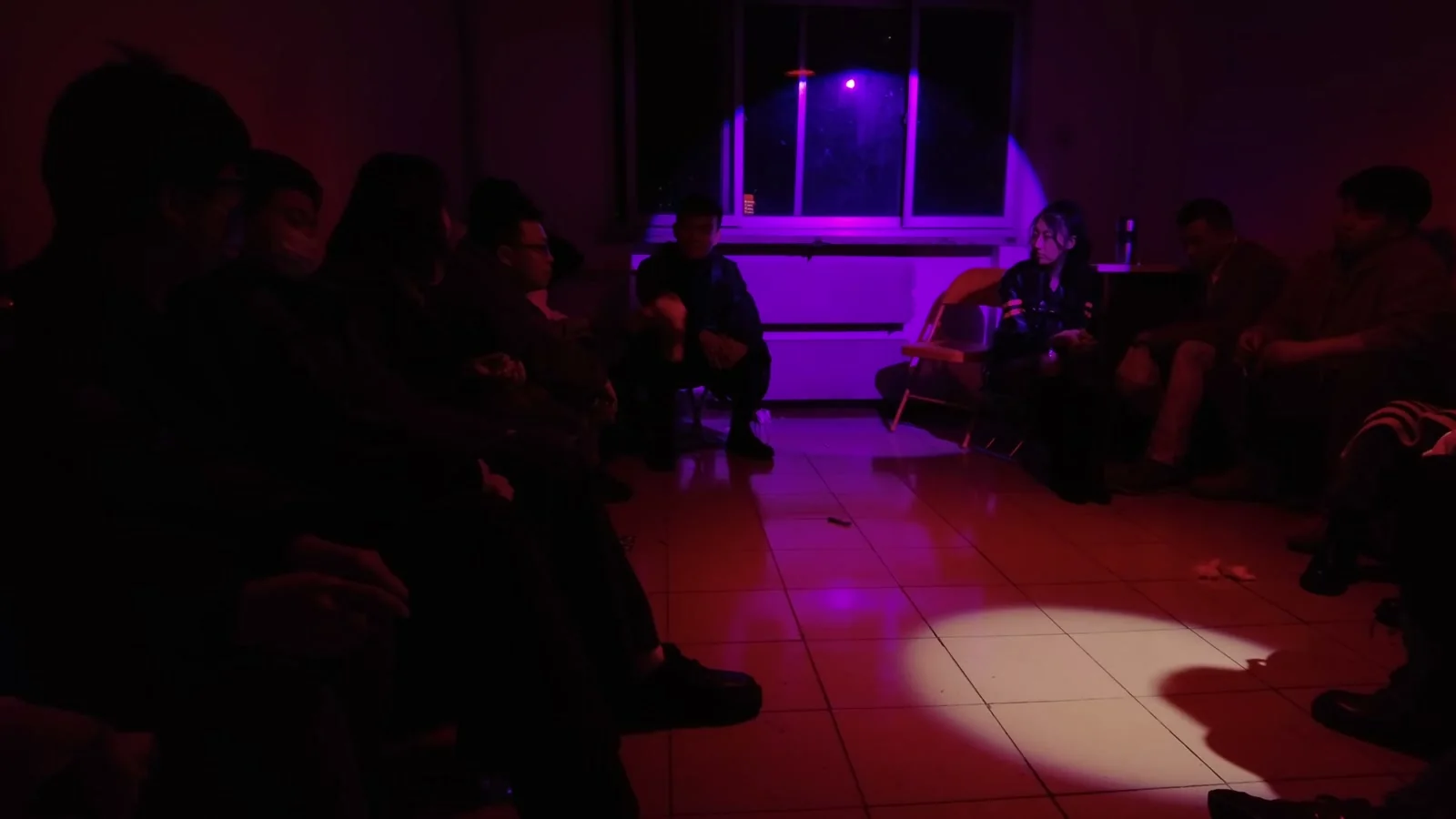
WHAT CHANGES HERE
A small office brings bodies together while making obstruction and yielding space part of spectatorship.
Producer
What does viewing become when there is no distant position?
The space gives no one a frontal position from which everything can be safely surveyed. Another body blocks the view, and one’s own movement changes a neighbour’s sightline. Silence, crowding and difficulty moving become concrete materials. The intensity cannot be reproduced simply by enlarging a video. It comes from the bodily cost of looking in limited space and from the impossibility of imagining the spectator as an eye that leaves the event untouched.
Continue the close reading ↗2023–2024 · Film, rehearsal, live performance
Human Surrender / Shoot Self with You ↗
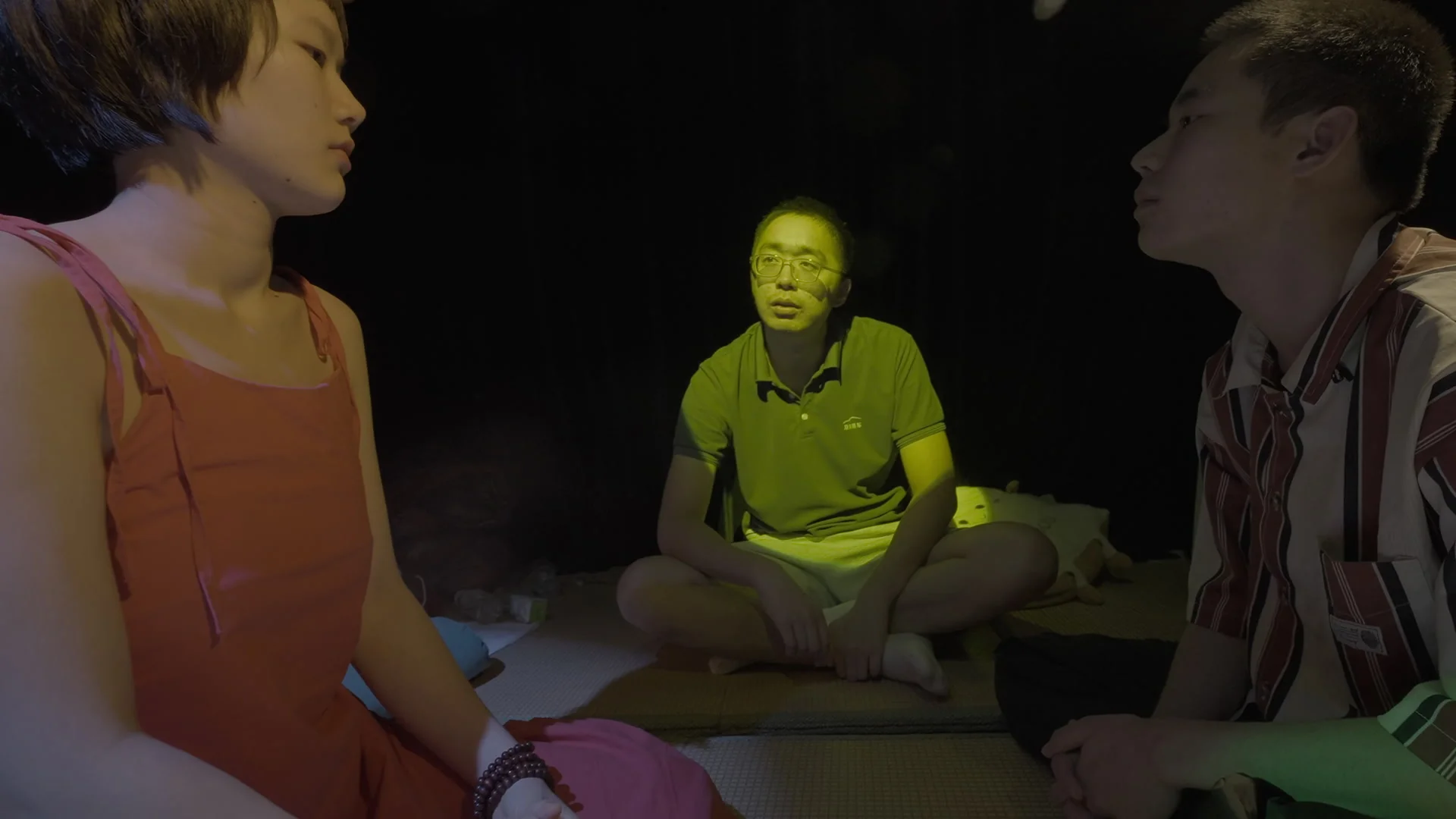
WHAT CHANGES HERE
Close images and the visible presence of cameras make it difficult for viewers to occupy an uncomplicated position outside the encounter.
Initiator, producer and editor; direction and screenplay collectively created by the crew
When shared experience becomes a film, who can still answer within it?
The film overlays the reciprocal looking of rehearsal with the gaze of later viewers. Cameras are present from the outset, and people know their actions may become future images. The camera is therefore not a transparent witness outside the event. The collective direction and writing credits extend this relation into authorship: shared experience is not absorbed under one director’s name, while He Fa’s initiating, producing and editing work remains specifically identifiable.
Continue the close reading ↗ANOTHER QUESTION STARTS HERE