2021–2022 / Intimate live theatre
Iceberg
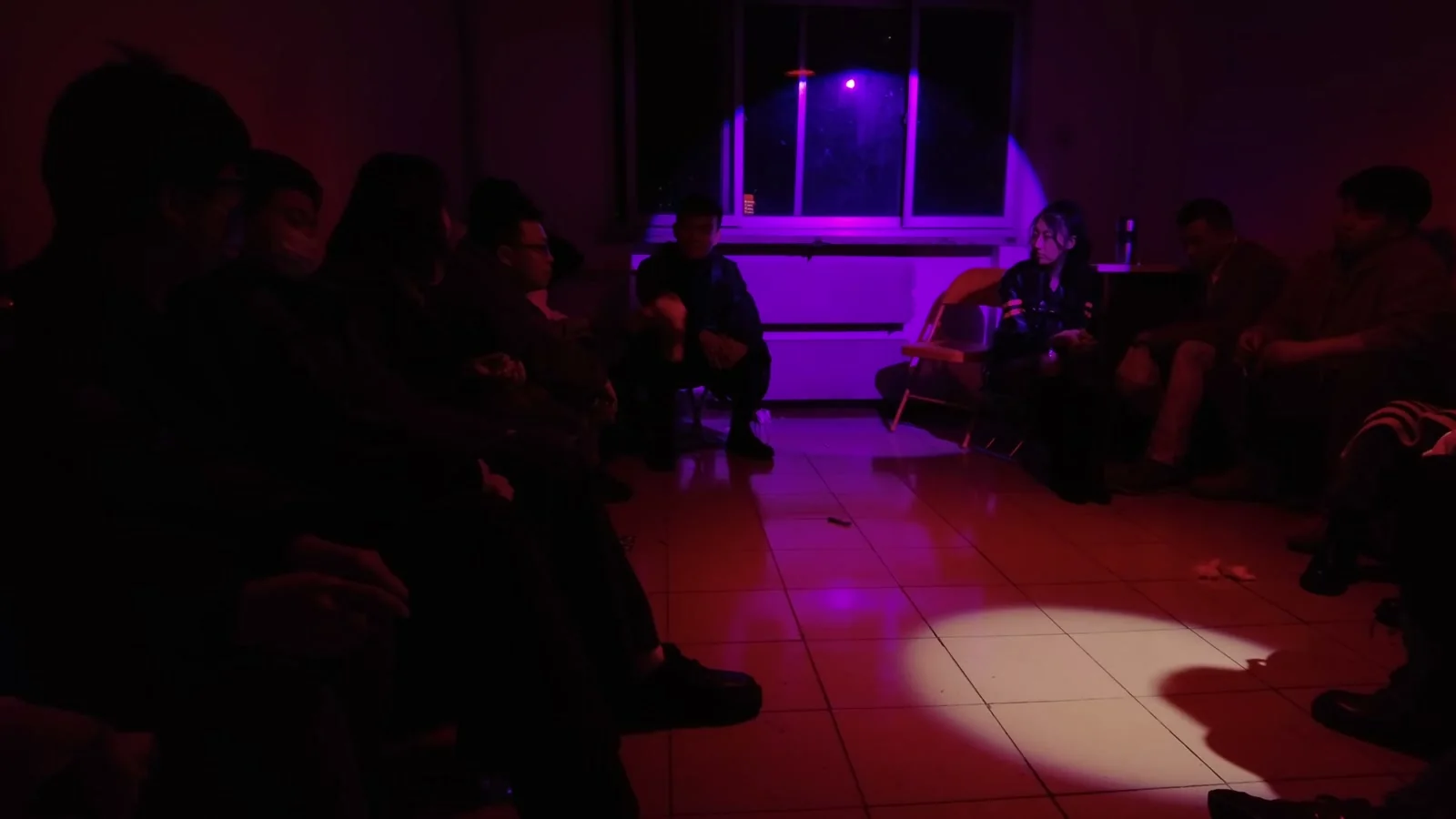
A small office and fifteen spectators: spatial proximity becomes part of the work.
HE FA’S ROLE
Producer
Complete chapter contents
- Year
- 2021–2022
- Medium
- Live theatre, spatial installation and collective creation
- Role
- Producer
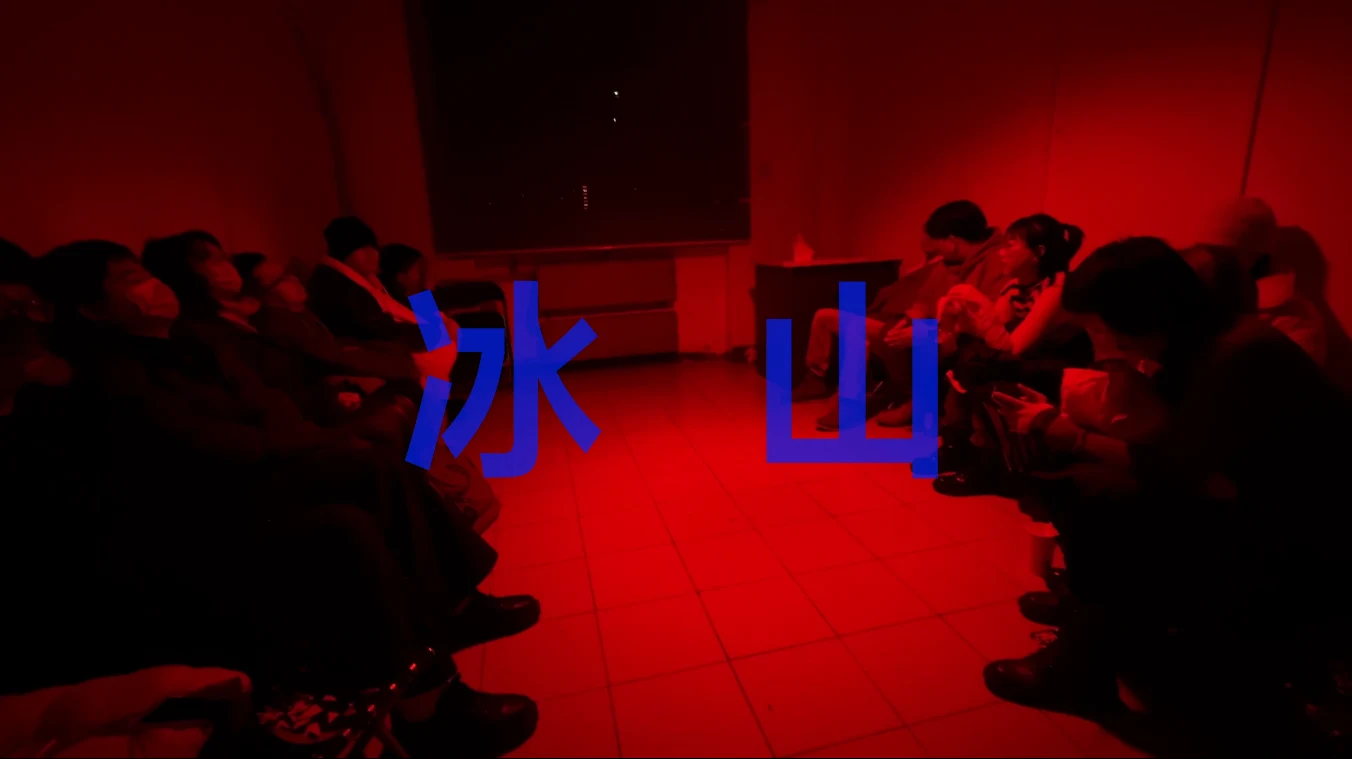
Eight makers and fifteen spectators entered the same small office; Iceberg was performed at 19:30 on 1 January 2022.
Project statement
Iceberg was developed by eight makers and opened to an audience of fifteen inside a small office. Crowding, obstruction, silence and the difficulty of entering or leaving directly changed how the event could be seen.
The performance took place at 19:30 on 1 January 2022. Makers and spectators shared the same room without the stable distance of a proscenium stage.
A line through the work
When spectators cannot retreat to a distance, what kind of bodily relation does looking become?
Two venue disruptions before Iceberg took shape
On December 7, 2021, He Fa described meeting Qu Wenhao, planning a production and forming a group again. After the Diaosutai venue stopped opening in June, a proposed ninth production initiated by Qu was halted. They began recruiting in a Wangjing office to develop Qu’s Iceberg. He Fa delegated most organizing work to Qu while occupied elsewhere; another venue problem arose in September. Iceberg’s development thus involved repeated changes of space, people and organization.
When restarting, the two decided to discuss shared values before forming North Wind Theatre. The article explicitly credits Qu with writing the nine-point declaration; He Fa endorsed it and joined the invitation. Its principles include respecting an initiator’s impulse, bringing personal concerns into roles, expressing views openly and addressing disagreement. The record therefore retains Qu’s authorship of the declaration and their joint initiation of the company.
Related sources
CLOSE READING / 2026 CURATORIAL INTERPRETATION
Iceberg
What does viewing become when there is no distant position?
The space gives no one a frontal position from which everything can be safely surveyed. Another body blocks the view, and one’s own movement changes a neighbour’s sightline. Silence, crowding and difficulty moving become concrete materials. The intensity cannot be reproduced simply by enlarging a video. It comes from the bodily cost of looking in limited space and from the impossibility of imagining the spectator as an eye that leaves the event untouched.
Yet physical closeness proves neither a deep relation nor equal willingness to participate. Spatial facts should coexist with differing audience accounts rather than translating every discomfort into proof of artistic success. He Fa’s production role deserves a concrete description of how venue, schedule, light and documentation enabled collective work. The site can begin with the identifiable office and viewing positions, then let footage and criticism open that small space further.
The limits of this reading
Still photographs and plans do not reproduce the live experience. The producer credit is not rewritten as sole director.
Sources for this reading
Based on performance records, the public work page and its linked North Wind Theatre archive.
Continue in writing
Follow works back to signed texts, with writing at the time, later reflection and participant accounts identified separately.
P4 Theater: A University in the Making, a Winding Labyrinth, a Hard Drive Inscribed with Life
Reading connectionIn 2024, He Fa revisits the studio’s conversion into a theatre, the move to a small office and cameras entering collaborative rehearsal. From Iceberg to Human Surrender, the size of a room, bodily distance and ways of filming affect one another. This retrospective returns the works to their spaces and collaborations.
P4 Theater: Past, Present, Future, 510
Reading connectionLooking back in 2022, He Fa returns to Shadow Counterpoint and Hamlet’s Mirror, then recounts a separation between collaborators and the restart at 510. A few chairs, two desks and a small office provided conditions for work such as Iceberg to continue. Moves, collaborations and repeated beginnings connect the productions.
Work record
Iceberg, 2021–2022. Intimate live theatre. He Fa’s role: Producer.
- Work / series
- Iceberg
- Date
- 2021–2022
- Medium
- Intimate live theatre
- He Fa’s role
- Producer
- Catalogue section
- Collaborative practice
Cite this record: Iceberg · 2021–2022 · Producer · https://hefa.p4theater.cn/en/work/iceberg
TAKE A PATH ACROSS
Other paths from this work.
Spaces transformed
Between blankness and crowding
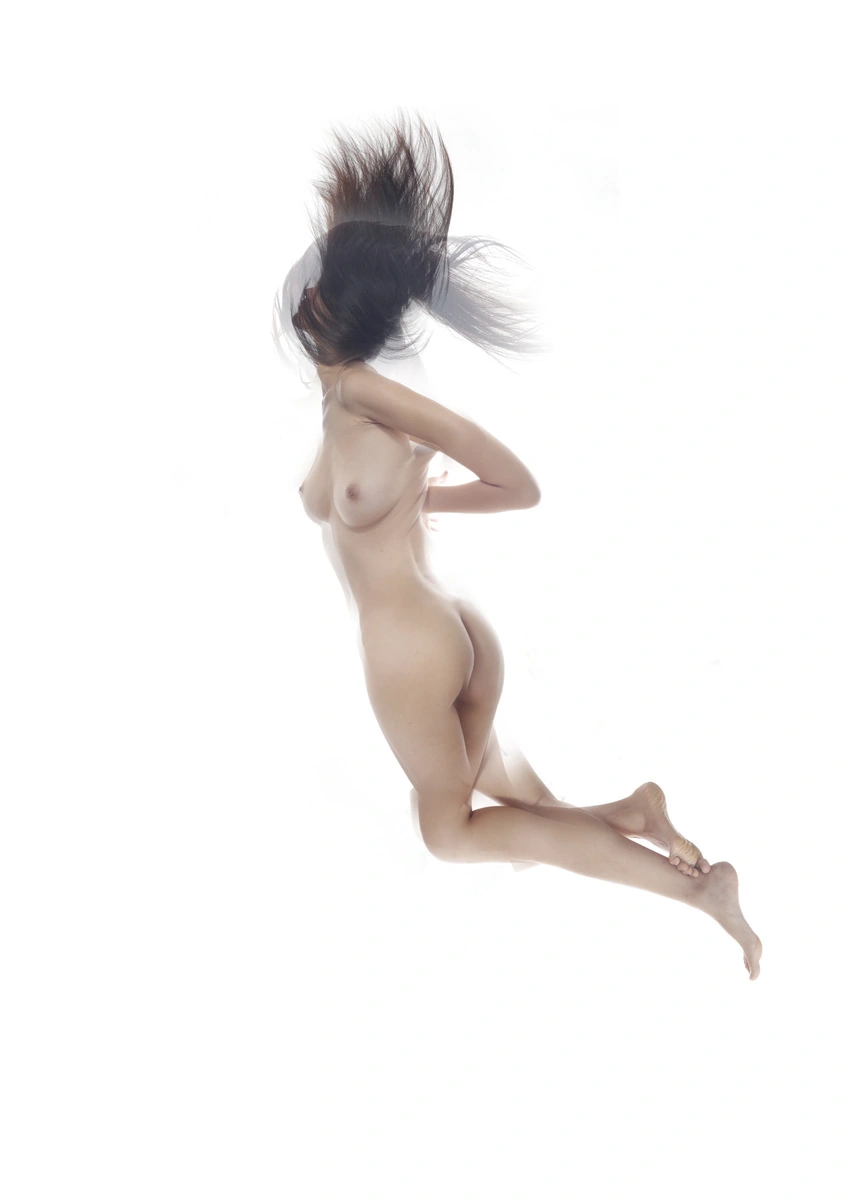
Illusion separates poses from a setting through a white background; Iceberg places performers and spectators in a small office. Spatial cues recede in one, while obstruction and proximity become unavoidable conditions in the other.
Continue from this work ↗Read the source materials
- Work imageImages and presentation ↗
The body in the first portfolio image is set against white, with no support visible; the photographs are not labelled as successive stages of motion.
- Event recordProject statement ↗
The event record specifies 1 January 2022, an office, eight makers and fifteen audience members, including crowding and obstruction as conditions of viewing.
- Work imageImages and presentation ↗
Spaces transformed
Enclosure can be planned or constrained
IcebergHamlet’s Mirror / Four-screen CAFAM Proposal
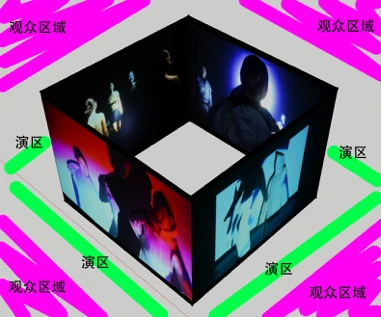
The CAFAM four-screen proposal distinguishes audience and performance zones in drawings; Iceberg shares limited office space. Both arrange enclosure and spectatorship, but imagined zoning cannot stand in for actual obstruction.
Continue from this work ↗Read the source materials
- Period documentFrom one screen to four ↗
The jointly signed proposal of 5 September 2016 surrounds the space with four screens and distinguishes audience and performance areas by colour; the evidence is a proposal and equipment arrangement.
- Event recordProject statement ↗
The event record specifies 1 January 2022, an office, eight makers and fifteen audience members, including crowding and obstruction as conditions of viewing.
- Period documentFrom one screen to four ↗
2026-10-04 / ARCHIVAL ADDITION
Source materials, process and versions
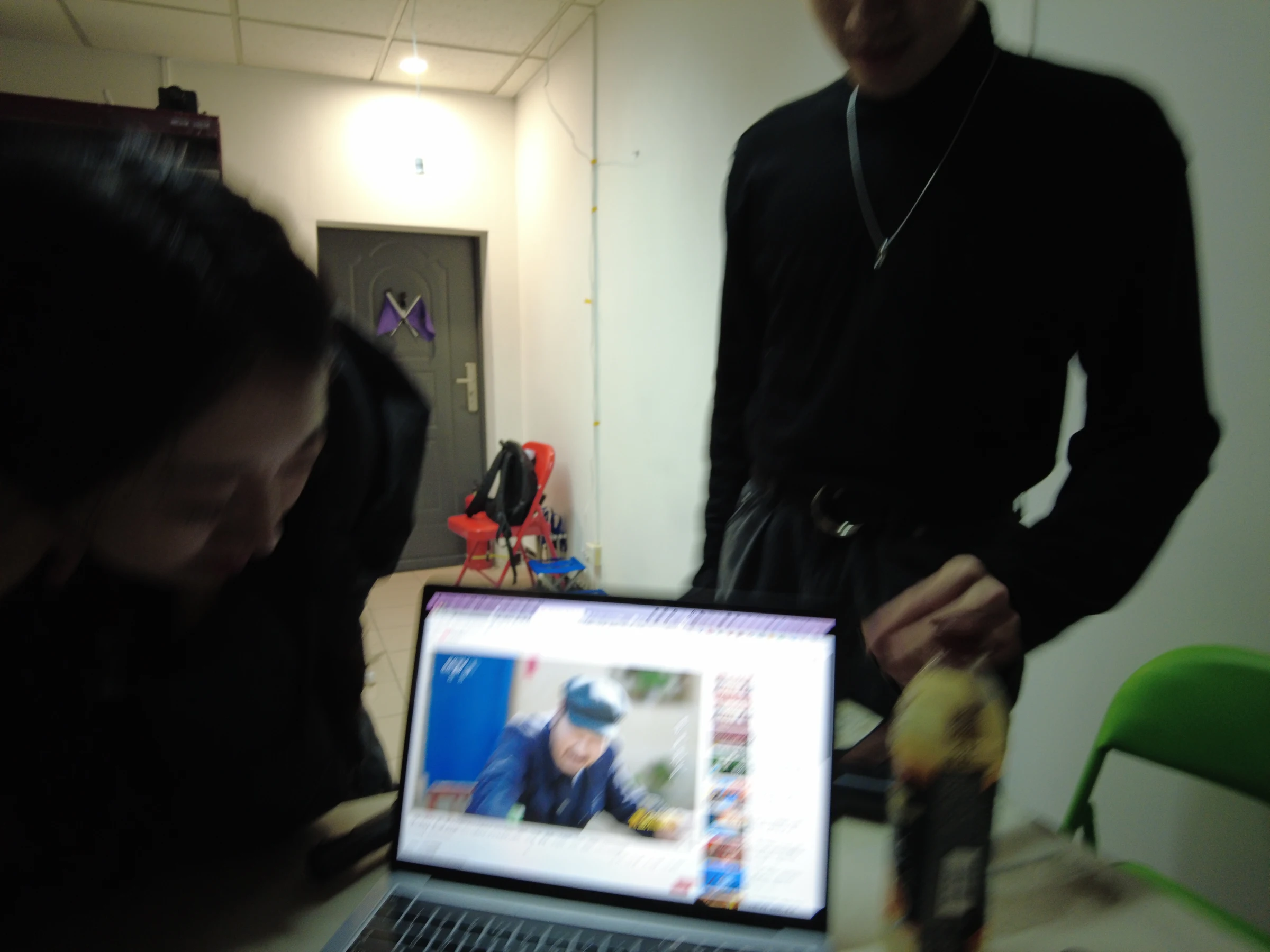
Meetings, rehearsals, location work and edited films remain distinct. A meeting record can be read alongside the public poster without confusing production discussion with the finished film.
8f9fb16e200f98acf6f46a32fde1135.png ↗
FROM HERE, ELSEWHERE
Passages between works
- After moving closer
A small office brings bodies together while making obstruction and yielding space part of spectatorship.
Related records in the archive
- P4 Theater ↗2015–present
- Purples / Purple Action ↗2021