LINE OF INQUIRY 02 / 07
Who decides
How do open rules still distribute power?
Letting something happen still requires someone to choose materials, set a scope and end a round. Following these decisions gives openness a concrete meaning.
01 / EDITORIAL ARGUMENT · 2026
Reading through this question
From ordering by file size and assigning values to points to selecting footage, arranging seats and fixing a performance date, rules have makers and working conditions. Photographs and models cannot answer a demand as collaborators can. The question therefore has two parts: who establishes the conditions, and who can change them once established? Read operational records alongside what happens when a rule encounters another person.
02 / THE ARTIST LOOKS BACK · ESSAY SUPPLIED IN 2026
These complete passages are from He Fa’s How Does a Hole Become a Theatre?, supplied on 16 September 2026. They are later reflections, to be read alongside records made within the works.
P4U was another social practice project initiated by P4. Gather a group of strangers and make a play in a month. Everyone could propose ideas and change their minds, but the date of the public performance wouldn’t move back with them. Whether a scene stayed, who made a gesture, when a discussion stopped: decisions had to be made. We couldn’t leave those decisions to a blank programme.
Editorial noteThe month and the public performance date are concrete constraints. Openness does not remove the power to select or end a discussion.
When I made collages, people would say it was close enough, but I kept moving things. Some things really did only appear later. Others didn’t. Next time, I still wouldn’t stop any sooner. In rehearsal, if I try once more, the other person has to give that time again too. Once we’ve said “co-creation”, it has to be their turn to push a sentence back at me, to alter an arrangement I’ve already made. It’s perfectly possible to listen, nod, keep rehearsing, and leave everything as it was.
Editorial noteThe artist proposes a test: does another person’s response actually change the arrangement, rather than merely receive a hearing?
03 / WORKS AND PERIOD RECORDS
Return to the works and records
- Twelve Water Lamps: model, shade and lamp holder ↗
Assigning values is followed by thickening, repair and assembly. Formulae do not complete the physical object. The work belongs to the studio’s collaborative practice, with He Fa contributing photography, conceptual development and artistic direction.
- YourTube: retained installation and playback instructions ↗
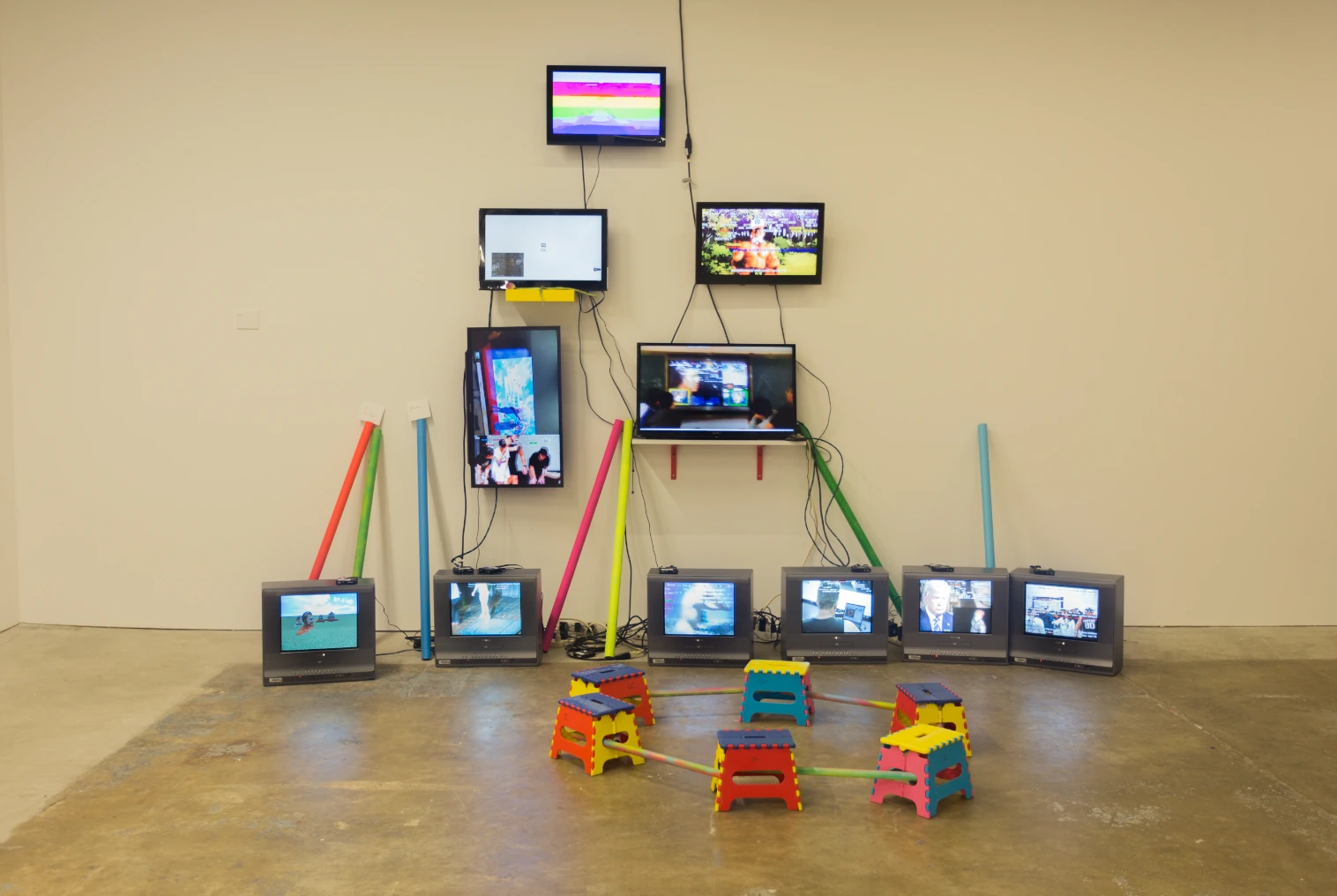
Cabling, remotes, media players and MP4 files are actual operating conditions. They do not establish live network interaction.
Works and writing
Follow works back to signed texts, with writing at the time, later reflection and participant accounts identified separately.
A Recruitment Text for Human Surrender
Reading connectionIn the 2023 recruitment text, He Fa proposes three filming arrangements: a stage long take, following performers into daily life and recording a real public performance. This initial plan shows the film beginning to gather people, assign roles and leave room for the unforeseen, with filming already part of rehearsal and shared time.
Related works: Human Surrender / Shoot Self with You
Theatre and Fear: Personal Chronicle — Offering Our Future
Reading connectionThe 2023 Personal Chronicle manifesto connects a long interview, a circulation edit, project initiation and a public presentation through explicit agreements. Recounting a past becomes a starting point for inviting others into future action. The rules also address when recording begins and ends, and how relationships within creation remain distinct from daily life.
Related works: Personal Chronicle / PHA · P4 Theater
3P Open Call: Witnessing and Recording the Eighth P4U Project, Kill the Rose
Reading connectionThe 2021 3P call invites observers into the making of Kill the Rose. It proposes following the process, publishing during the production period and exhibiting alongside the performance, while leaving ownership for members to discuss. Looking, performing and recording alternate within these rules as observers prepare to make their judgments public.
Related works: Kill the Rose: 3P—Watching, Performing, Recording
A Future That Seems Both True and False
Reading connectionFrom Shixiang’s photographic research to open-call productions such as Cocoon, He Fa’s 2021 account describes the labour of providing space, practical support and temporary teams. He also acknowledges how his own judgments can redirect work and bring compromise or hurt. The theatre’s aspirations sit beside the decisions required to sustain it.
Related works: P4 Theater · Shixiang · Cocoon
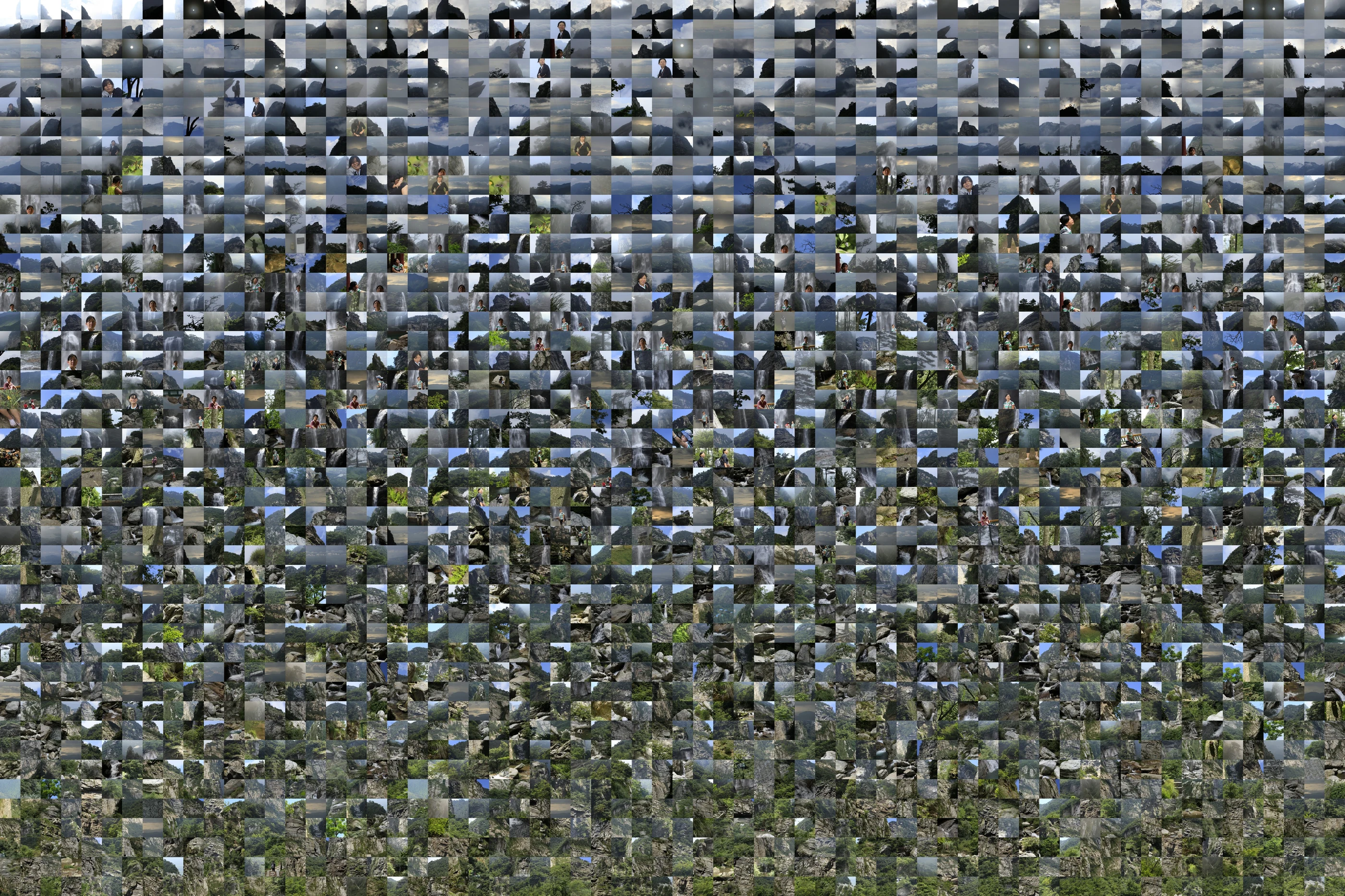
2013 · Archival inkjet print
Cocktail ↗
WHAT CHANGES HERE
File size replaces depicted meaning as the ordering rule; that replacement remains an artistic decision.
Artist: He Fa
What landscape appears when file size sets the order?
Cocktail brings a usually hidden technical property forward. A photograph depicts something and occupies a number of bytes. That value depends on image information and compression conditions; it is not the actual weight of a natural scene. Once assigned an ordering task, however, it determines which photographs become neighbours. A machine-readable difference becomes a visual difference that viewers can read as sky, ground, settling or floating.
Continue the close reading ↗2012–2013 · Co-creation, 3D printing and product design
Gewu Studio / Twelve Water Lamps ↗

WHAT CHANGES HERE
Rules can generate many forms, but production must fix one of their possible moments.
He Fa: photography, conceptual development, form exploration and artistic direction; collaborative studio practice
When water is preserved, is it a shape or a way of changing?
The lamps make something that cannot stop into an object that can be held, lit and placed. The crucial change is not the application of a water motif to a lampshade. Flow enters curvature, openings and thickness; transmitted light lets a solid be read as movement again. The viewer’s relation changes too. Painted water is viewed, while a lamp enters the scale of use. It is seen and illuminates other things, helping to form an environment.
Continue the close reading ↗2013–2014 · Archival inkjet print
Wu ↗

WHAT CHANGES HERE
Free growth takes place within an already chosen landscape composition.
Artist: He Fa
Within whose chosen frame does free growth occur?
Wu does not name a tidy style. Different objects enter experiments in repetition, division, blur and recombination, while the title suspends the usual job of defining an image. Two actions in one statement deserve attention: choosing a familiar landscape composition and then letting photographs grow freely. The frame has already made a decision; the fragments can still produce something unknown. This is not a contradiction to explain away, but a condition through which the work operates.
Continue the close reading ↗2018 · Multi-screen video installation
YourTube ↗
WHAT CHANGES HERE
Choosing which screen to watch differs from choosing what the screens show.
Artist; graduate thesis work
Do shared seats and visible comments already make a “we”?
One structure directs attention toward screens; another joins seats into a ring. Their centres differ. I can sit beside you while everyone watches a different screen, or share an image without knowing how my neighbour understands it. Exposed cables make equipment connections visible, and tubing physically joins the furniture. Those material connections cannot testify on behalf of human relations. The installation gives form to the distance between being connected and understanding one another.
Continue the close reading ↗2021–2023 · Interactive theatre, a voting game and a transcript archive
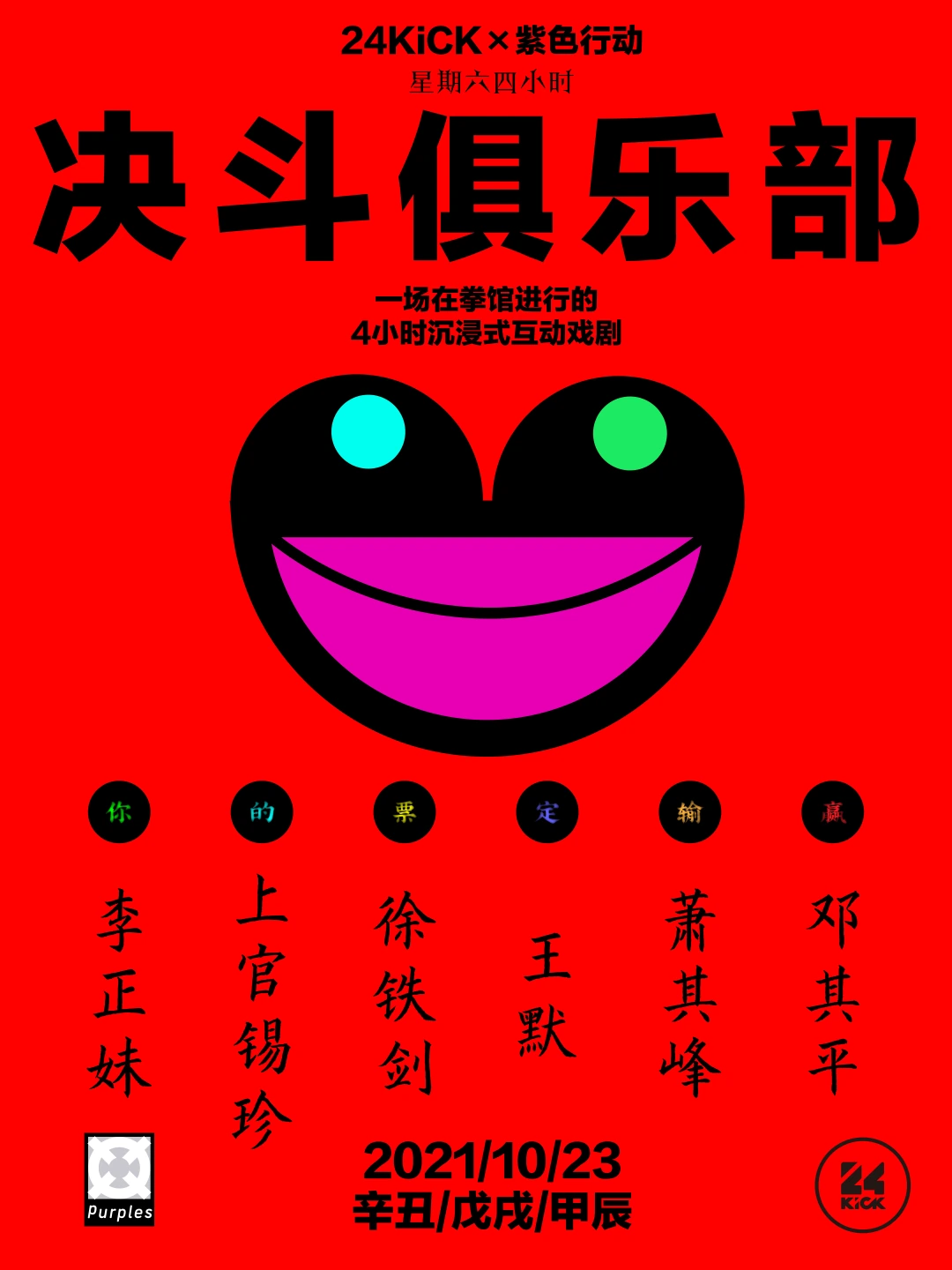
Saturday Four-Hour Duel Club ↗
WHAT CHANGES HERE
Voting lets spectators decide who stays; the countdown and elimination system determine what kind of decision they can make.
Purples co-initiation and collaborative development of its game models
What changes when the audience can vote—and what stays?
The ring borrows the space of competition and turns the contest toward securing support. Performance, lived experience, persuasion and audience judgment share a limited duration. This is not a simple advance from passive watching to active participation. Voting has consequences, but elimination restricts those consequences to staying or leaving. Spectators judge while fighters must keep seeking retention. The difference between these positions becomes materially visible in scales and a countdown.
Continue the close reading ↗ANOTHER QUESTION STARTS HERE