LINE OF INQUIRY 03 / 07
Meaning on the way
What remains when something passes into another medium?
Translation makes new relations and leaves things behind. Comparing these processes need not assume an original meaning that can be completely recovered.
01 / EDITORIAL ARGUMENT · 2026
Reading through this question
This path follows differences left when material passes into another medium. Central borrows a spatial placement from a relief; the lamps carry water imagery into points and physical thickness; Hamlet’s Mirror brings bodies into projected images; Fafalish passes words through accent and transcription; YourTube places imagery among screens and seats. These are not one translation algorithm. Each transition asks what travels, what remains and who acts within it.
02 / THE ARTIST LOOKS BACK · ESSAY SUPPLIED IN 2026
These complete passages are from He Fa’s How Does a Hole Become a Theatre?, supplied on 16 September 2026. They are later reflections, to be read alongside records made within the works.
Later, I developed this work into “fafalish”, embracing mistaken recognition, misreading and the drift of signs, letting writing become sound and return another way. This too was collage. Cut up, turn around, contaminate those old positions: once the earlier words were no longer where they had been, new meanings could emerge. My accent was still in there. The mistakes came along too. No starting over. I carried all of it and kept going.
Editorial noteThe artist links Fafalish and montage in this 2026 reflection. The actual 2017 procedure still requires the period exhibition record.
Some things can’t be said directly. Others have been said so many times that, at the opening words, the other person already knows how to shut themselves off. Borrow a role, take a line you didn’t write, and you might get around that. You speak someone else’s lines and discover for the first time: I can face you this way too.
Editorial noteSpeaking through another person’s lines can be compared with transcription, but this passage does not identify a particular performance as the same experiment.
03 / WORKS AND PERIOD RECORDS
Return to the works and records
- Fafalish: Chinese, English, accent and new characters ↗
Retain the transcriber’s identity: the record describes He Fa writing down the pinyin he hears, rather than attributing every shift to someone else’s mishearing.
- FakingAosome and the work’s period ↗
Keep the work’s date separate from the 2016 proposal. The co-creators are He Fa and Zhang Aoshuang.
Works and writing
Follow works back to signed texts, with writing at the time, later reflection and participant accounts identified separately.
Imaging with You: The Unowned Second Person and Non-Sovereign Spectatorship in Human Surrender / Shoot Self with You
Reading connectionIn this 2026 study, He Fa follows close views of eyes, cameras caught on camera and end-credit archives to ask what position proximity and replay give the viewer. The two titles open another route: shifts between self and you lead back to particular bodies, voices and moments of waiting.
Related works: Human Surrender / Shoot Self with You
What Is Shixiang?
Reading connectionWhat Is Shixiang? looks back from 2020 at Shanshui and Central, then turns to photographic roles, the naming of I, See, You and publication choices. It proposes eight and a half encounters and imagines a museum holding a thousand people’s traces: retaining images while making room for another meeting.
2013 · Archival inkjet print
Central ↗
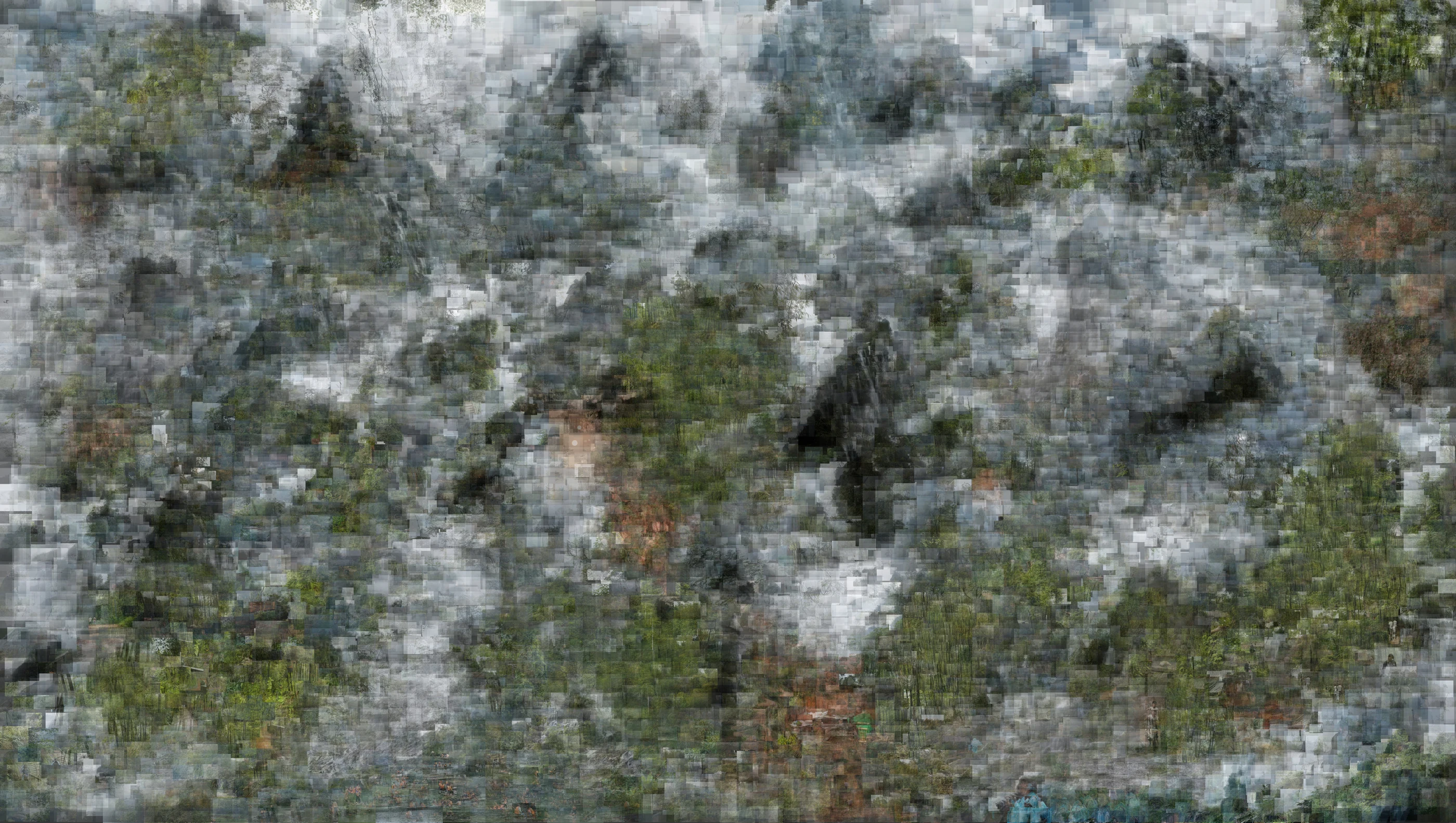
WHAT CHANGES HERE
The sun’s position in a relief enters photography, changing the image’s obedience to geographical placement.
Artist: He Fa
If the sun moves, does photography’s promise change too?
The sun is small, but the decision is large. Placed among the mountains, it becomes a new compositional centre. Photographs with separate origins serve a position that no single exposure witnessed. The work does more than manufacture a digital spectacle. It makes the differing spatial rules of photography and relief apparent: one luminous circle passes between media and changes how an image asks to be believed.
Continue the close reading ↗2012–2013 · Co-creation, 3D printing and product design
Gewu Studio / Twelve Water Lamps ↗
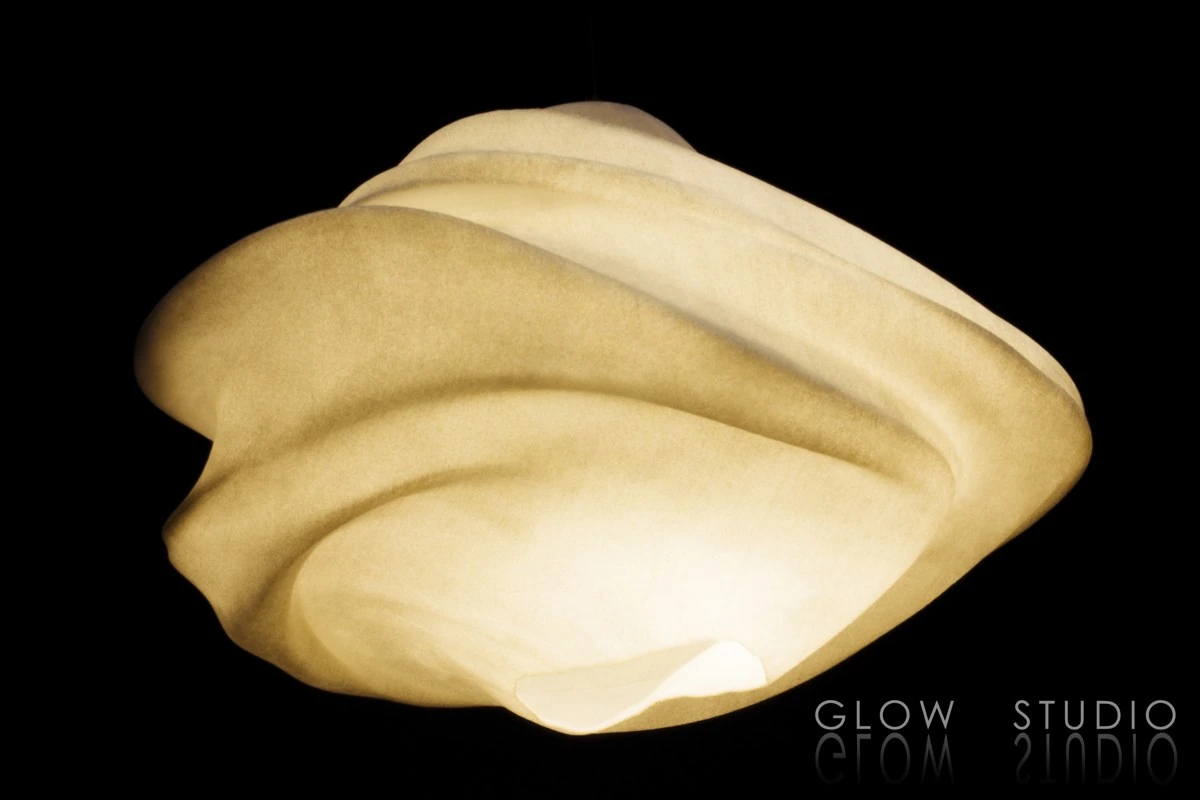
WHAT CHANGES HERE
Painted water enters generative rules and luminous objects: the subject persists while viewing and use change.
He Fa: photography, conceptual development, form exploration and artistic direction; collaborative studio practice
When water is preserved, is it a shape or a way of changing?
The lamps make something that cannot stop into an object that can be held, lit and placed. The crucial change is not the application of a water motif to a lampshade. Flow enters curvature, openings and thickness; transmitted light lets a solid be read as movement again. The viewer’s relation changes too. Painted water is viewed, while a lamp enters the scale of use. It is seen and illuminates other things, helping to form an environment.
Continue the close reading ↗2015 · Moving image and performance
Hamlet’s Mirror ↗
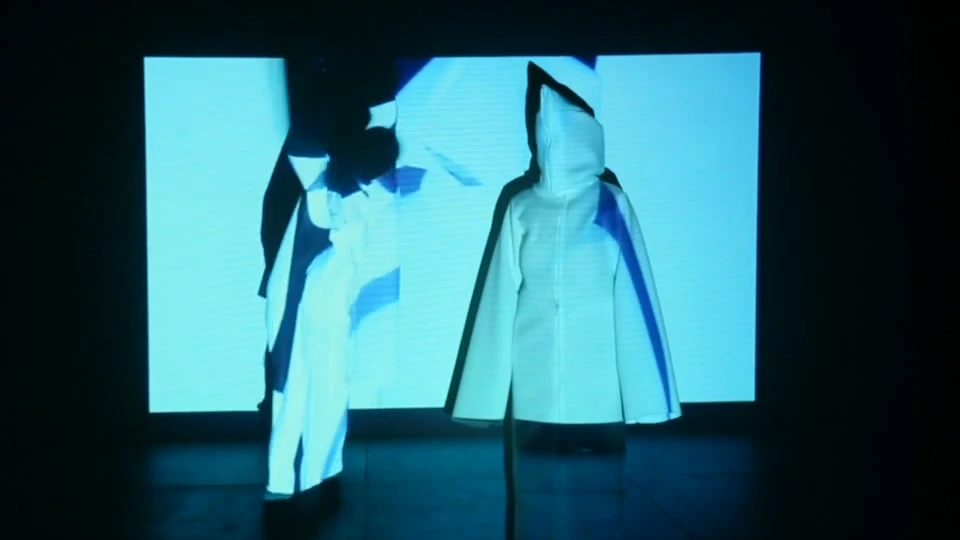
WHAT CHANGES HERE
A dramatic character passes through fragments, projection and bodies, no longer occupying one place.
Co-created by He Fa and Zhang Aoshuang (FakingAosome)
When my image returns to my body, where is the character?
The figure on screen does not remain safely at a distance. When projection returns to the body, the performer carries an earlier self while present movement can block that image. Obstruction can therefore change where a scene takes place. The body is more than an instrument of emotional expression: it is a surface through which images appear, lose coherence and shift position. Viewers continually compare live action, recorded action and the location produced by projection.
Continue the close reading ↗2017 · Language, video, printed text
Fafalish ↗
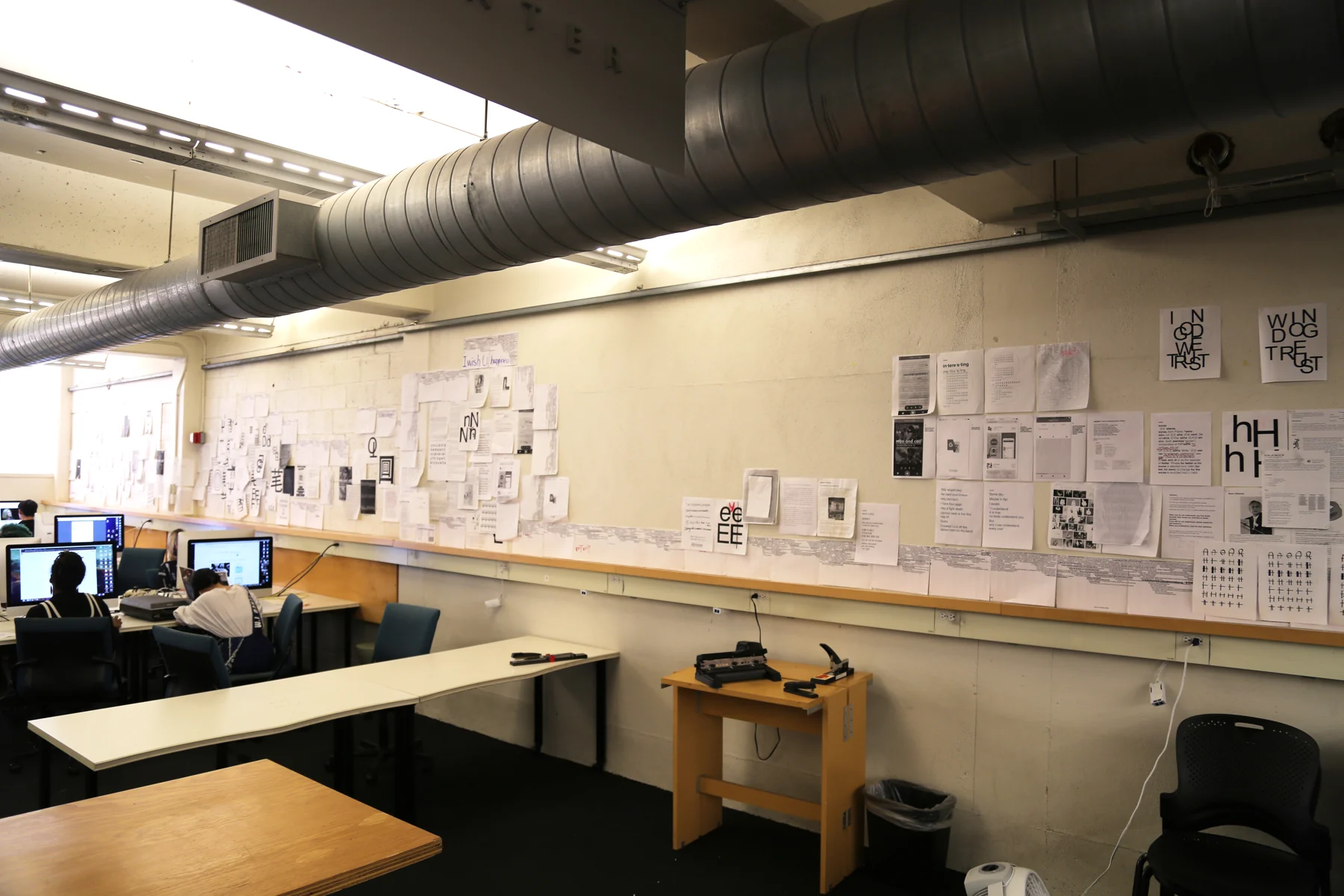
WHAT CHANGES HERE
Poetry, literal translation, accent, transcription and machine translation pass meaning along until error acquires a form.
Artist and exhibition curator
If language cannot return intact, can communication still happen?
A deviation in one conversion becomes the material available to the next. Sound does not simply obey its source text, and written characters cannot guarantee a return to the original. Error is not a residue removed by final proofreading; it is an action that moves the work forward. Accent, guesswork, hearing and software rewrite meaning together. Looking only for what the final sentence means misses the way meaning acquires a body during its passage.
Continue the close reading ↗2018 · Multi-screen video installation
YourTube ↗
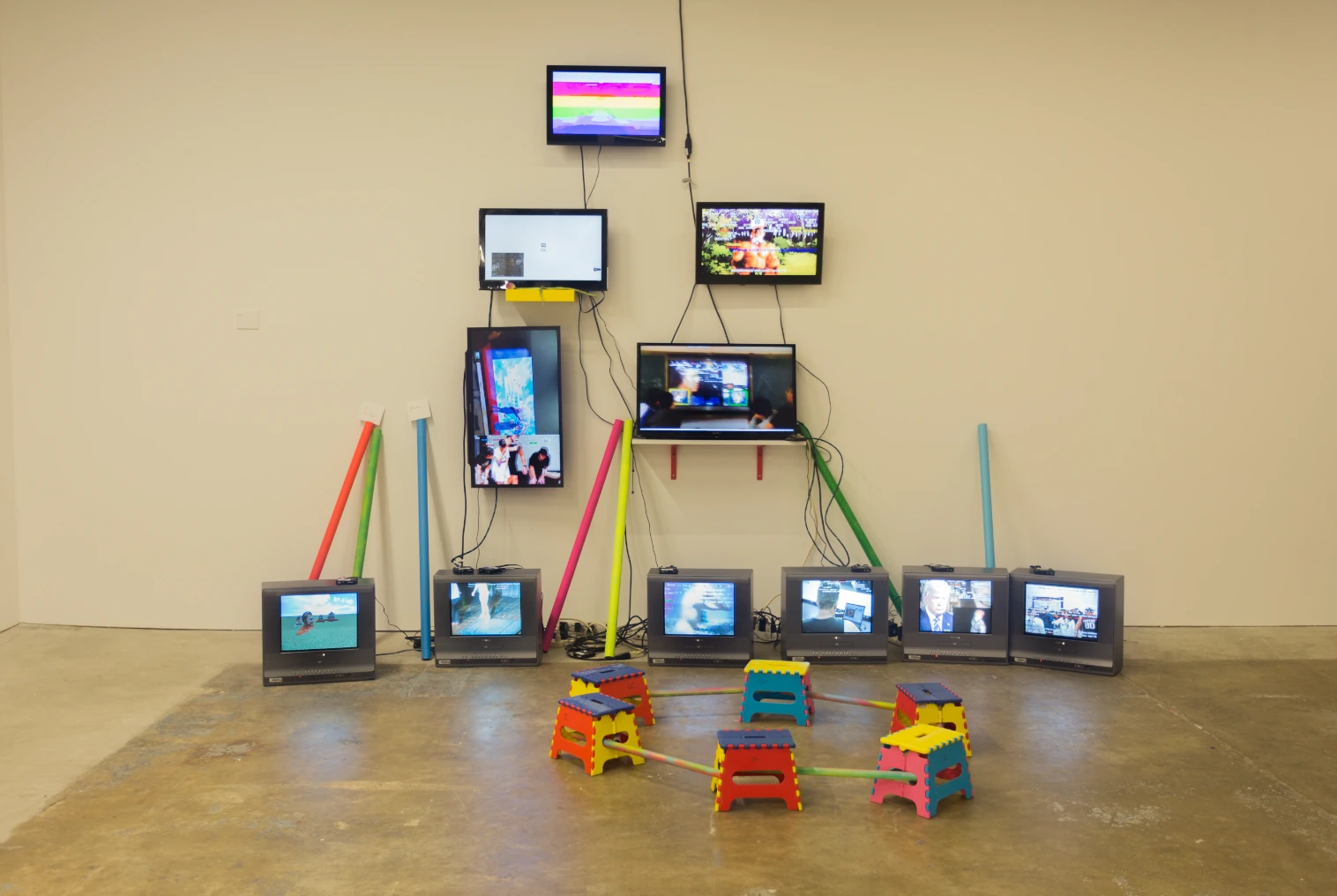
WHAT CHANGES HERE
Editing, phonetic play and on-screen comments rename actions and sounds, reorganizing how they are watched.
Artist; graduate thesis work
Do shared seats and visible comments already make a “we”?
One structure directs attention toward screens; another joins seats into a ring. Their centres differ. I can sit beside you while everyone watches a different screen, or share an image without knowing how my neighbour understands it. Exposed cables make equipment connections visible, and tubing physically joins the furniture. Those material connections cannot testify on behalf of human relations. The installation gives form to the distance between being connected and understanding one another.
Continue the close reading ↗ANOTHER QUESTION STARTS HERE