LINE OF INQUIRY 05 / 07
When another person enters
What can another person change in a shared work?
Being photographed and initiating a project are different forms of participation. Follow the roles, rights and speaking positions through which a “we” forms—and remains divided.
01 / EDITORIAL ARGUMENT · 2026
Reading through this question
Participant is not a single role. A sitter, performer, observer and person initiating a project have different capacities. Shixiang alternates photographing and looking; 3P’s recruitment rules propose observation and publication within an unfolding event; Personal Chronicle invites a narrator to initiate further action. The comparison concerns who can change a process, decide publication, leave an account of their own or depart, rather than how many people participate.
02 / THE ARTIST LOOKS BACK · ESSAY SUPPLIED IN 2026
These complete passages are from He Fa’s How Does a Hole Become a Theatre?, supplied on 16 September 2026. They are later reflections, to be read alongside records made within the works.
Shaohua worked mainly on the shoots; I was more involved in the structure, discussions and looking at the photographs. When people arrived, we didn’t hurry them in front of the camera. We spent time together, talked, then moved onto the stage and into the shoot. Some told stories from their lives. Some asked the photographer questions. Others said nothing for a long time. We photographed many people, and each shoot took an entire day. The ritual was long. Film develops quickly. People are slow.
Editorial noteThe artist distinguishes Zhang Shaohua’s on-site photography from his own structural, discussion and viewing roles. Collaboration cannot be compressed into undifferentiated authorship.
She said that, when a question came, she might not know the answer yet herself. Shaohua asked another way. She went on to talk about the relationships between people and their roles, and the ways they were out of step.
Editorial noteA different question elicits another response. This is the artist’s account of the exchange, not a fabricated complete transcript of the performer’s independent testimony.
03 / WORKS AND PERIOD RECORDS
Return to the works and records
- 2021: the observer includes themself in the system ↗
Read alongside the period recruitment rules, which propose recording and publication before the event is over. Actual publication records are needed to establish how often this happened.
- Yuyu Yumu: from Personal Chronicle to shared writing ↗
Retain the participant’s byline and writing rather than treating the project only as an organizer’s methodological achievement.
- Photographer and sitter: publication choices ↗
Place publication decisions beside the viewing relationship so that emotion does not eclipse choice.
Works and writing
Follow works back to signed texts, with writing at the time, later reflection and participant accounts identified separately.
P4 Theater: A University in the Making, a Winding Labyrinth, a Hard Drive Inscribed with Life
Reading connectionIn 2024, He Fa revisits the studio’s conversion into a theatre, the move to a small office and cameras entering collaborative rehearsal. From Iceberg to Human Surrender, the size of a room, bodily distance and ways of filming affect one another. This retrospective returns the works to their spaces and collaborations.
Related works: P4 Theater · Iceberg · Human Surrender / Shoot Self with You
On Burning the Moon, on What Love Is, and on Illusions of Brokenness and Wholeness
Reading connectionXu Shuai connects these works through his involvement in Human Surrender and the production retitled from Burning the Moon to Breaking the Moon. Written before the 2023 performance, He Fa’s account follows changing personnel and rehearsal schedules toward the anticipated 16 December presentation, while the work is still taking shape.
Related works: Breaking the Moon · Human Surrender / Shoot Self with You
P4’s Final Chapter: The Last Rehearsal — Love, Death and Human Surrender
Reading connectionThe 2023 announcement links writings by performers, a documentarian and musicians, alongside plans to record the public event for the film. Following these links back from the film reveals how different people prepared for the same gathering. The invitation, their individual voices and the later images remain available together.
Related works: Human Surrender / Shoot Self with You
Open Call: Step Outside the Everyday
Reading connectionCo-signed by Yuyu Yumu and He Fa, the article moves from a Personal Chronicle interview to Yumu’s own Thirty-Three Lives proposal. She seeks eight collaborators to write fictional lives spanning more than two thousand years. The person being recorded issues a new invitation, preparing to initiate a shared writing project.
Related works: Personal Chronicle / PHA
Theatre and Fear: Personal Chronicle — Offering Our Future
Reading connectionThe 2023 Personal Chronicle manifesto connects a long interview, a circulation edit, project initiation and a public presentation through explicit agreements. Recounting a past becomes a starting point for inviting others into future action. The rules also address when recording begins and ends, and how relationships within creation remain distinct from daily life.
Related works: Personal Chronicle / PHA · P4 Theater
P4 Theater: Past, Present, Future, 510
Reading connectionLooking back in 2022, He Fa returns to Shadow Counterpoint and Hamlet’s Mirror, then recounts a separation between collaborators and the restart at 510. A few chairs, two desks and a small office provided conditions for work such as Iceberg to continue. Moves, collaborations and repeated beginnings connect the productions.
Related works: P4 Theater · Shadow Counterpoint · Hamlet’s Mirror · Iceberg
3P Open Call: Witnessing and Recording the Eighth P4U Project, Kill the Rose
Reading connectionThe 2021 3P call invites observers into the making of Kill the Rose. It proposes following the process, publishing during the production period and exhibiting alongside the performance, while leaving ownership for members to discuss. Looking, performing and recording alternate within these rules as observers prepare to make their judgments public.
Related works: Kill the Rose: 3P—Watching, Performing, Recording
A Future That Seems Both True and False
Reading connectionFrom Shixiang’s photographic research to open-call productions such as Cocoon, He Fa’s 2021 account describes the labour of providing space, practical support and temporary teams. He also acknowledges how his own judgments can redirect work and bring compromise or hurt. The theatre’s aspirations sit beside the decisions required to sustain it.
Related works: P4 Theater · Shixiang · Cocoon
Sixteen Days and Nights at P4: The Cocoon Performance
Reading connectionWritten before Cocoon’s 2020 performance, this account moves from scheduling into continuous rehearsal. Falls, fatigue, lateness and mutual judgments share the same days as performing, lighting, documentation and publicity. Alongside stage images, the article records how bodies bear the work of production and how many people prepare a single performance.
Related works: Cocoon
What Is Shixiang?
Reading connectionWhat Is Shixiang? looks back from 2020 at Shanshui and Central, then turns to photographic roles, the naming of I, See, You and publication choices. It proposes eight and a half encounters and imagines a museum holding a thousand people’s traces: retaining images while making room for another meeting.
2019–2020 · Photography theatre
Shixiang ↗
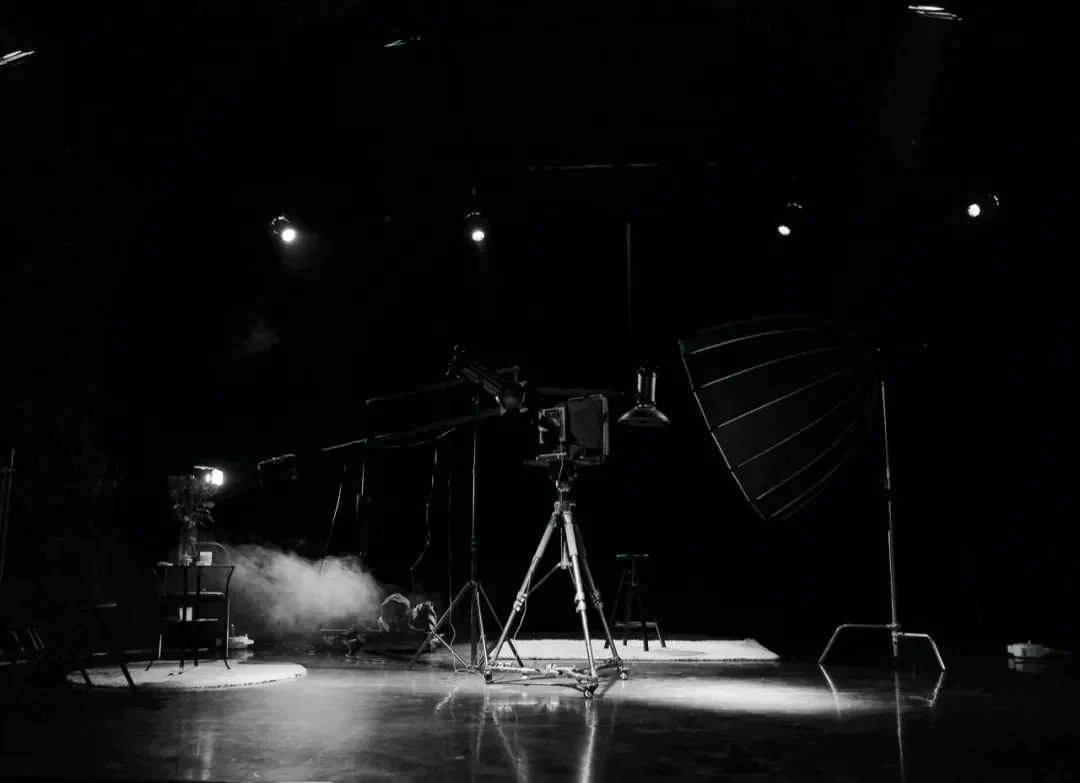
WHAT CHANGES HERE
The sitter offers more than a face and retains a decision about publication.
Collaboration with Zhang Shaohua; theory, structure, framework and interpretation
After the portrait is made, what position remains for its subject?
An ordinary portrait session often ends when the photograph is delivered. Shixiang instead makes the previous photograph the starting point for another meeting. A person faces a preserved self again, recognizing it or finding it strange. A fixed image and an ongoing life occupy the same structure. Meeting again neither updates the earlier photograph nor guarantees acceptance of its interpretation. Photography extends from taking an image into a relation that requires further response.
Continue the close reading ↗2020 · Dance theatre and collective production
Cocoon ↗
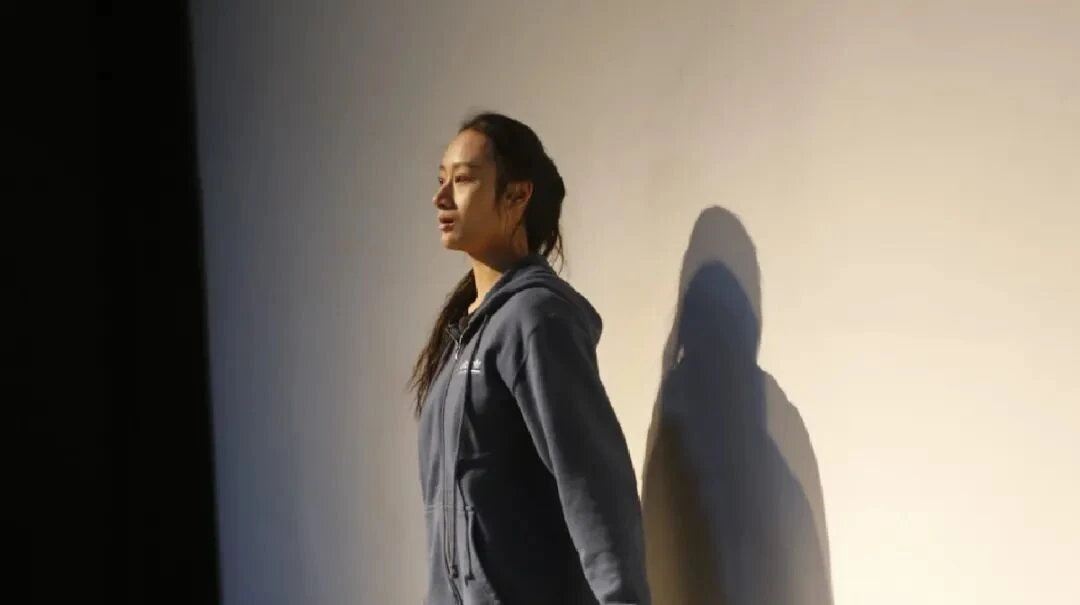
WHAT CHANGES HERE
Director, performers, documentarians and organizers work to the same date; equality of voice does not automatically equalize their burdens.
Production and organisational collaboration, signed writing and participation in backstage interviews
Whose bodies and time make the event possible?
This dance-theatre work cannot be understood only through attractive performance images. The contemporary text records repeated falls on a slippery stage, lateness, fatigue, injury, hunger and mutual judgments. These are not irrelevant matters outside creation. Whether a body can continue, and how members allocate time from their lives, directly determine what the evening can contain. Collective intensity has a specific process of production; final excitement cannot by itself establish a liberation shared by everyone.
Continue the close reading ↗2021 · Theatre event, 3P creative observation and exhibition proposal
Kill the Rose: 3P—Watching, Performing, Recording ↗
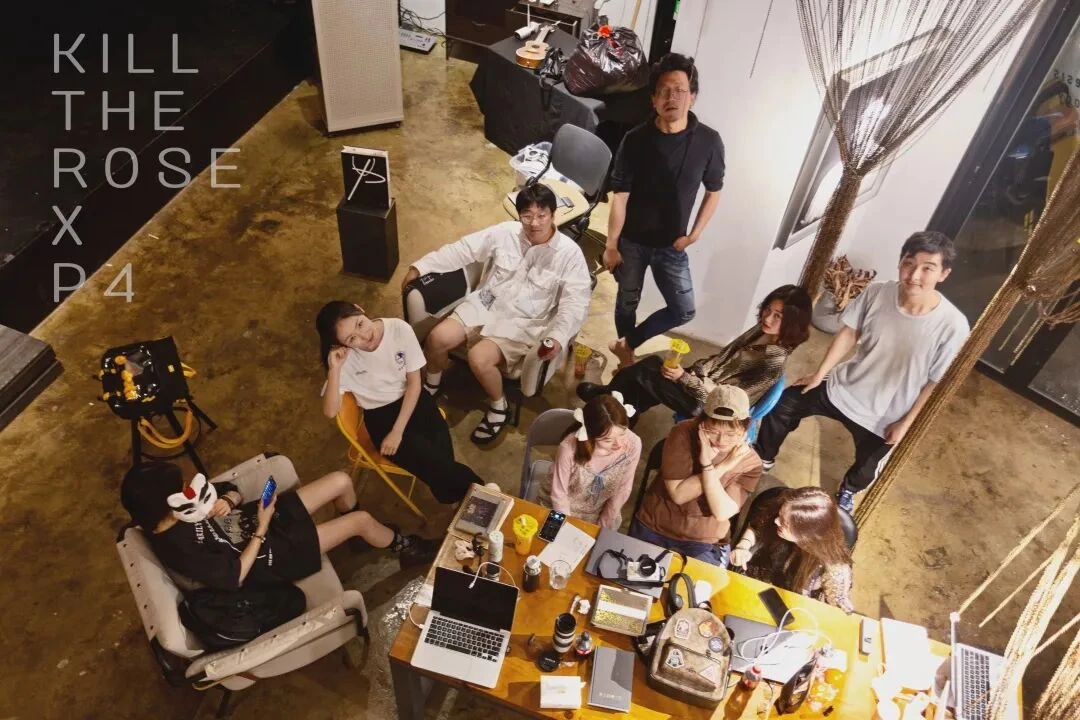
WHAT CHANGES HERE
Observers join work in progress and affect it through concurrent publication.
3P group creator; author of the 3P recruitment text
What happens to an event when its record is published before it ends?
3P does not wait until the play is finished to certify that it happened. Observers enter rehearsal, interviews and conversations and publish during the same production cycle. A remark can already have been read, judged and brought back into the room before opening night. Documentation is not merely the event’s later shadow: it becomes a condition of its continuation. Photography, writing and performance cross one another through an actual rhythm of publication.
Continue the close reading ↗2023 · Collective puppet-making, role play and an evolving theatrical environment
Happiness Kingdom ↗
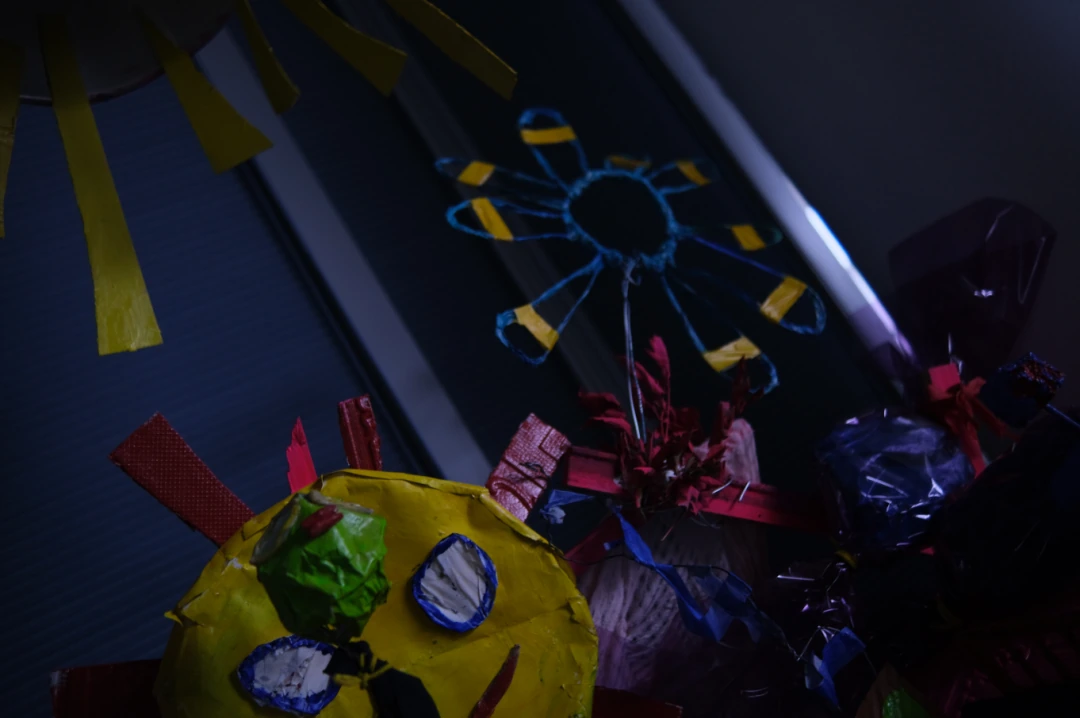
WHAT CHANGES HERE
Participants make figures, bring gifts and enter roles; different authors keep adding to the world.
Co-design of formats, rules and models, and organisation through P4
Does making a character change how one can enter a story?
A world begins with a small object made by hand. A figure’s personality is not prewritten in a hidden database; paper and clay can change the character its maker imagines. Gifts, conversation and games then carry those identities into exchanges among people. Making objects and making theatre are not separate categories here. A thing is made, acquires a name and relations, and becomes something another person can answer when entering the story.
Continue the close reading ↗2023 · Interview archives, collective creation and public documentation
Personal Chronicle / PHA ↗
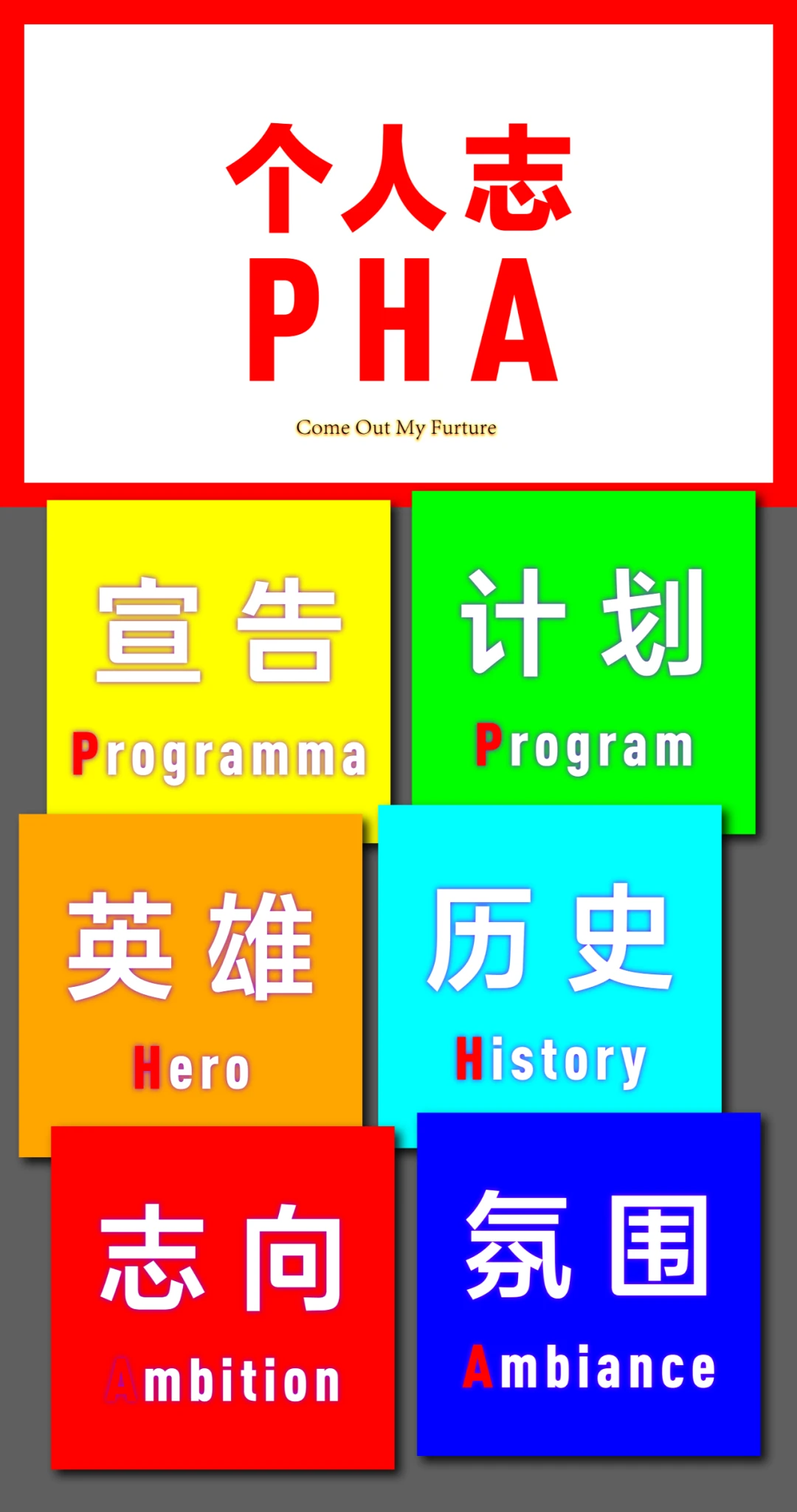
WHAT CHANGES HERE
The interviewee can go on to initiate a project, moving from the subject of an account to the initiator of an action.
Author of the framework and declaration; P4 project organisation
How can recording a person enable them to initiate something?
Personal Chronicle removes life-writing from the résumé’s retrospective format. A narrated past and a desired future share an interview. The record need not merely certify a finished history; it can supply material for a new invitation. Someone listened to by a camera can then become someone inviting others to act. The important shift is this exchange of positions, not an assumption that a long interview is inherently truer than a short video.
Continue the close reading ↗ANOTHER QUESTION STARTS HERE