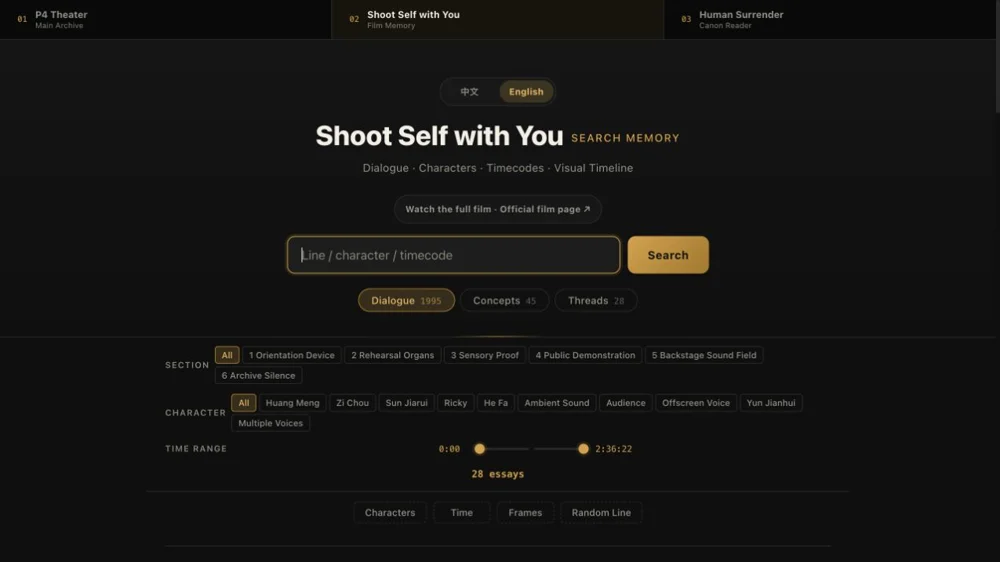
Site interface · September 2026
Film · dialogue & images
Shoot Self with You · Human Surrender
Return to the film through dialogue, characters, timecodes and stills; follow a sentence back to its image.
sswy.p4theater.cn · Chinese / English
A FILM · 2023–2024
Human Surrender · 人类投降派
The full film plays on YouTube. If it cannot load on your network, use the official screening page or Vimeo.
A film taking shape through rehearsal and life together.
Approx. 156 min · English subtitles
He Fa: Initiator, producer and editor; direction and screenplay collectively created by the crew
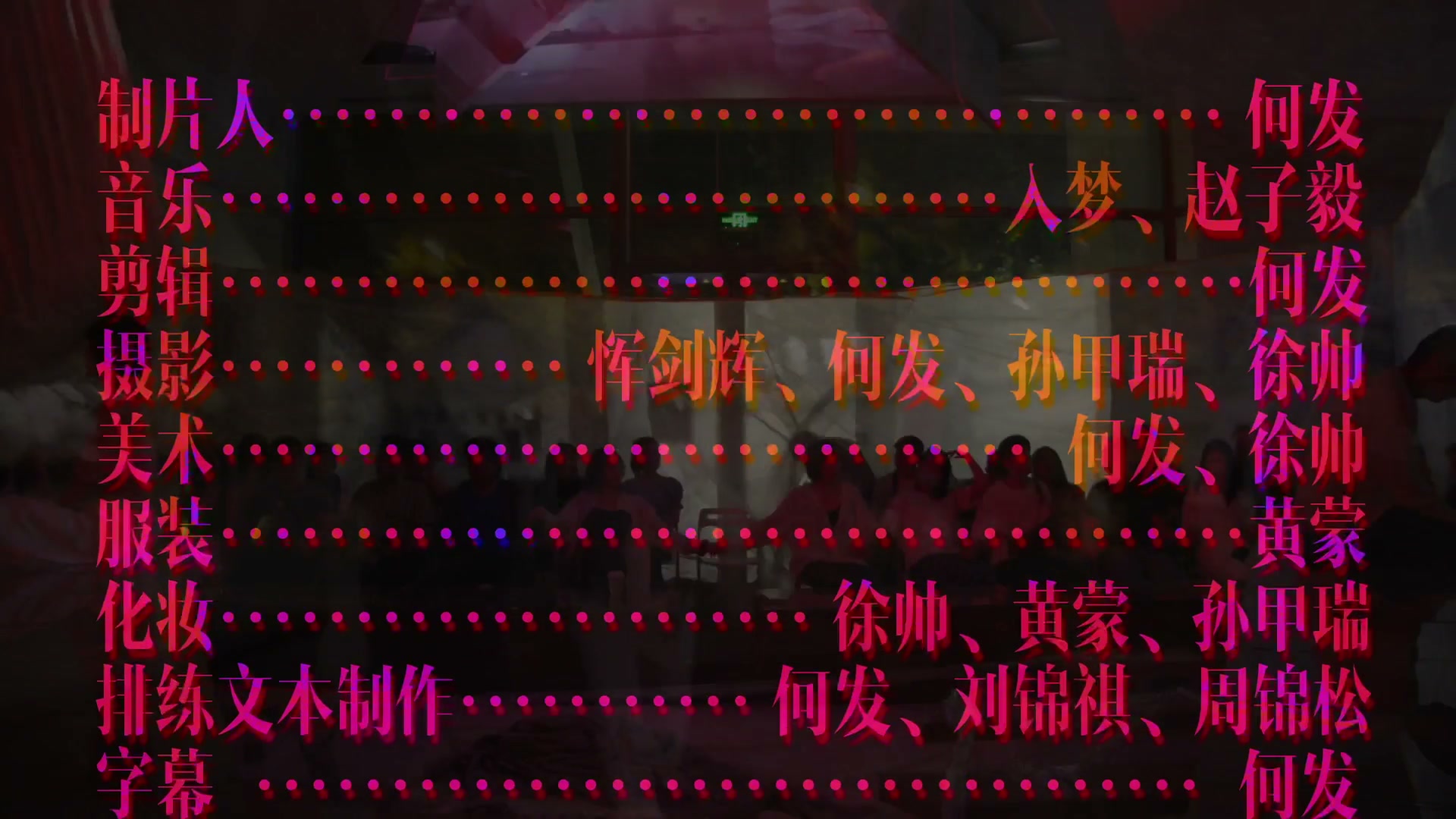
Original end credits ↗
Theatre, bodies, overlapping images and people looking. Return through moments held in the film.
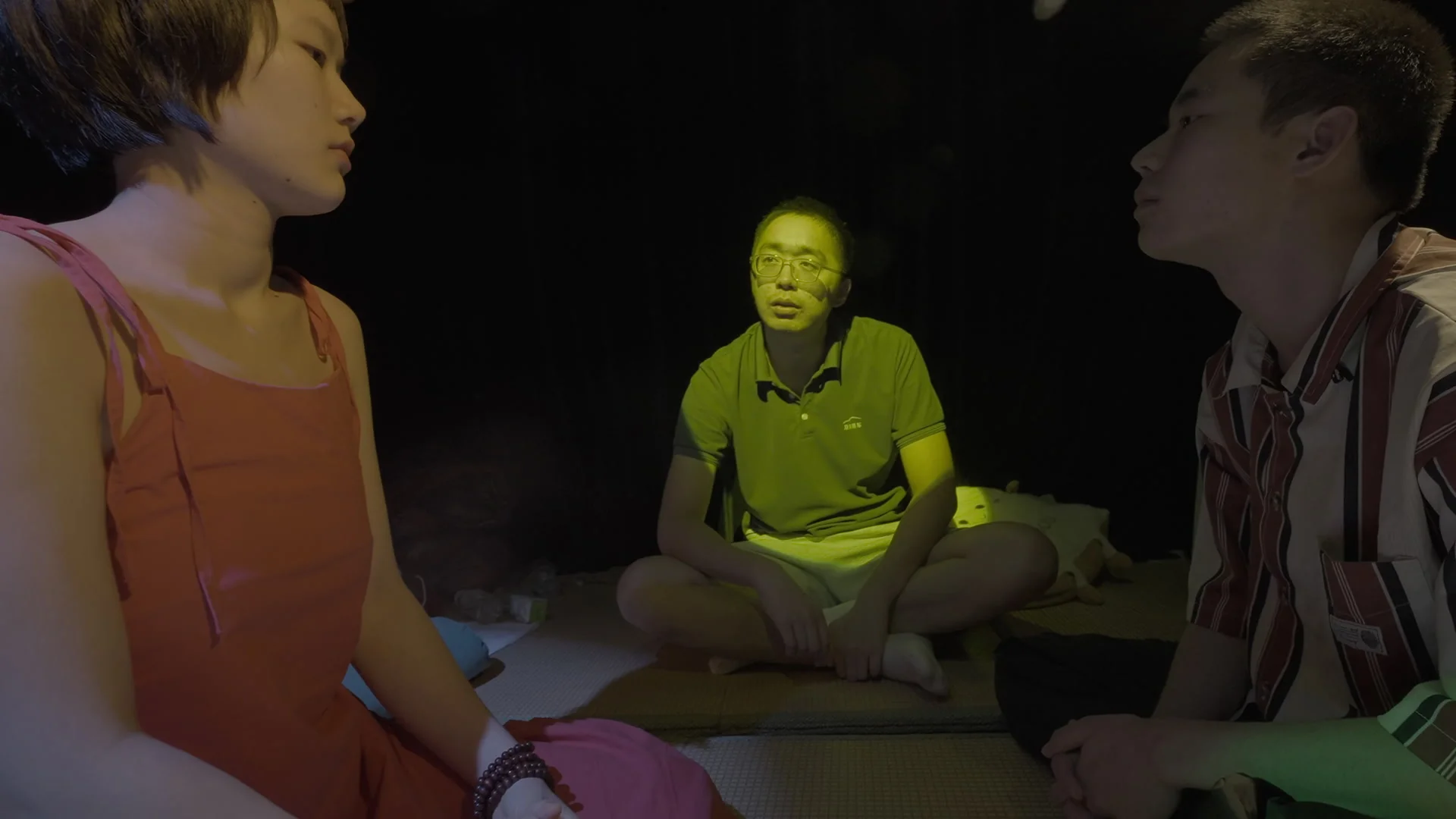
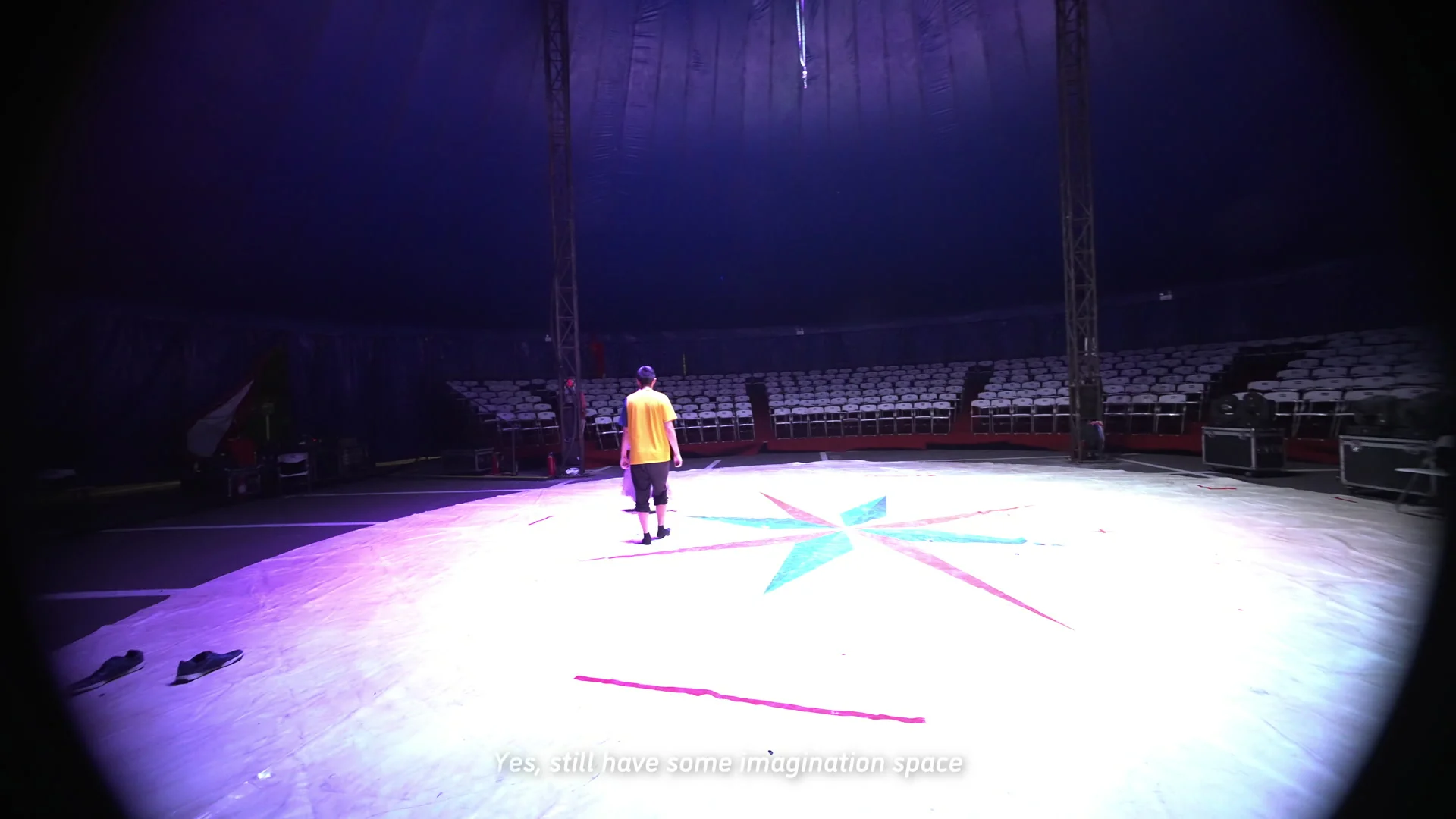
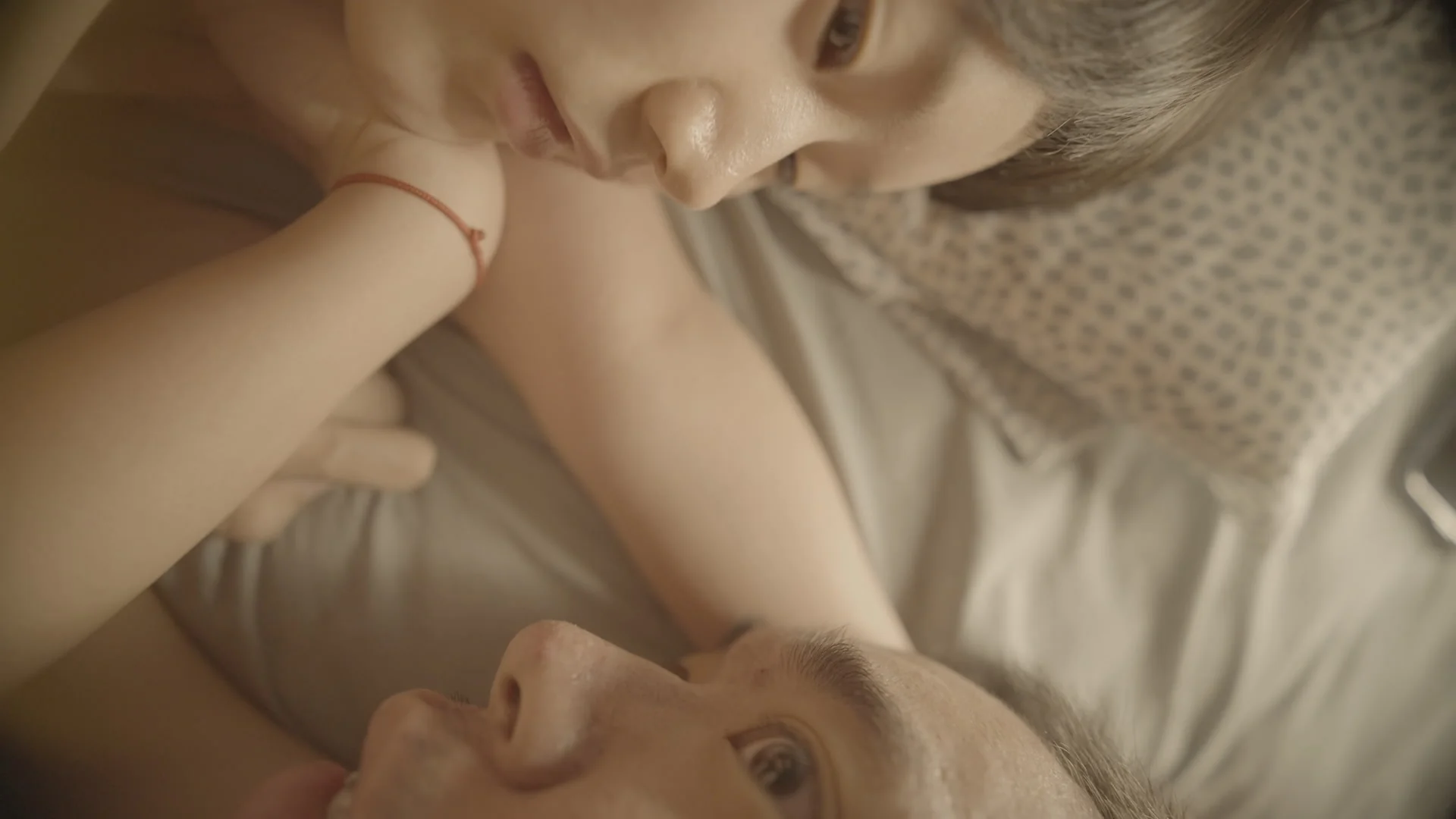
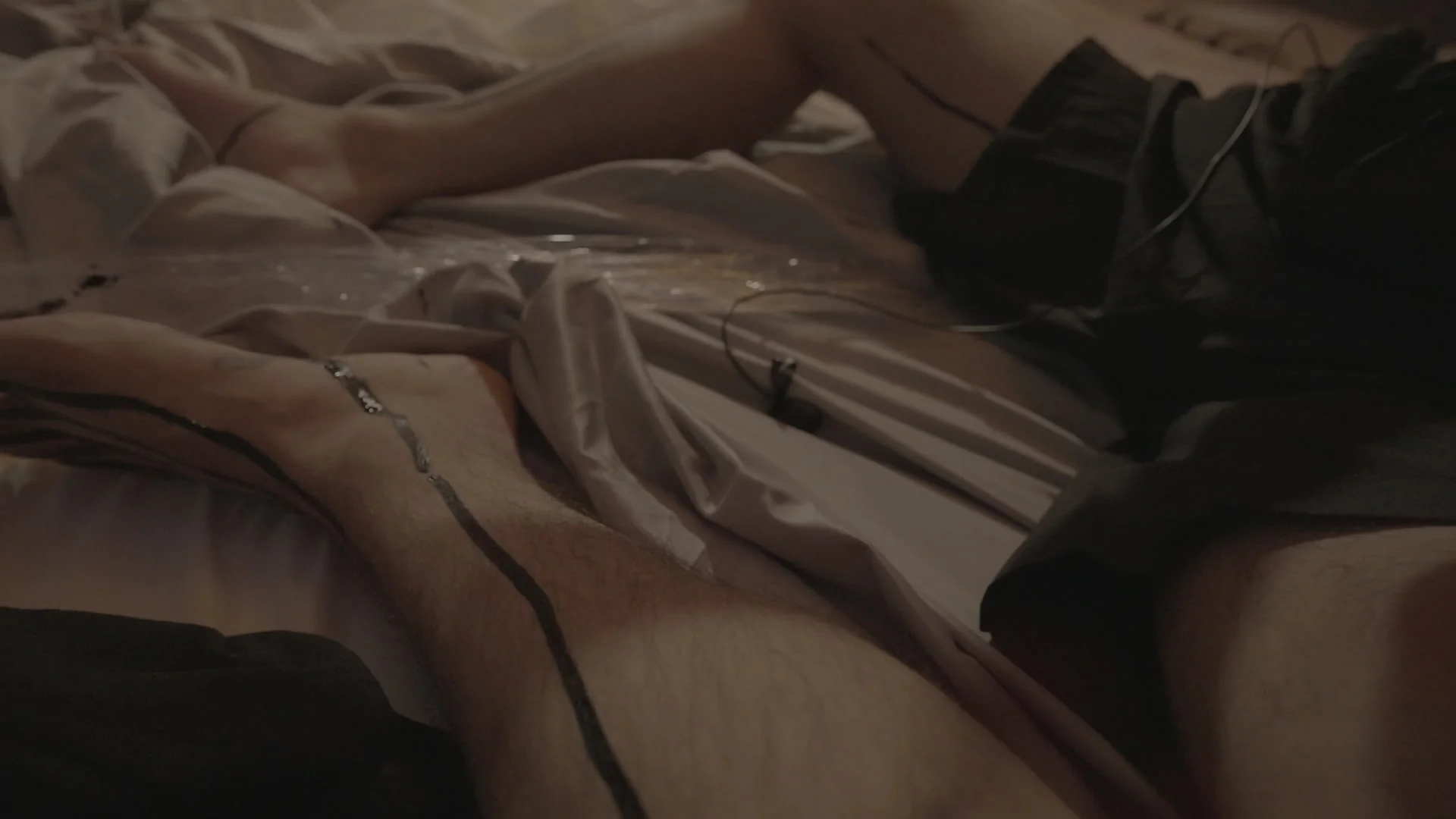
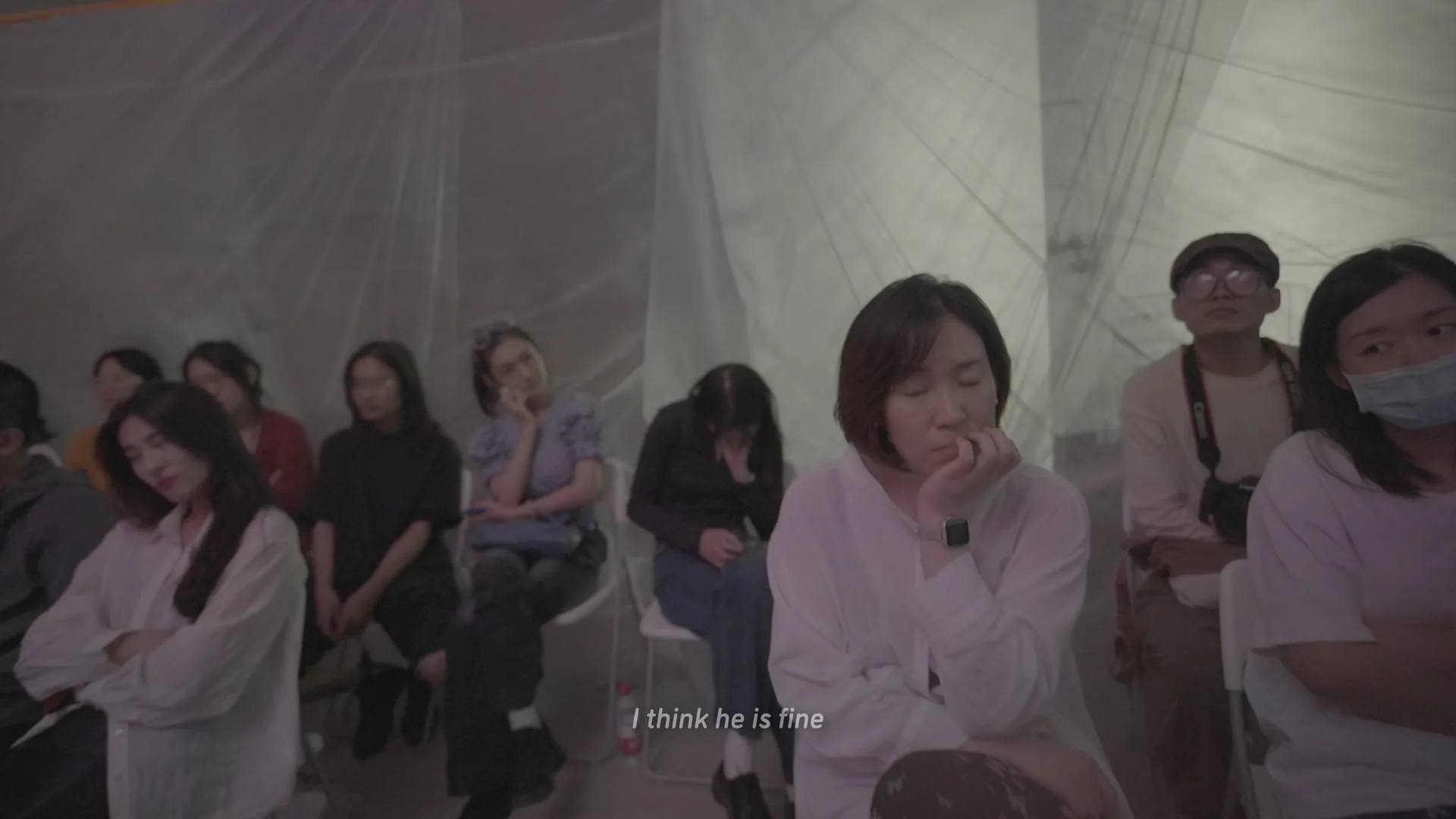
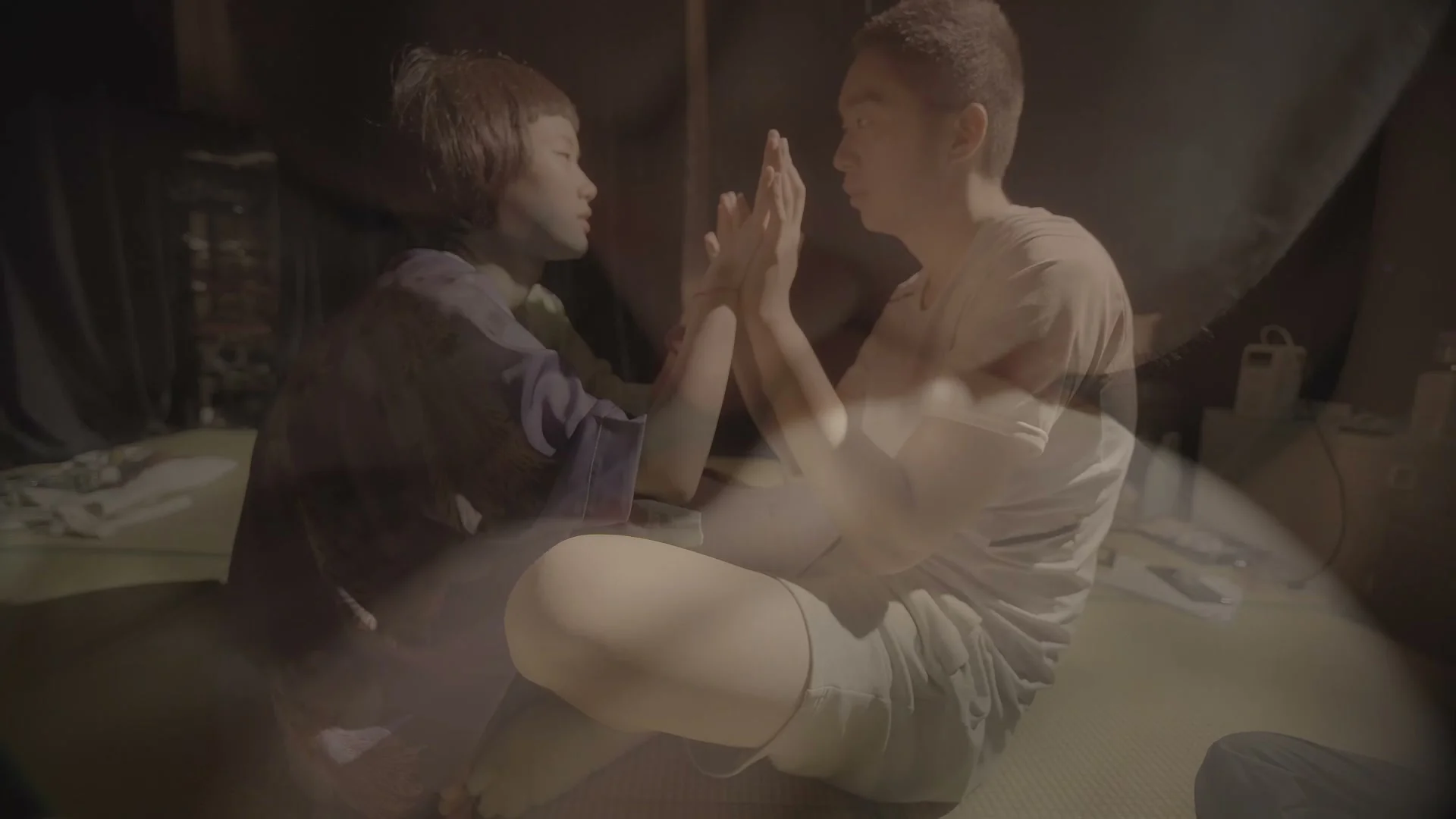
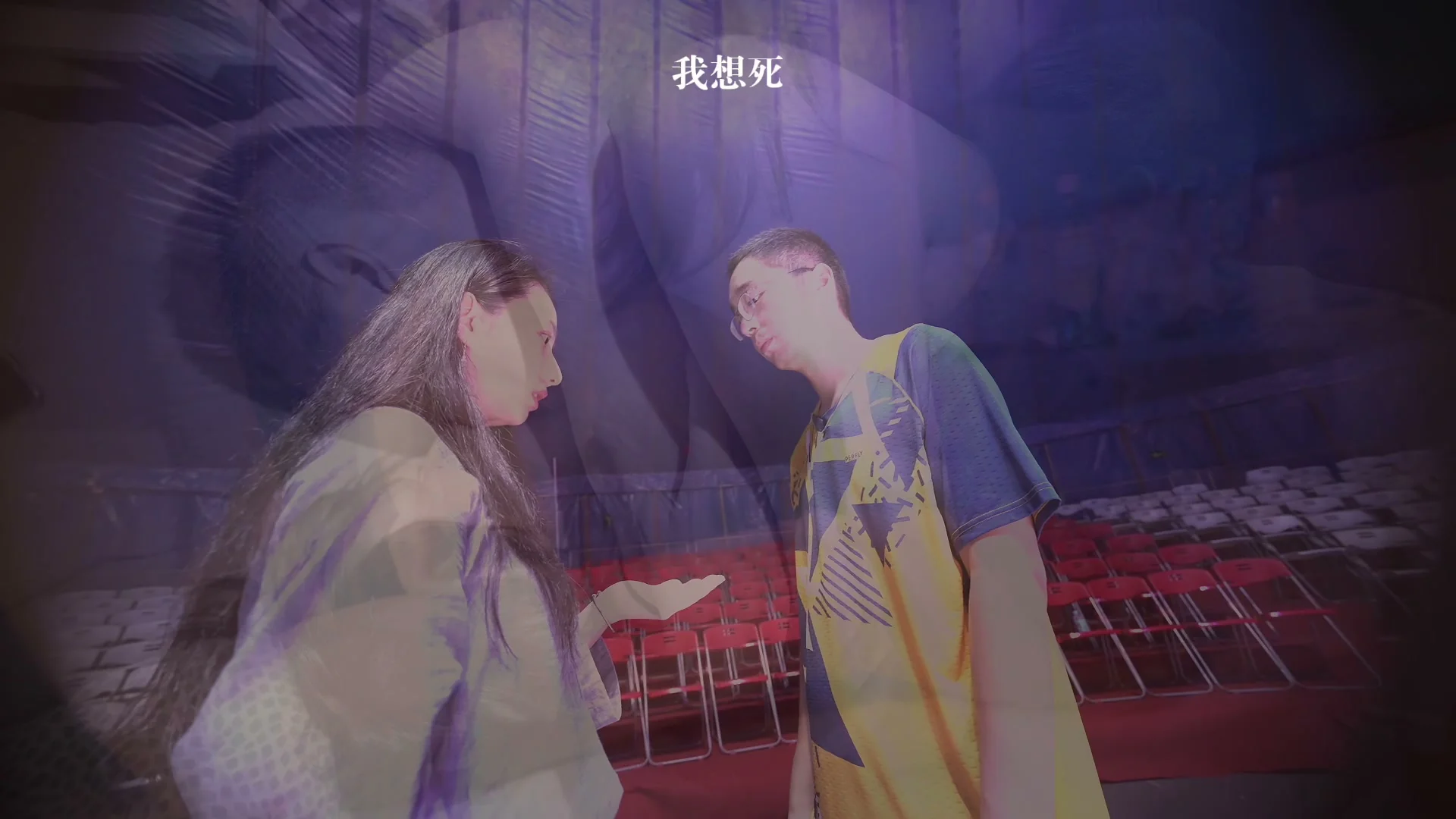
The project moved through casting, rehearsal, filming and public performance in 2023; an approximately 156-minute film cut was completed in 2024.
Human Surrender / Shoot Self with You took shape through casting, rehearsal and filming in 2023. Participants faced one another and the camera; initiating, performing, filming and directing intersected within a shared creation process.
At 19:30 on 26 August 2023, The Last Rehearsal took place at Ciyu Bookstore (Middle Theater branch). The final performance before filming wrapped combined theatre, performance art, live sound, installation, audience interaction and continuous photography; material from the event entered the film.
After completing the film, He Fa continued to work with its voices, dialogue, breath, images and excerpts through sound sessions, explanatory shorts and frame-by-frame notes.
A line through the work
When performers, director and camera all remain inside the relation, can looking stay neutral?
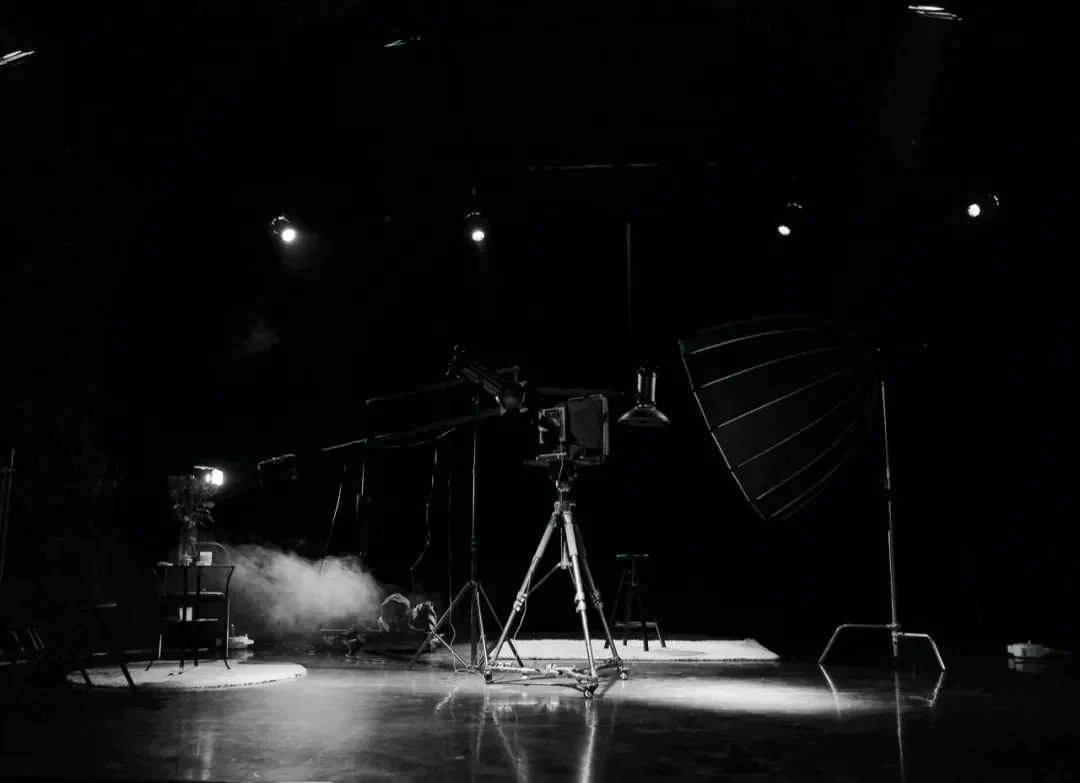
He Fa’s recruitment text of June 3 proposed three parts: long-take rehearsals in a black stage space; a camera following performers into everyday life; and a public performance recording their interaction with an audience. Three people were sought to play a director and two leads, with work planned for June–August. This proposal documents an early method rather than the final film’s structure, cast size or duration.
Read the contemporary text ↗The production account of August 18 names Yun Jianhui as an early initiator and cinematographer. Zhou Jinsong and Liu Jinqi recorded the process while contributing ideas, scripts and production work. He Fa describes roles changing during the work: actors could direct, camera operators could perform, and recorders also acted within events. These contemporary credits preserve individual contributions alongside the shifting structure of the collaboration.
Read the contemporary text ↗The August 25 announcement scheduled the film’s concluding performance for 19:30 on August 26 at Ciyu Bookstore’s Inside-Out Theatre branch. It lists Huang Meng, Sun Jiarui and Xu Shuai as performers; Yun Jianhui as recorder; Zhao Xuan, Ru Meng and Zhao Ziyi as musicians; and He Fa as the behind-the-scenes producer. The plan combined theatre, performance art, live sound and installation, with camera documentation throughout. These are the roles stated in the pre-performance announcement.
Read the contemporary text ↗Follow works back to signed texts, with writing at the time, later reflection and participant accounts identified separately.
Reading connectionIn this 2026 study, He Fa follows close views of eyes, cameras caught on camera and end-credit archives to ask what position proximity and replay give the viewer. The two titles open another route: shifts between self and you lead back to particular bodies, voices and moments of waiting.
Reading connectionIn 2024, He Fa revisits the studio’s conversion into a theatre, the move to a small office and cameras entering collaborative rehearsal. From Iceberg to Human Surrender, the size of a room, bodily distance and ways of filming affect one another. This retrospective returns the works to their spaces and collaborations.
Reading connectionXu Shuai connects these works through his involvement in Human Surrender and the production retitled from Burning the Moon to Breaking the Moon. Written before the 2023 performance, He Fa’s account follows changing personnel and rehearsal schedules toward the anticipated 16 December presentation, while the work is still taking shape.
Reading connectionThe 2023 announcement links writings by performers, a documentarian and musicians, alongside plans to record the public event for the film. Following these links back from the film reveals how different people prepared for the same gathering. The invitation, their individual voices and the later images remain available together.
Reading connectionIn the 2023 recruitment text, He Fa proposes three filming arrangements: a stage long take, following performers into daily life and recording a real public performance. This initial plan shows the film beginning to gather people, assign roles and leave room for the unforeseen, with filming already part of rehearsal and shared time.
CLOSE READING / 2026 CURATORIAL INTERPRETATION
When shared experience becomes a film, who can still answer within it?
The film overlays the reciprocal looking of rehearsal with the gaze of later viewers. Cameras are present from the outset, and people know their actions may become future images. The camera is therefore not a transparent witness outside the event. The collective direction and writing credits extend this relation into authorship: shared experience is not absorbed under one director’s name, while He Fa’s initiating, producing and editing work remains specifically identifiable.
Editing still selects sequence, distance and duration; collective credit does not make those decisions vanish. The question is how the film lets voices continue to encounter one another and where it fixes a relation into one version. A published 2026 reading of eyes, sound, cameras entering the frame and questions offers entrances for close viewing. These remain versioned interpretations to be tested against passages in the film. It cannot simply become testimony that theatre has exposed real people, and a director character cannot automatically be equated with He Fa outside the frame.
The film, public performance, rehearsal records and 2026 research text remain distinct versions. Private experience is not inferred from characters or performances.
Based on the 2023 Last Rehearsal announcement, He Fa’s published 2024 account, Imaging with You (2026), and the end credits of the 4g version.
Dialogue opens back onto images. Sound becomes another work. Writing returns to what happened between people.
A sound reworking
He Fa continues to work with the film’s dialogue, breathing, voices and environmental sound. This is a 45-second excerpt from that sound reworking.
Site interface · September 2026
Film · dialogue & images
Return to the film through dialogue, characters, timecodes and stills; follow a sentence back to its image.
sswy.p4theater.cn · Chinese / English
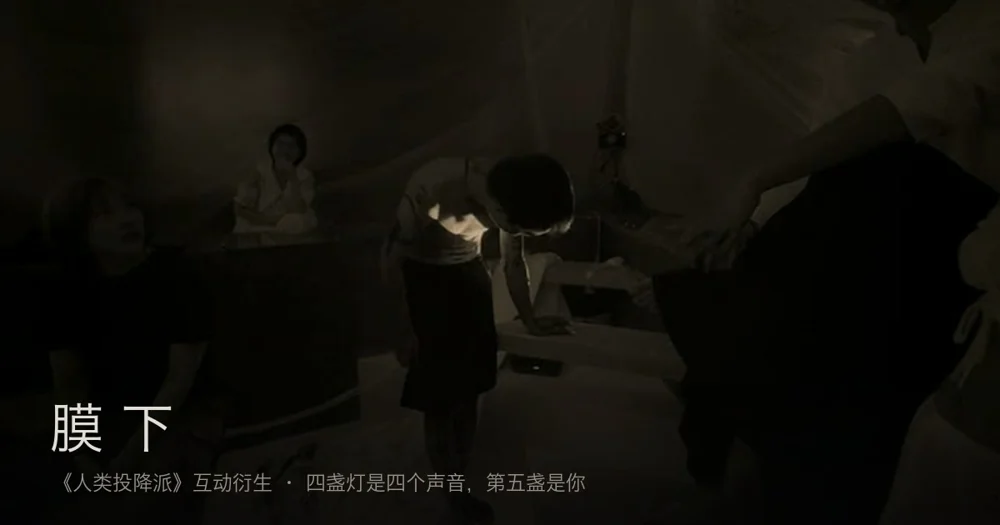
Under the Membrane · project cover
Film extension · interactive work
Four voices move through mist; the viewer lights a fifth lamp. An interactive space extending from Human Surrender.
s.p4theater.cn · Chinese / English
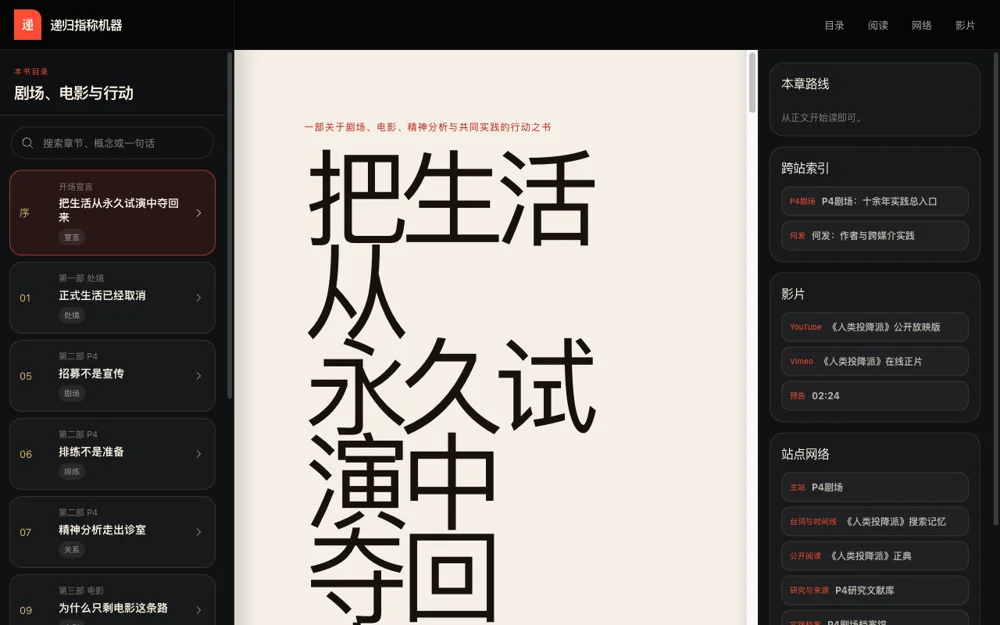
Site interface · September 2026
A book by He Fa · online reading
Beginning with P4 Theater, Human Surrender and shared practice, the book asks how roles, images and interpretation reorganise life.
book.p4theater.cn · Chinese text
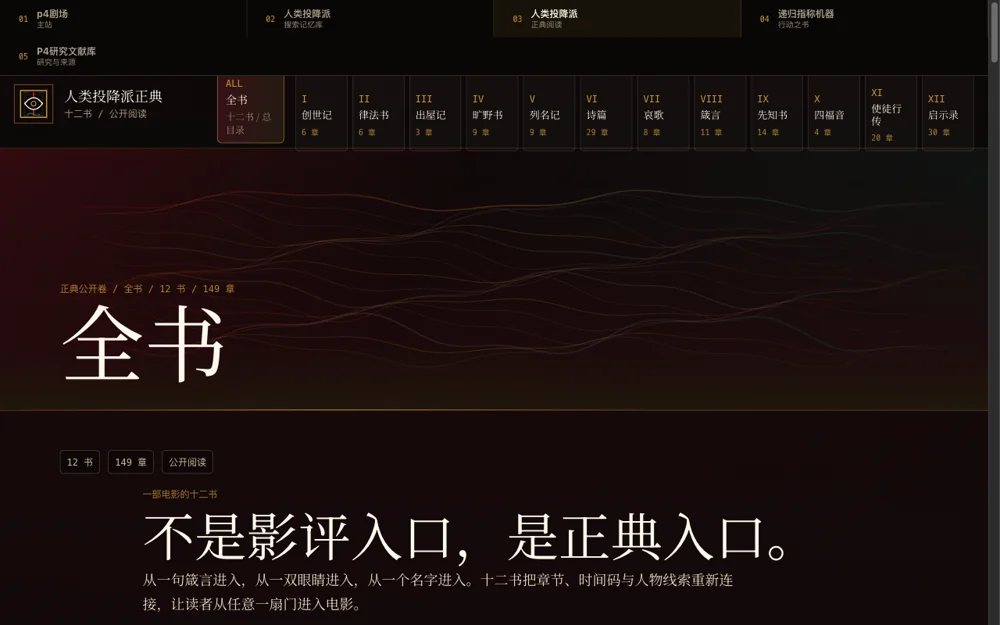
Site interface · September 2026
Film extension · public reading
A multi-volume reading space extending questions from the film into discussions of roles, relationships and viewing.
canon.p4theater.cn · Chinese text
Return to the people, the dates and the material left by making the film together.
2026-10-04 / ARCHIVAL ADDITION
Keep the camera records separate from the completed film. The 5.14 collection retains individual file identities; rehearsal, discussion and later editing remain distinct.
The preserved 4G version credits He Fa as initiator at 02:34:12, with direction and screenplay collectively created by the crew. At 02:34:50, He Fa is credited as producer and editor, with contributions to cinematography, art direction, rehearsal texts and subtitles. These two frames preserve the film’s own credits.
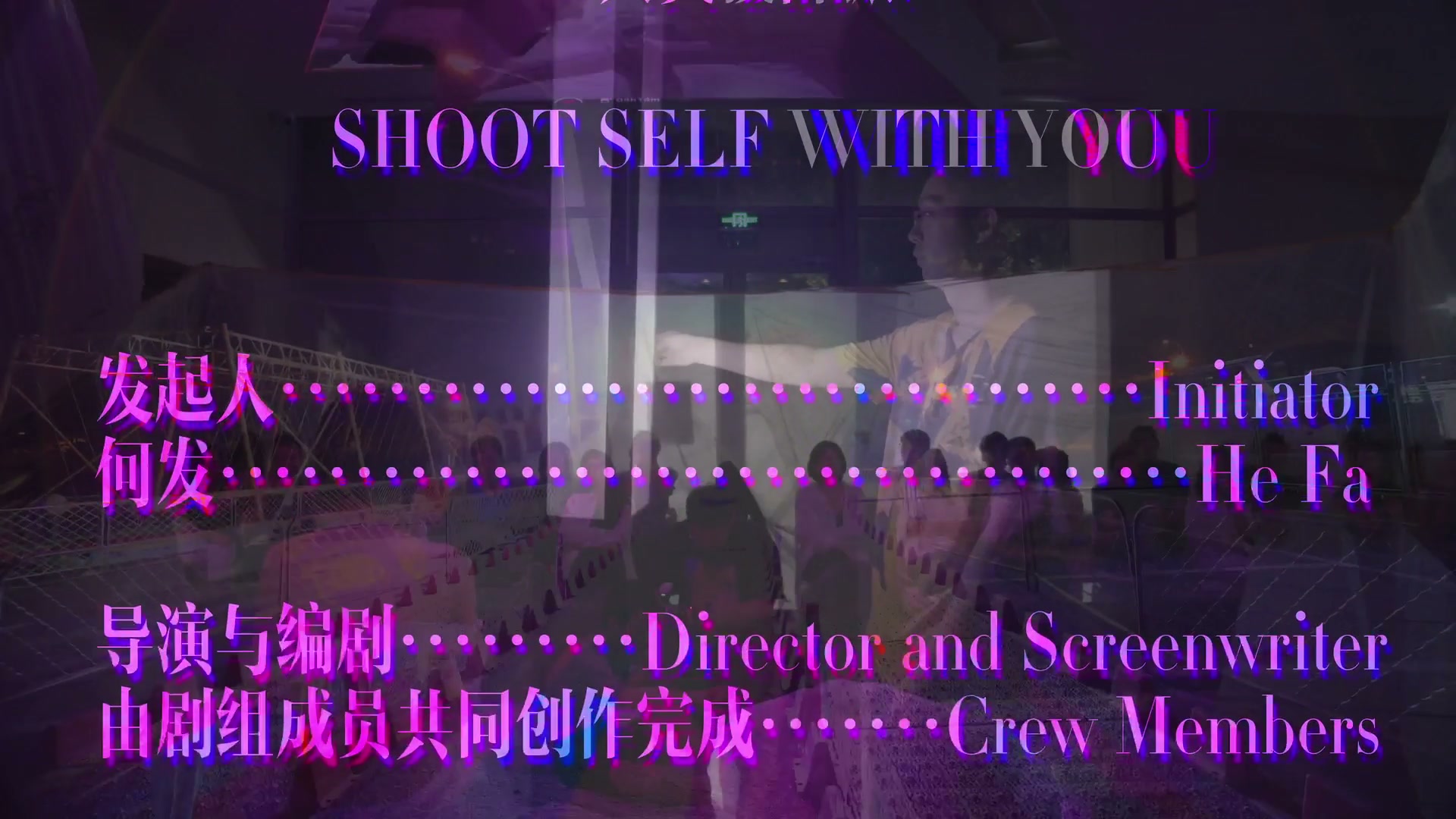
Human Surrender / Shoot Self with You, 2023–2024. Film, rehearsal, live performance. He Fa’s role: Initiator, producer and editor; direction and screenplay collectively created by the crew.
Cite this record: Human Surrender / Shoot Self with You · 2023–2024 · Initiator, producer and editor; direction and screenplay collectively created by the crew · https://hefa.p4theater.cn/en/work/human-surrender
The film's festival journey has three stages: selection by Filmmaker Sessions Volume 8, Los Angeles Lift-Off Film Festival, the Summer edition of the Los Angeles Film and Documentary Awards, and TheaterFilmFest - FIKTIVA in 2024; a place in the Boden International Film Festival's 2nd Quarter semifinal the same year; and Best Feature Film at the Esoteric Film Festival in 2025.
Further reading
Human Surrender: history and performance detailsThe Last RehearsalFestival selections, semifinal and awardBoden International Film Festival — 2nd Quarter 2024 semifinalistsEsoteric Film Festival — 2025 winnersLos Angeles Film and Documentary Awards — official selectionTAKE A PATH ACROSS
Keeping and losing
Human Surrender / Shoot Self with YouThe Forbidden City
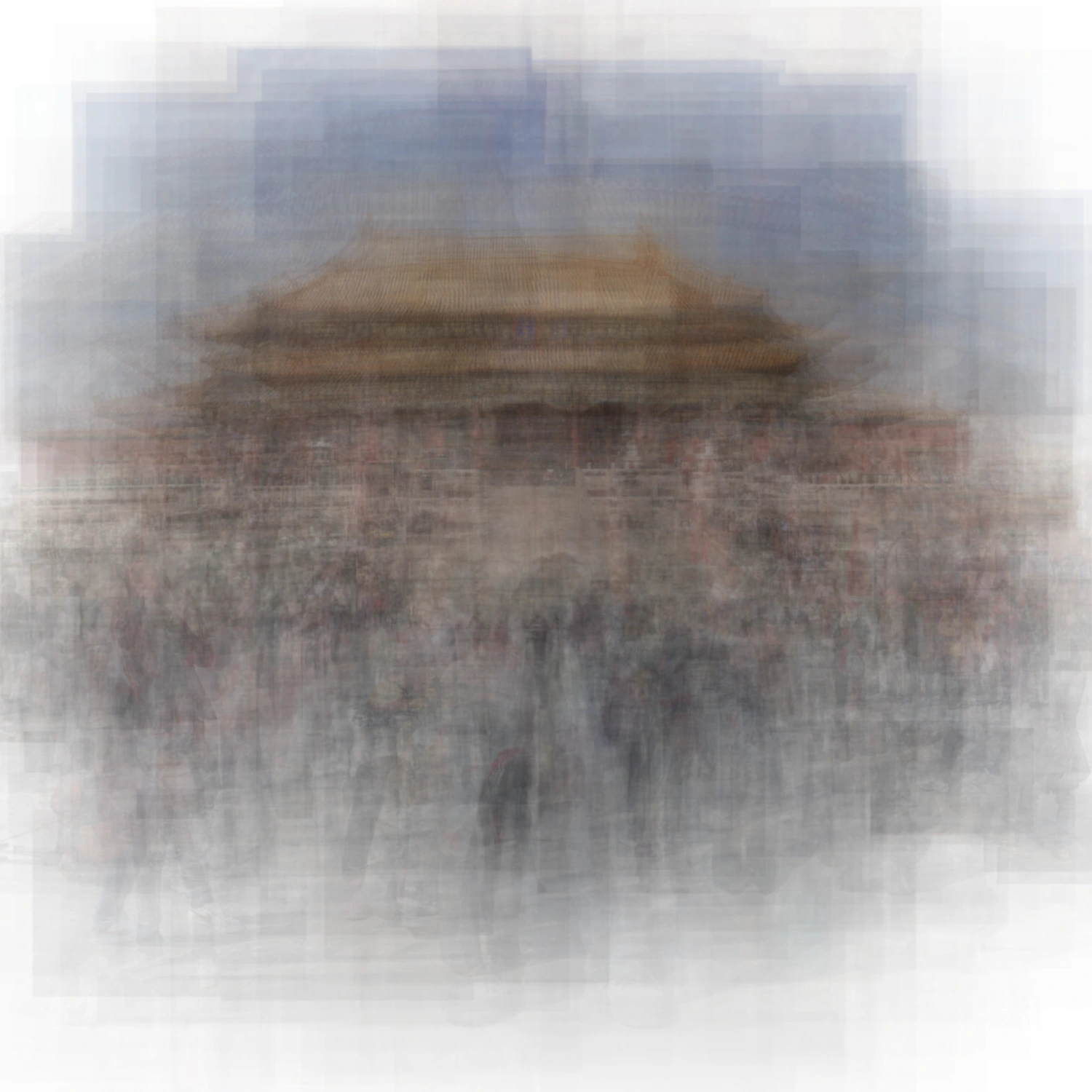
The displaced overlays of The Forbidden City resist one stable instant; Human Surrender organizes collective filming into a film. Both hold multiple acts of looking, but planar overlap and editing sequence are not interchangeable.
Displaced superimpositions form the architectural outlines; the original portfolio does not specify the number of exposures or processing algorithm.
The production account of 18 August 2023 specifically records shifts among photography, performance, directing and documentation in collective creation.
Working together
Human Surrender / Shoot Self with YouTheatre Murder Case
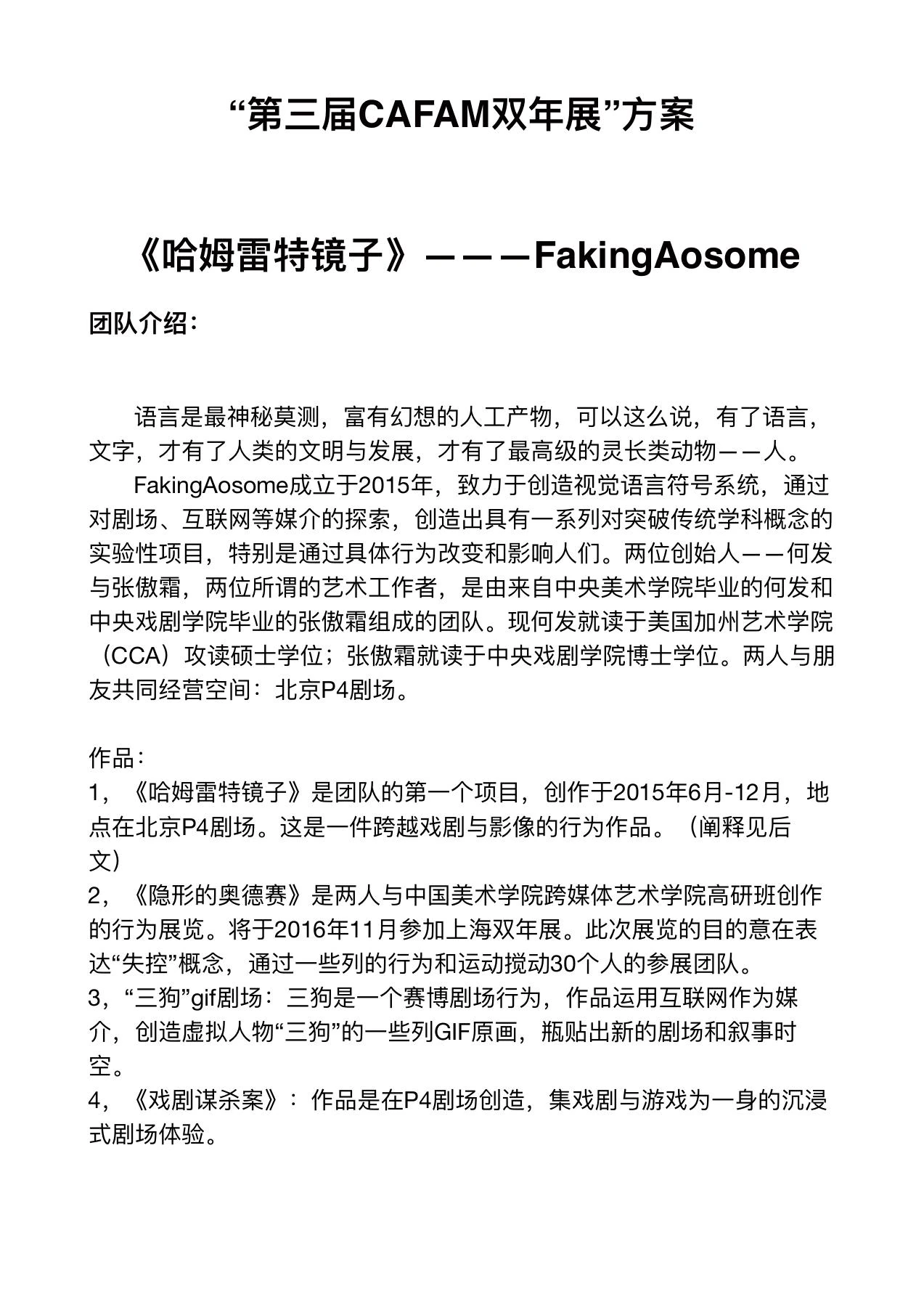
Theatre Murder Case combines drama and games under the name FakingAosome; Human Surrender credits its crew with collectively creating the direction and screenplay. Both organize practice involving multiple people, while the duo and the film crew define different scopes of authorship.
The 2016 proposal jointly signed by He Fa and Zhang Aoshuang lists the work under FakingAosome and explicitly combines theatre and games at P4; detailed documentation is limited.
At 02:34:12 the film credits directly attribute direction and screenplay to collective work by the cast and crew; the scope follows the original credit wording.
Keeping and losing
Human Surrender / Shoot Self with YouYourTube
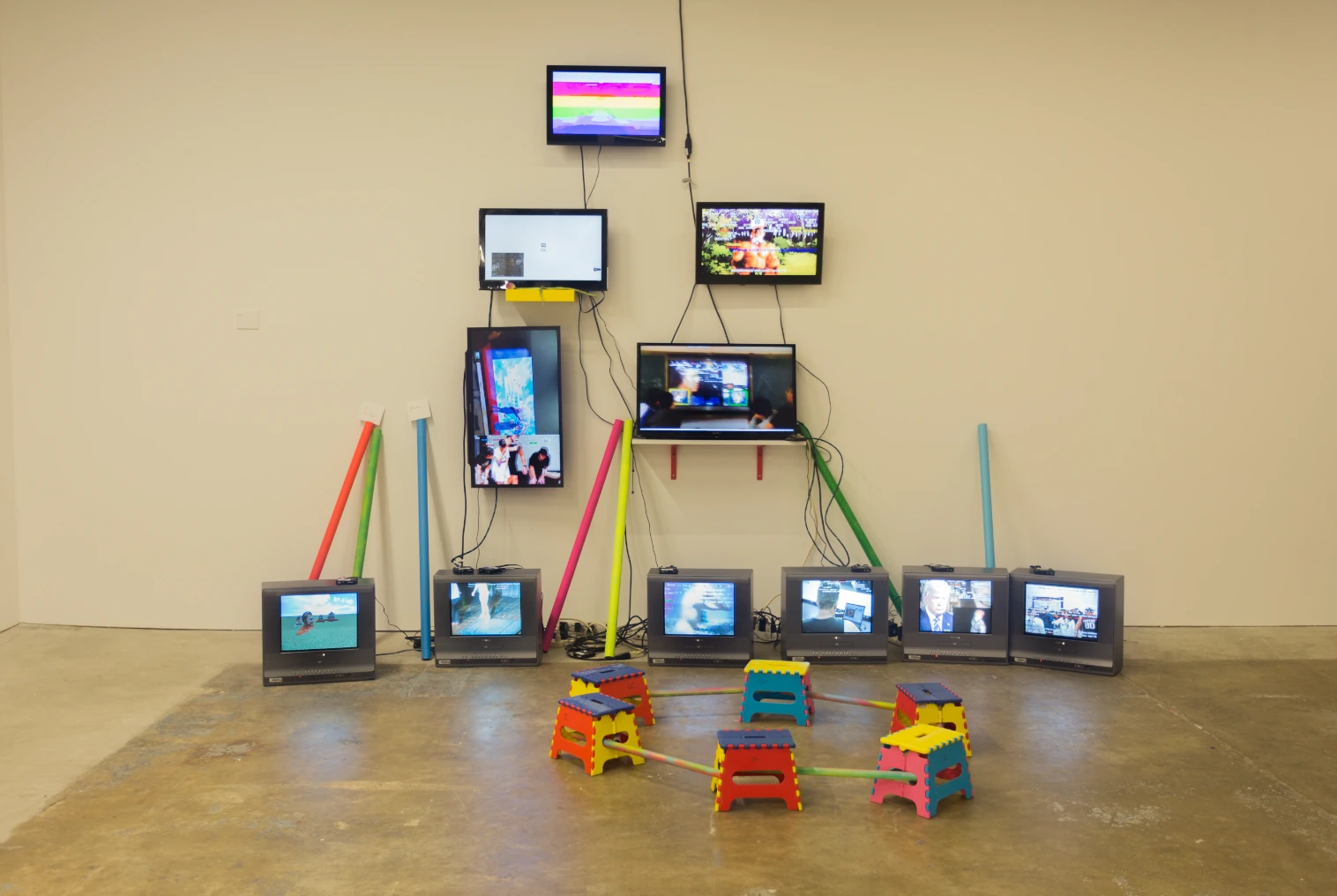
YourTube places existing comments over images; Human Surrender brings those filming and those filmed into shared production. The former makes others’ viewing traces visible; the latter also credits collective direction and writing. The word interaction cannot adequately describe both arrangements.
Source frames retain on-screen text, picture-in-picture and images of viewers, bringing existing traces of viewing into the playback material.
The credits at 02:34:12 and 02:34:50 separately retain collective direction and screenplay, production, editing and shared cinematography.
Working together
Human Surrender / Shoot Self with YouShixiang
Shixiang extends photography into renewed viewing and expression; Human Surrender organizes shared filming into a film. Both bring people before their own images. Responses during continuing meetings differ from the choices that establish a finished version.
The 2020 project text sets out photography in odd acts and viewing and expression in even acts within an eight-and-a-half-act structure; this is the method announced at the time.
The production account of 18 August 2023 specifically records shifts among photography, performance, directing and documentation in collective creation.
FROM HERE, ELSEWHERE
Close images and the visible presence of cameras make it difficult for viewers to occupy an uncomplicated position outside the encounter.
The film orders rehearsal and live material. Its preservation of collective work need not reduce it to one voice.
Move from the 2023 three-part film proposal through rehearsal records, the trailer and the public film, then read the artist on selection and continued editing. These stages preserve versions through which shared time during filming can be considered alongside later editing decisions.