I. Keeping Most of the Light Out
Link to paragraph · 用中文读这一段When I was learning photography, we had to make pinhole cameras. The inside of the box had to be dark enough. Velvet was best.
Link to paragraph · 用中文读这一段Seal it tight. Make a hole in one side, put photographic paper opposite it, and cover the hole with black tape. Find something to photograph, peel back the tape, let the light in, wait a while, then cover it again and take it to the darkroom. That was how something outside left an image inside.
Link to paragraph · 用中文读这一段To see, you first have to keep most of the light out.
Link to paragraph · 用中文读这一段I liked this slightly counterintuitive way of doing things. You didn’t turn on every light and expose everything. First it had to go dark: block things out, separate them, leave only a very small opening. The mountain was still outside. It couldn’t come in. What came in was light. On the photographic paper, things far apart pressed against each other. One person’s body could hide a whole building.
Link to paragraph · 用中文读这一段The mountain hadn’t moved. In my hands, it was already somewhere else.
Link to paragraph · 用中文读这一段For a long time at university, photographic collage was all I did. A book by David Hockney about photography drew me in. After that it was photograph, assemble, photograph again, assemble again. I was fascinated by this photographic alchemy. An idea takes only minutes to say aloud. Once you start making it, you can spend years without finding a way out. There were tens of thousands of photographs. Other people could already see a mountain; I was still moving one of them.
Link to paragraph · 用中文读这一段 · Inquiry: After moving closerSometimes I got it into place. Then something beside it was wrong. I had to go back. Even the part I’d just been happy with couldn’t be left alone. In the telling, this sounds like great patience. While I was in it, I simply wasn’t willing to stop.
Link to paragraph · 用中文读这一段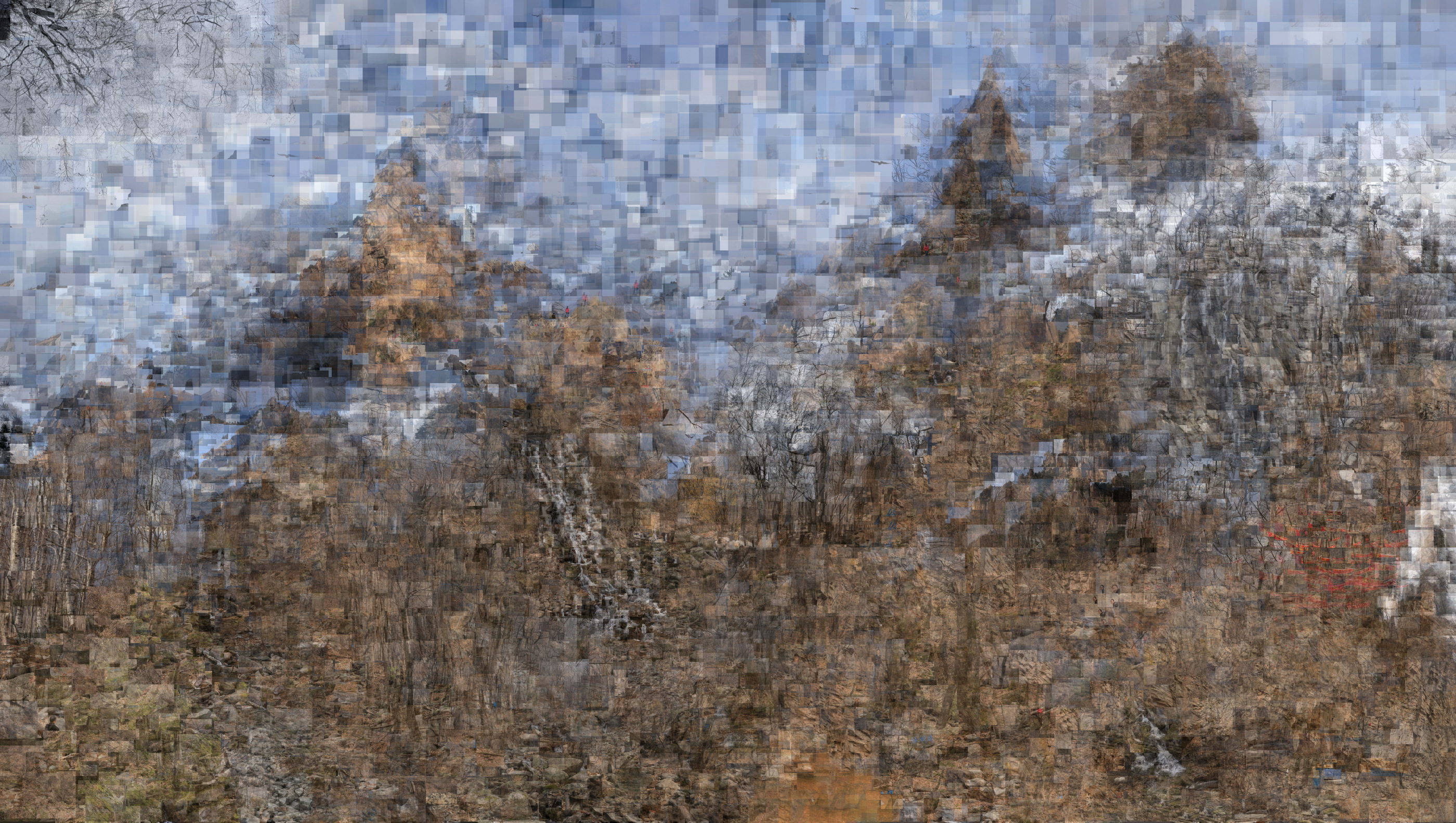
After Shanshui, I made a collage called Central, placing the sun amid the mountains. The idea came from a relief at the Ming Xiaoling Mausoleum. A photograph could leave its original position and lean against another, making a whole that hadn’t existed before. The edges of the photographs were still there, but the mountains had joined up. I liked that: you could plainly see how it was put together, and your eyes still wanted to enter it.
Link to paragraph · 用中文读这一段I went in too. All those tens of thousands of photographs had been taken. The mountain still wasn’t finished.
Link to paragraph · 用中文读这一段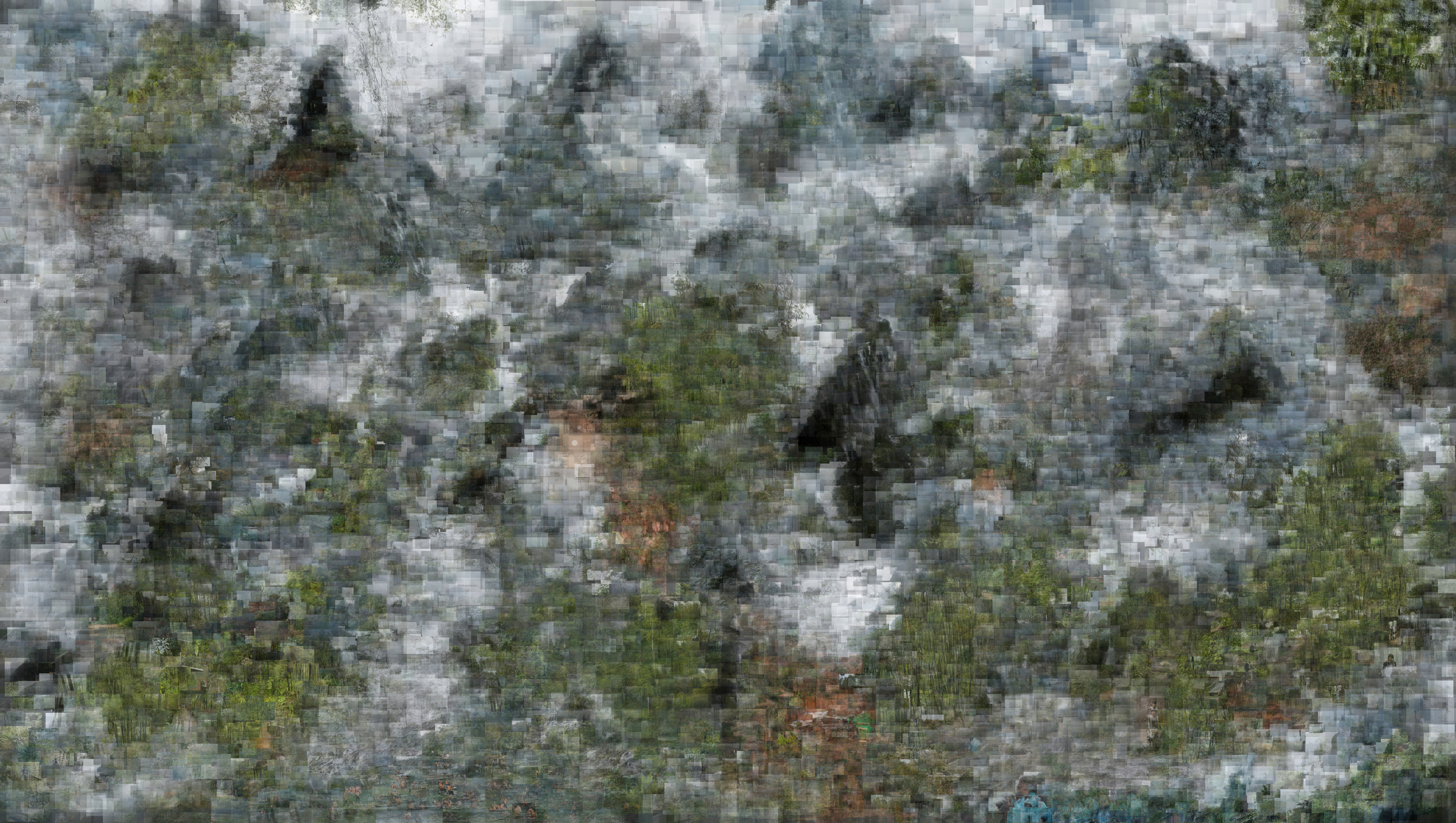
But photographs are easy to move. People aren’t.
Link to paragraph · 用中文读这一段Later, I began talking about portraiture with Zhang Shaohua, who had also studied photography. His difficulty was that, as soon as someone faced a camera, they presented a version of themselves ready to be photographed. They wanted to look good, to look natural, for the person in the photograph finally to look like them.
Link to paragraph · 用中文读这一段“Be a little more natural.”
Link to paragraph · 用中文读这一段That sentence was already giving an order. The harder the person tried, the more it looked like acting. The photographer was still waiting, thinking the real person must be somewhere further back. In front of the lens, someone was trying to become themselves. Behind it, someone else kept judging: not yet.
Link to paragraph · 用中文读这一段Give them a little more time. Perhaps talk a little longer.
Link to paragraph · 用中文读这一段The person we were going to photograph had already arrived. We were still waiting for them to appear.
Link to paragraph · 用中文读这一段When we first planned P4, we had a photography studio in mind. Zhang Aoshuang proposed a theatre. Shaohua took on the conversion, and the stage, lights and curtains gradually found their places. To photograph a person, we began building a theatre.
Link to paragraph · 用中文读这一段 · Inquiry: The container takes partThe black box was now large enough to walk into. I walked in too.
Link to paragraph · 用中文读这一段The upside-down image flickered on the ground glass, wrapped in black. But this time, the person inside could look back. Where I asked them to stand, what I asked them to say, how I asked them to turn their head: all those instructions for making an image had to pass through their body first. They might do as I asked. They might ask me why.
Link to paragraph · 用中文读这一段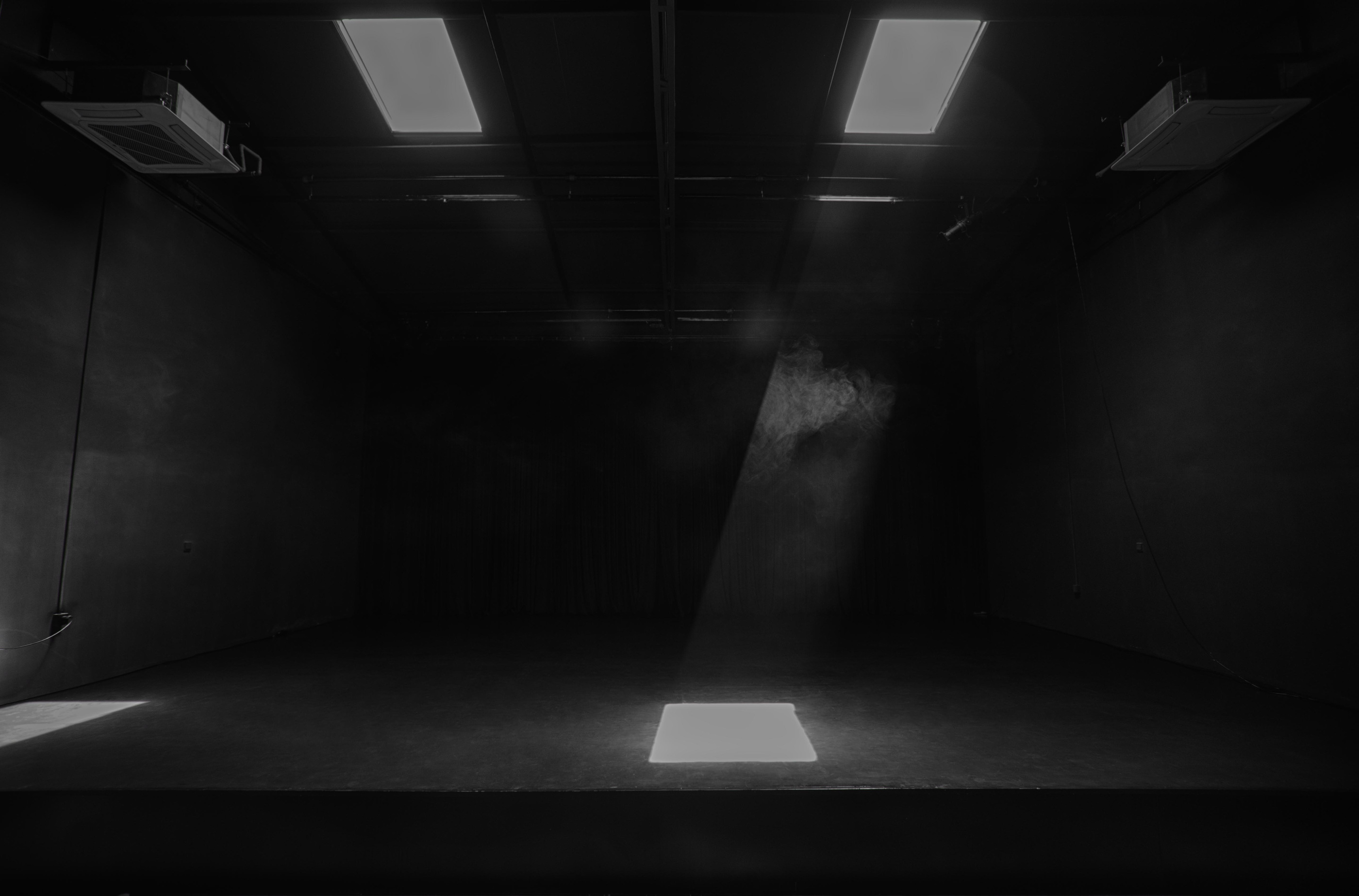
II. Let Me Speak First
Link to paragraph · 用中文读这一段Put together this way, it sounds as though the questions of photography led me straight into theatre. But there was also a breakup in there, and the beginning of another relationship.
Link to paragraph · 用中文读这一段After the breakup, something in my head split open. Films made me cry. I wrote poems. I began learning to listen. The person I later fell in love with studied stage design. She took me to see plays in Beijing and talked to me about theatre, Greek myths, Salome putting the head of the man she loved on a platter. I was still making photographs. I was also in love. The chronology of my work arranges the years so neatly. I never lived like that.
Link to paragraph · 用中文读这一段An intimate relationship: I had long since stepped out of it. Set it on the table, get the scalpel, the microscope and the audio cassette ready, and examine it carefully.
Link to paragraph · 用中文读这一段That’s not what I mean. At the time, I—
Link to paragraph · 用中文读这一段There was so much before that. How can you start counting from here? Another word might make it clear. I still want to tell what came before, a little further back, before that sentence pushed us apart.
Link to paragraph · 用中文读这一段I still wanted to be liked. I wanted the person in front of me to understand me, not to take a place I had assigned them in my work.
Link to paragraph · 用中文读这一段Theatre. Your theatre, or my dramatics. An aftertaste of sweetness, turning sour.
Link to paragraph · 用中文读这一段I’ve always believed I would come to like you again.
Link to paragraph · 用中文读这一段The person who came later had her own goodness. When she talked about those plays, they weren’t yet the story of how I got here. I was listening to her. I was also in love with her. Now, writing about that platter, I have to lift my head off it again.
Link to paragraph · 用中文读这一段And yet language had frightened me from very early on. As a child, I couldn’t get my words out smoothly. Sounding things out, reciting, copying lines as punishment: opening my mouth was never far from getting something wrong. Later I went to study in the United States, and it was English’s turn. When other people spoke, I pretended to understand. When my turn came, I pretended I too was communicating.
Link to paragraph · 用中文读这一段I missed a word, and the next ones had already arrived. I wanted to go back for it, but my face had to stay here, as though I’d understood all along. When it was my turn, several sentences crowded into my head. At my lips, each seemed to find the others in the way.
Link to paragraph · 用中文读这一段At the end of the term, we had to present. There was no avoiding it. I bought a printer, prepared a stack of handouts and put on a public speech. Language, discrimination, margins, walls, with some messing about thrown in. People kept laughing, and I relaxed. My grammar hadn’t suddenly improved, but I could keep speaking. Before, I’d worked so hard to get one word right. This time it was all over the place, and somehow someone could catch it.
Link to paragraph · 用中文读这一段Later, I developed this work into “fafalish”, embracing mistaken recognition, misreading and the drift of signs, letting writing become sound and return another way. This too was collage. Cut up, turn around, contaminate those old positions: once the earlier words were no longer where they had been, new meanings could emerge. My accent was still in there. The mistakes came along too. No starting over. I carried all of it and kept going.
Link to paragraph · 用中文读这一段 · Inquiry: Meaning on the wayI hadn’t fixed myself before I began to express myself.
Link to paragraph · 用中文读这一段Speak properly first. Train professionally first. Think it through first. First become someone worth listening to. How long are we to prepare? The person is already here, their mouth already open. What else must they hide before they’re allowed to begin?
Link to paragraph · 用中文读这一段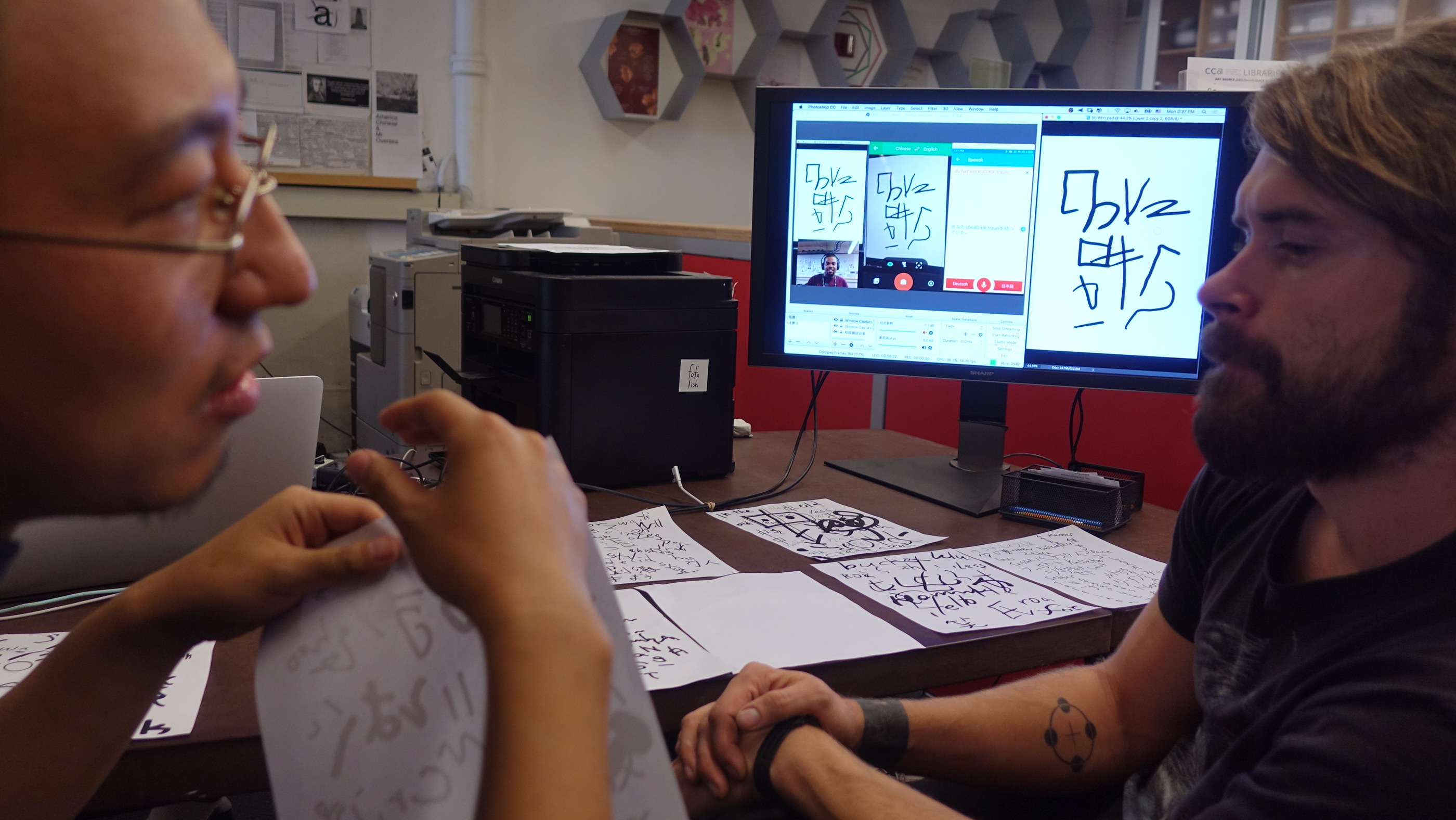
I wanted a place where this could happen now. Words could go wrong, gestures could come out crooked, and people needn’t already know who they wanted to become. But I wasn’t satisfied with everyone taking a turn to speak and then going home with the same self they had brought. I wanted something to happen here that hadn’t happened elsewhere.
Link to paragraph · 用中文读这一段Some things can’t be said directly. Others have been said so many times that, at the opening words, the other person already knows how to shut themselves off. Borrow a role, take a line you didn’t write, and you might get around that. You speak someone else’s lines and discover for the first time: I can face you this way too.
Link to paragraph · 用中文读这一段 · Inquiry: Meaning on the wayI once wrote a signature line for P4: “Use the false as a lever on the real.”
Link to paragraph · 用中文读这一段I stole that “lever” from Archimedes. I liked its refusal to stand aside and keep waiting. Make the lights, the rules, the roles, the lines, one by one, and put the body in first. You know it’s made up, but the words still have to be spoken. You hear them. I hear myself being able to speak like that. Wherever we go next, it is already a little different from a moment ago.
Link to paragraph · 用中文读这一段Some feelings only take shape once you’ve lived through them. Ask me to explain them clearly in advance, and I can’t. If it hasn’t happened, what could I explain?
Link to paragraph · 用中文读这一段I would call these things experiments, openness, letting things happen on their own. As though it didn’t matter very much whether they worked.
Link to paragraph · 用中文读这一段But I still wanted it to happen.
Link to paragraph · 用中文读这一段I wasn’t that indifferent.
Link to paragraph · 用中文读这一段III. Just to See You Again
Link to paragraph · 用中文读这一段Shaohua and I continued the photographic experiment and called it Shixiang. We designed the whole as “eight and a half parts”, alternating photography, looking and expression. Photographs left by one part would enter the next.
Link to paragraph · 用中文读这一段“A theatre for two, just to see you again.”
Link to paragraph · 用中文读这一段After taking the photographs, we had to look. After looking, there was something else to bring into the next part. When one meeting ended, there was always something left to do. Even when I wrote the eighth part, half a part remained. I liked that unfinished place. As long as it stayed there, perhaps we wouldn’t need another reason for next time.
Link to paragraph · 用中文读这一段Shaohua worked mainly on the shoots; I was more involved in the structure, discussions and looking at the photographs. When people arrived, we didn’t hurry them in front of the camera. We spent time together, talked, then moved onto the stage and into the shoot. Some told stories from their lives. Some asked the photographer questions. Others said nothing for a long time. We photographed many people, and each shoot took an entire day. The ritual was long. Film develops quickly. People are slow.
Link to paragraph · 用中文读这一段 · Inquiry: When another person enters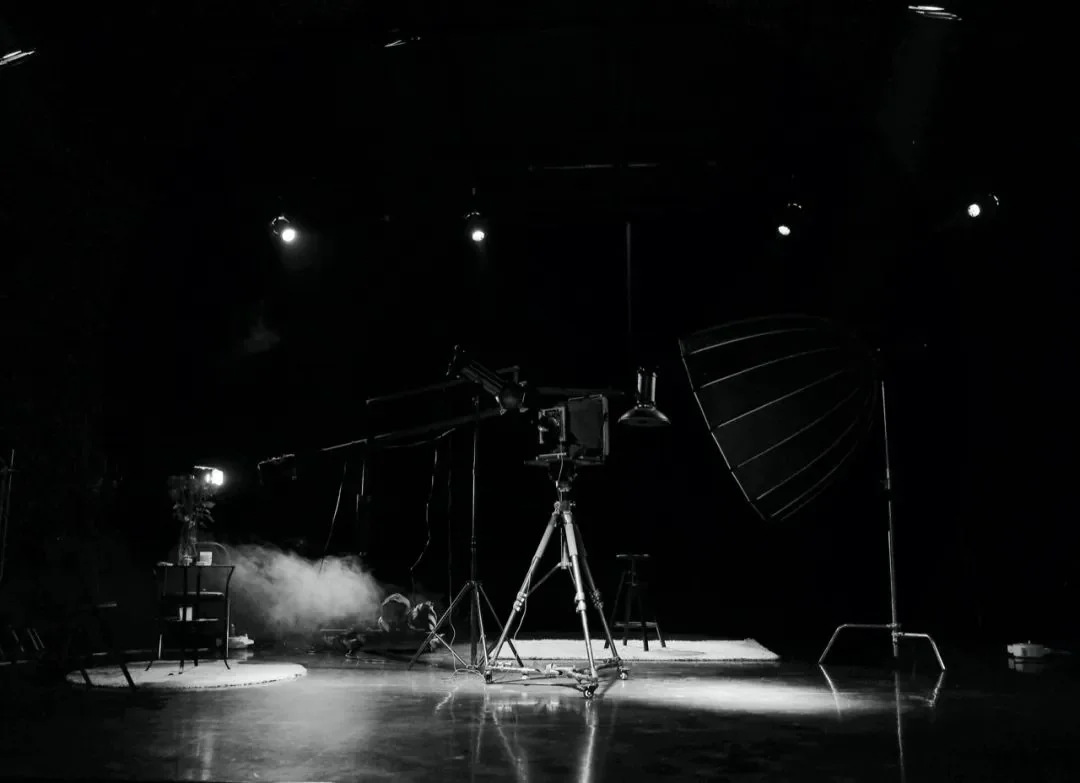
One participant later wrote that, before the shoot, she tried on clothes again and again, looking for the outfit that felt most true to her. None seemed right. During the conversation, she was still guessing how best to answer, what the photographer wanted to hear. Gradually she relaxed and began talking about her life. But when she stood before the camera, she grew nervous again. She began worrying about how the photographs would turn out.
Link to paragraph · 用中文读这一段Her account also described the end of the shoot: she was no longer worried about the result and was willing to see the photographs as a record of the experience. Reading it, I went back to that earlier “again”.
Link to paragraph · 用中文读这一段The person who was talking just now must now stay behind, become a face that other people will look at later. The clothes aren’t right, the expression is wrong, be a little more natural, don’t try so hard. After all that talking, the person still has to stand before the camera again. She has already written that she no longer worries. I’m still waiting at the point where she was nervous.
Link to paragraph · 用中文读这一段We used large-format film. We didn’t retouch the water stains and scratches left by developing and scanning. The face stayed in the photograph along with traces of its making. Eyes that only meant to look at a person might be drawn away by a scratch beside them.
Link to paragraph · 用中文读这一段 · Inquiry: Making and keepingThe person goes on living. The photograph doesn’t. The posture of that instant stays there; it won’t automatically change its expression because the person changes later. Today they can say, that’s not me anymore. The photograph is still there. It cannot explain who this person is, but it won’t entirely submit to their change of account either.
Link to paragraph · 用中文读这一段 · Inquiry: After moving closerI like this stubbornness in photographs.
Link to paragraph · 用中文读这一段When it’s my face, that’s another matter. You can’t just look at this one. There’s more before it, and more after. You can’t start counting from here—
Link to paragraph · 用中文读这一段Some words are like that too. You’ve held them in for so long. At last you say them, only to find that what mattered most hasn’t been said. But the other person has already answered. The sentence comes back to your own ears, sounding almost unfamiliar. You want to take it back, but you can’t make them not have heard it. Add another sentence, and the first stays there beside it.
Link to paragraph · 用中文读这一段The next time we meet, what we bring is more than a photograph. There is what was said last time, what couldn’t be said, and what only began to become unbearable later. The photograph hasn’t captured anything more. The person holding it has lived a little longer.
Link to paragraph · 用中文读这一段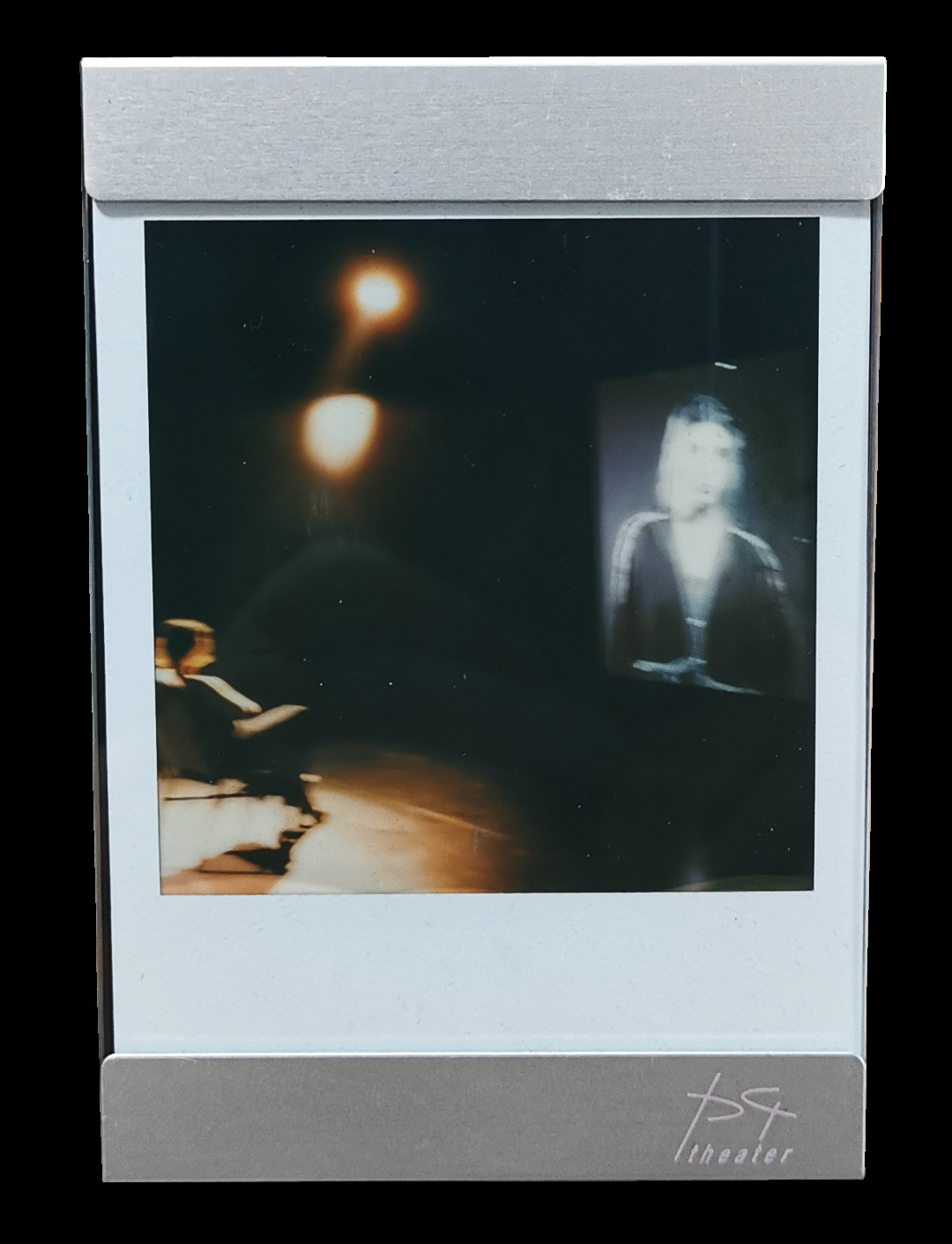
According to the plan, we could talk again.
Link to paragraph · 用中文读这一段Shixiang never completed its planned eight and a half parts. I left the place where we had worked together and moved the theatre into a twelve-square-metre room in Wangjing.
Link to paragraph · 用中文读这一段 · Inquiry: When can it endShaohua and I haven’t seen each other since.
Link to paragraph · 用中文读这一段IV. I’m Drawing Something Out
Link to paragraph · 用中文读这一段But in an old post-show discussion, Shaohua is still speaking.
Link to paragraph · 用中文读这一段One of the actors said that entering a role was also her way of “watching the play”. I pressed her: what, exactly, had she seen through that role? She said she had seen how everyone changed. I wasn’t satisfied. I kept asking.
Link to paragraph · 用中文读这一段Shaohua pointed out that I seemed to have an answer in mind and was leading her towards it.
Link to paragraph · 用中文读这一段“I’m drawing something out.”
Link to paragraph · 用中文读这一段She said that, when a question came, she might not know the answer yet herself. Shaohua asked another way. She went on to talk about the relationships between people and their roles, and the ways they were out of step.
Link to paragraph · 用中文读这一段 · Inquiry: When another person entersShe had already brought something. I still wanted to hear what I hadn’t heard. I wasn’t asking her to give my answer. I really wanted to hear something else. Something else arrived, and I felt it still wasn’t it.
Link to paragraph · 用中文读这一段At the time, “drawing something out” was a phrase that let me go on asking.
Link to paragraph · 用中文读这一段P4U was another social practice project initiated by P4. Gather a group of strangers and make a play in a month. Everyone could propose ideas and change their minds, but the date of the public performance wouldn’t move back with them. Whether a scene stayed, who made a gesture, when a discussion stopped: decisions had to be made. We couldn’t leave those decisions to a blank programme.
Link to paragraph · 用中文读这一段 · Inquiry: Who decidesAs an undergraduate, reading Out of Control, I became fascinated by the way simple rules could grow into complex results. Later I talked about self-reference, emergence and recursion: bring a few simple conditions together and wait for something new to grow. I wanted to be surprised. Very early on, I knew I didn’t want to be a studio artist. What was in front of me couldn’t just be another way of saying the same thing about myself. I wanted to dance with the whole world.
Link to paragraph · 用中文读这一段One month. The date of the public performance was already set.
Link to paragraph · 用中文读这一段What if what arrived wasn’t good? What if it slowed rehearsals down or pushed against the direction I wanted? Liking the words “out of control” hadn’t taken away my desire to judge good and bad. I wanted to get the play made, to make it powerful. I also wanted others to enter with wishes of their own. They were already in the room, and those two things were still competing for space.
Link to paragraph · 用中文读这一段Harder. Deeper. Don’t stop here.
Link to paragraph · 用中文读这一段This urge to draw something out had become a terrorist: it had to drag everything stable over the edge with it. I too was looking down. I too wanted to move forward. There was seriousness in that force. But when someone else stopped, I grew impatient. Where hadn’t we reached yet? How much more was there to give? I still wanted to ask.
Link to paragraph · 用中文读这一段The demands I disliked came out of my own mouth with a different heat. I wasn’t asking you to wait until you were well rehearsed before coming onstage. I was waiting for you, right now, right here, to give me what you didn’t yet know.
Link to paragraph · 用中文读这一段She said that, when a question came, she might not know the answer yet herself.
Link to paragraph · 用中文读这一段I know those moments. Standing there as a child. Later, standing there in English. My mouth open.
Link to paragraph · 用中文读这一段When I made collages, people would say it was close enough, but I kept moving things. Some things really did only appear later. Others didn’t. Next time, I still wouldn’t stop any sooner. In rehearsal, if I try once more, the other person has to give that time again too. Once we’ve said “co-creation”, it has to be their turn to push a sentence back at me, to alter an arrangement I’ve already made. It’s perfectly possible to listen, nod, keep rehearsing, and leave everything as it was.
Link to paragraph · 用中文读这一段 · Inquiry: Who decidesI’ve fallen and broken two front teeth, fallen out with friends, driven collaborators to cut ties with me. “For the sake of truth”: I would say that too. Sometimes, by the end of my explanation, I found I felt wronged.
Link to paragraph · 用中文读这一段“Heh. I’m only joking.”
Link to paragraph · 用中文读这一段My tone lightened. But if it was really let go as a joke, I wanted them to know it hadn’t only been a joke.
Link to paragraph · 用中文读这一段V. The Exit
Link to paragraph · 用中文读这一段Human Surrender was planned as a film from the recruitment stage. Three actors played the director, the male lead and the female lead. In an enclosed black space, their conversations kept failing, and they kept trying to rebuild their relationships. Rehearsals, daily life and a public performance that actually took place were all part of what we intended to film.
Link to paragraph · 用中文读这一段Even the director was a role.
Link to paragraph · 用中文读这一段I was fascinated by that situation: the harder you try to explain, the less able you are to get close. Words are still coming out, but the person in front of you may already want to leave. Try another word, add some background, say again what you didn’t get right. The words reach backwards to explain, while time is dragged forwards, sentence by sentence. As long as I haven’t finished, it seems they still have to stay.
Link to paragraph · 用中文读这一段The camera was there from the start. We rehearsed, knowing the rehearsals would be kept. The person before us was watching; it was as though people in the future were watching too. That gaze, which would arrive only later, squeezed into today’s gestures ahead of time. Before anyone had left, the time when we would see them afterwards was already there.
Link to paragraph · 用中文读这一段 · Inquiry: The container takes part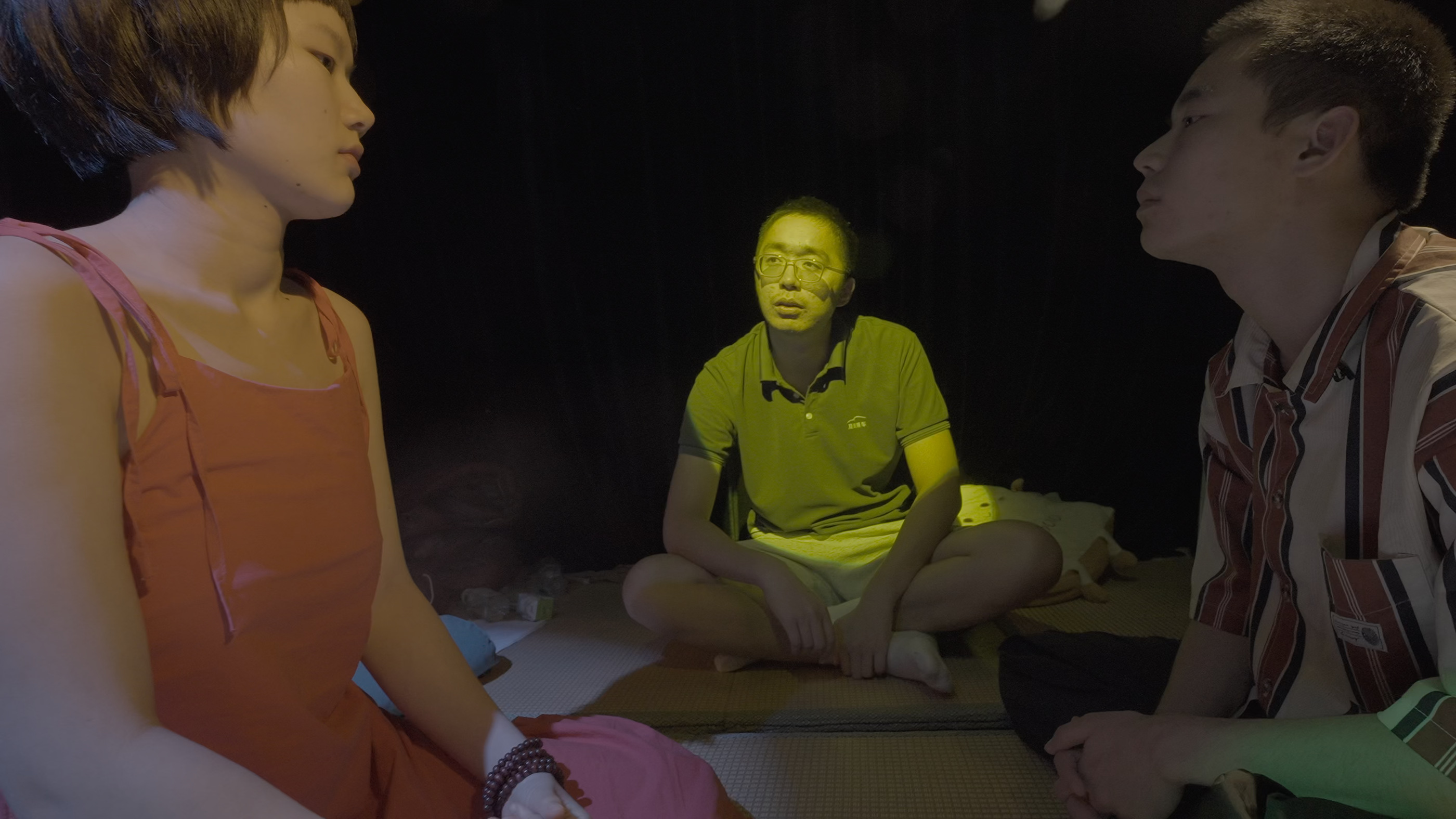
Some kisses during filming were deliberate, clearly tied to staging and the script. Others came spontaneously. Before I could understand it, how had this happened?
Link to paragraph · 用中文读这一段I would get excited. After building so much, thinking so much through, a gesture suddenly went beyond my preparation and had already happened before my eyes. So this was possible too. I wanted to go back and watch it again. Before I knew how to speak of it, it was over.
Link to paragraph · 用中文读这一段Watching again, I already knew a kiss was coming. Every earlier sentence, every small distance, could seem to me a sign of it. I could even edit the scene as though they had been moving towards that kiss all along. The words that failed to connect now had a destination: a little later, a longer way round, not there yet.
Link to paragraph · 用中文读这一段Before it happened, I didn’t know.
Link to paragraph · 用中文读这一段The space open then wasn’t a space waiting for a kiss. A sentence went out. What came back still had to be waited for. It might receive an answer. It might simply stop there. The gesture that later excited me hadn’t yet decided what everything before it was for.
Link to paragraph · 用中文读这一段Watching now, I can leave every second intact and still, in my mind, pass over those words and arrive at the kiss first. I wait for them to come towards me.
Link to paragraph · 用中文读这一段The spontaneous will be called genuine feeling; the arranged will be called performance. As though separating the footage into those two kinds gave me a grasp of what was happening inside their bodies. The actors completed a kiss. They didn’t hand its meaning over to me along with it.
Link to paragraph · 用中文读这一段A mouth is a hole too.
Link to paragraph · 用中文读这一段It speaks, kisses and also closes. The person is right here, very close. At this point, I can no longer decide how much gets through as though peeling the black tape off the box. Where is the next sentence? There might not be one. I’ve come this close, and I am still waiting.
Link to paragraph · 用中文读这一段I can ask again. I can also say: these are lines, this is rehearsal, let’s do it again. The person can take their place once more. The previous answer has already been heard; the gesture has already been made. They bring those things back with them. I still want a beginning in which nothing has happened yet.
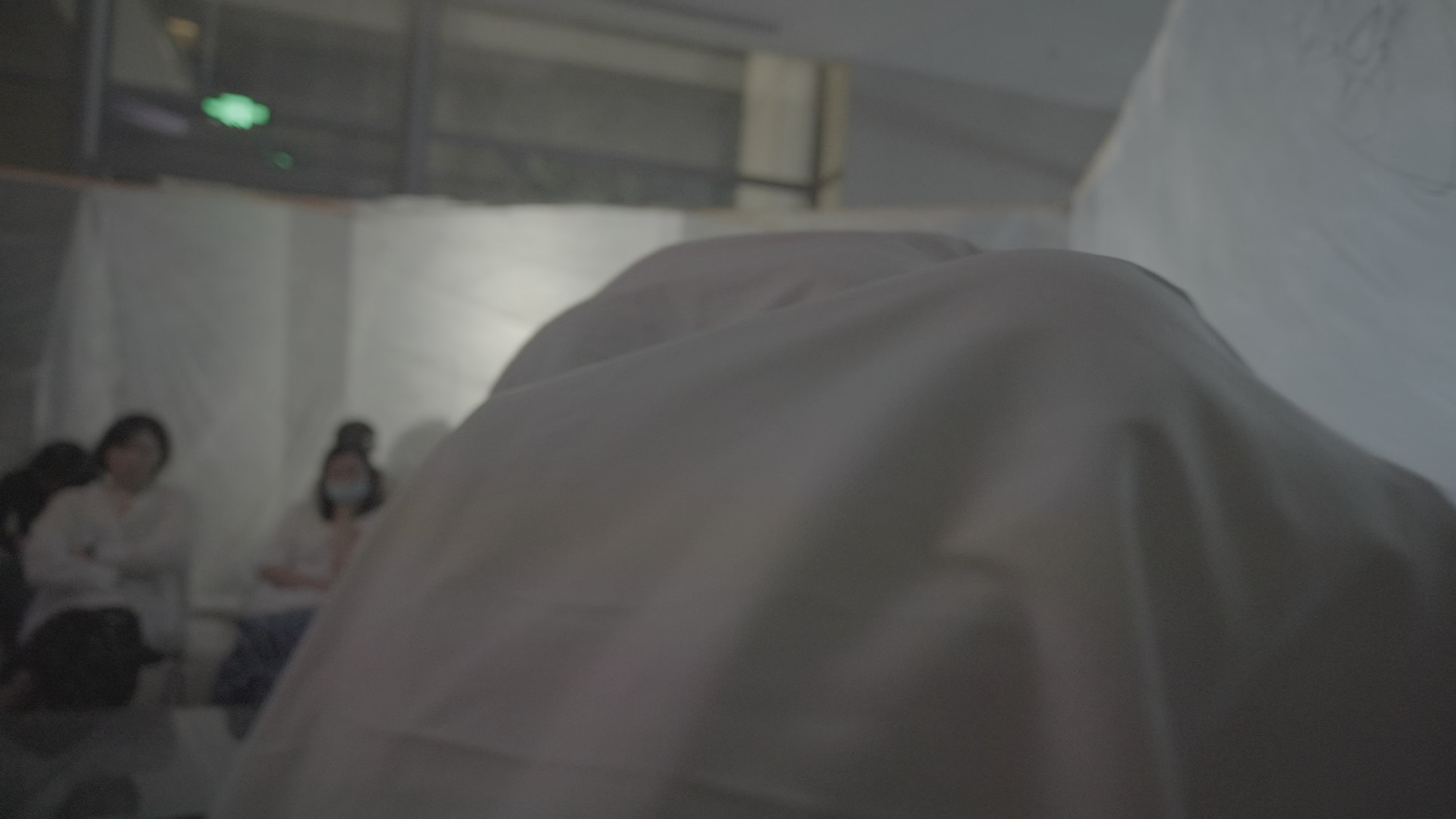
Link to paragraph · 用中文读这一段An actor wrote a recollection after the performance. They had agreed to cover their bodies with white cloth, walk upstage and quietly leave, letting the cloth remain onstage so it looked as though the people had disappeared. But at the exit, someone suddenly asked him:
Link to paragraph · 用中文读这一段“So is this what you wanted?”
Link to paragraph · 用中文读这一段She pressed him: you just want to go somewhere no one can find you. He answered, “Yes. Yes.”
Link to paragraph · 用中文读这一段When he wrote about it afterwards, he was still unsure whether he’d simply been hurrying to end the performance or whether the question really had touched something.
Link to paragraph · 用中文读这一段The cloth, the route, the exit: all of it had been agreed. They only needed to finish the action. The person would leave from beneath the cloth, and the performance could end. But this was exactly where the question came. He was still completing the rehearsed action. Now it also looked as though he was answering by leaving.
Link to paragraph · 用中文读这一段Who those words, “Yes. Yes,” allowed to keep going wasn’t settled. Nor would they necessarily leave the question behind.
Link to paragraph · 用中文读这一段Reading, I wanted to recognise something at once. When do I leave the stage, when do I find a way out, when do I get what I want? It is still me doing the editing. They are me. Yes. Yes—
Link to paragraph · 用中文读这一段But what he wrote in his recollection was that he wasn’t sure either.
Link to paragraph · 用中文读这一段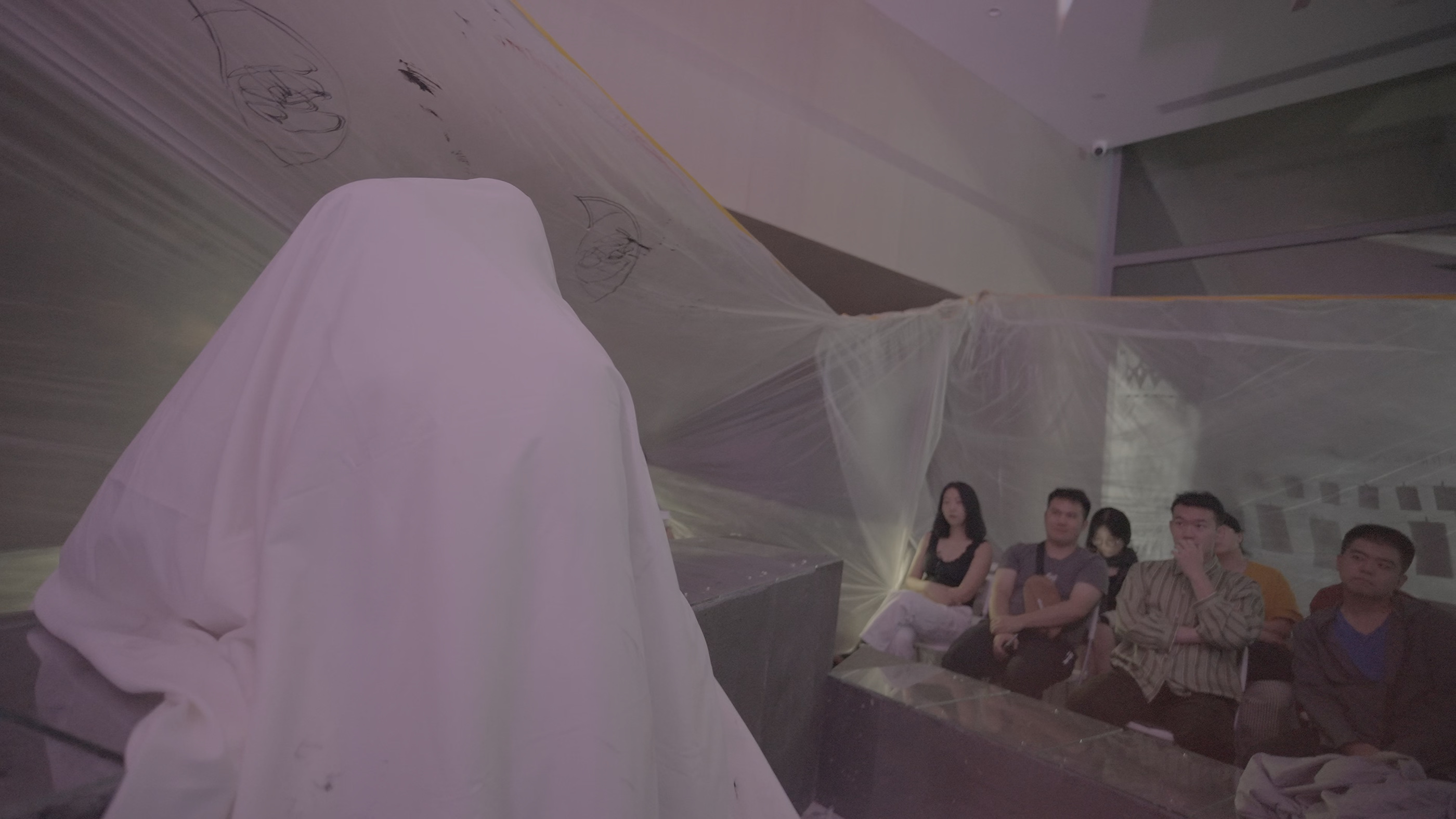
VI. I Want to Do It Again
Link to paragraph · 用中文读这一段Human Surrender was the closing work of P4’s experimental theatre period. People had to leave. Life had to go on. I wanted the film to be finished. It needed a length of its own, an order, a last image. I couldn’t keep putting off the ending forever by invoking how precious the process was.
Link to paragraph · 用中文读这一段 · Inquiry: When can it endI’m still editing. Whether to wait where there was no answer. Whether to stop after a gesture. Something that excited me at the time may not, on film, keep a later viewer in their seat. They didn’t live through those earlier days with me. I can’t ask them to stay with everything I can’t bear to let go.
Link to paragraph · 用中文读这一段But editing also makes me happy. What has already been filmed can leave its original position and come close to another passage. What we couldn’t make while we were together can, in images, go a little further. I know the material. I don’t know the way it looks now that it has just come together.
Link to paragraph · 用中文读这一段Like that, once more. The next version might not work. I can’t bear to give up the last one either. That mountain still isn’t finished.
Link to paragraph · 用中文读这一段The film can be replayed. The photographs can be brought out again. Those people won’t appear in the same place simply because I want to go on. Even if they come back, they may not come with the wishes they had last time.
Link to paragraph · 用中文读这一段Looking again is not the same as seeing you again.
Link to paragraph · 用中文读这一段Shixiang never completed its eight and a half parts. When we wrote the plan, the next part was still ahead of us. We had already spent time moving towards it. Reading “just to see you again” today, I hear another meaning speaking in the sentence. But when we wrote it, we were still making plans for what came next.
Link to paragraph · 用中文读这一段I want to do it again. To film it, to go on with you, to let what happened be more than material I later use to explain myself.
Link to paragraph · 用中文读这一段But every time I choose a photograph, every time I edit, I’m doing this again. What stays, what goes, who gets to have the last word again. Later I may dislike those choices. I may find better words. The photographs are already there. The film is already there. It can’t be only today’s more articulate version of me that counts.
Link to paragraph · 用中文读这一段 · Inquiry: Making and keepingThe photographs are there. The film is there. What if the hard drive breaks one day?
Link to paragraph · 用中文读这一段I haven’t finished editing yet.
Link to paragraph · 用中文读这一段That first black box, of course, knew nothing of a theatre to come. The hand peeling back the black tape hadn’t yet lived through these later things. Now I put it at the beginning, and the people come after it, one by one. As though it had already left a hole for them.
Link to paragraph · 用中文读这一段Writing this essay, I’ve put myself in front of the camera again. Pinhole, collage, breakup, theatre, kissing: move them together and arrange them into someone I’m willing to let you see. Writing about urgency makes me look candid. Writing about control makes me look clear-eyed. Even those two front teeth can carry the essay a little further.
Link to paragraph · 用中文读这一段I still want you to like this person.
Link to paragraph · 用中文读这一段Be a little more natural.
Link to paragraph · 用中文读这一段Here is that sentence again. I look at the passage I’ve written and still feel it isn’t quite like me. Move it forward a little. Take away what sounded too heavy just now. Then I’m afraid it’s too light, that you’ll read past it. I make that person stand there and wait for them to look more like themselves. They’ve already arrived. I’m still waiting.
Link to paragraph · 用中文读这一段I still want to see you again. The words are written, but my hand refuses to leave.
Link to paragraph · 用中文读这一段Edition, translation and image sources
The Chinese text reproduces the supplied final manuscript in full. This complete English translation was prepared for this edition and has not yet been approved line by line by the author. Both languages contain 124 corresponding text units. Captions and reading links are editorial additions. The manuscript was supplied on 16 September 2026; this is not an asserted date of composition.
“Looking again / seeing you again” preserves the distinction between renewed viewing and meeting someone again. “Be a little more natural” recurs unchanged. “Use the false as a lever on the real” keeps the physical force of the verb without making the real a single ultimate truth. Work titles follow the existing English catalogue; Shixiang is retained in transliteration.
Images come from the existing He Fa and P4 archives, with their full frames and proportions retained. Unconfirmed photographic credits are identified as such; archive ownership is not a photographer’s credit. Film timecodes refer to the archived version. Still frames do not establish dialogue synchronisation or spontaneity.
- 01 He Fa, Shanshui — Red, 2012. Digital photographic collage, full composition.
Project page / published source - 02 He Fa, Central, 2013. Digital photographic collage, full composition.
Project page / published source - 03 An early P4 black-box stage. Spatial archive photograph, dated 2016 in the original file’s EXIF metadata. Photographer unconfirmed.
P4’s own spatial archive. - 04 Fafalish: a record of conversation and work with letterforms around a table. Original file dated 2017 (EXIF). This documents the later practice, not the first public speech described in the essay. Photographer unconfirmed.
Project page / published source - 05 Shixiang: the stage on which photography takes place. Project material published by P4 in 2020. Photographer unconfirmed.
Project page / published source (Chinese) - 06 Shixiang: a photograph of a framed finished work, published in participant 0039 Xiaoxiang (Evelyne)’s account in 2020. This is documentation of the finished object. Photographer unconfirmed.
Project page / published source (Chinese) - 07 Human Surrender, film frame, 00:07:49. P4 film archive. A space of conversation with three people present.
Project page / published source - 08 Human Surrender, film frame, 02:28:20. Bodies covered with white cloth; spectators alongside.
Project page / published source - 09 Human Surrender, film frame, 02:29:20. Bodies beneath white cloth move upstage. These frames are one minute apart, not a complete record of continuous action. They do not locate the exact moment of the question quoted in the essay.
Project page / published source
Illustrated web edition · 16 September 2026
Return to the works through a question
These paths quote specific passages alongside artwork records. Their interpretations are website editorial content, not additions to this essay. Enable paragraph tools to return from a quoted passage to its inquiry.