From an image to what it is made of
An image can appear whole from a distance and dispersed up close. In his statement for Shanshui, He Fa writes: “Within clear and pure imagery lie tens of millions of pieces of deconstructed information.” What matters here is not only what a photograph depicts, but also how many photographs sustain an overall image together.
An installation photograph offers another kind of evidence: the work is presented in an illuminated frame, beyond the scale of an on-screen thumbnail. Yet the photograph’s date field cannot establish the exhibition title or venue, and other objects shown in the same setting cannot all be attributed to He Fa.
INSTALLATION RECORD
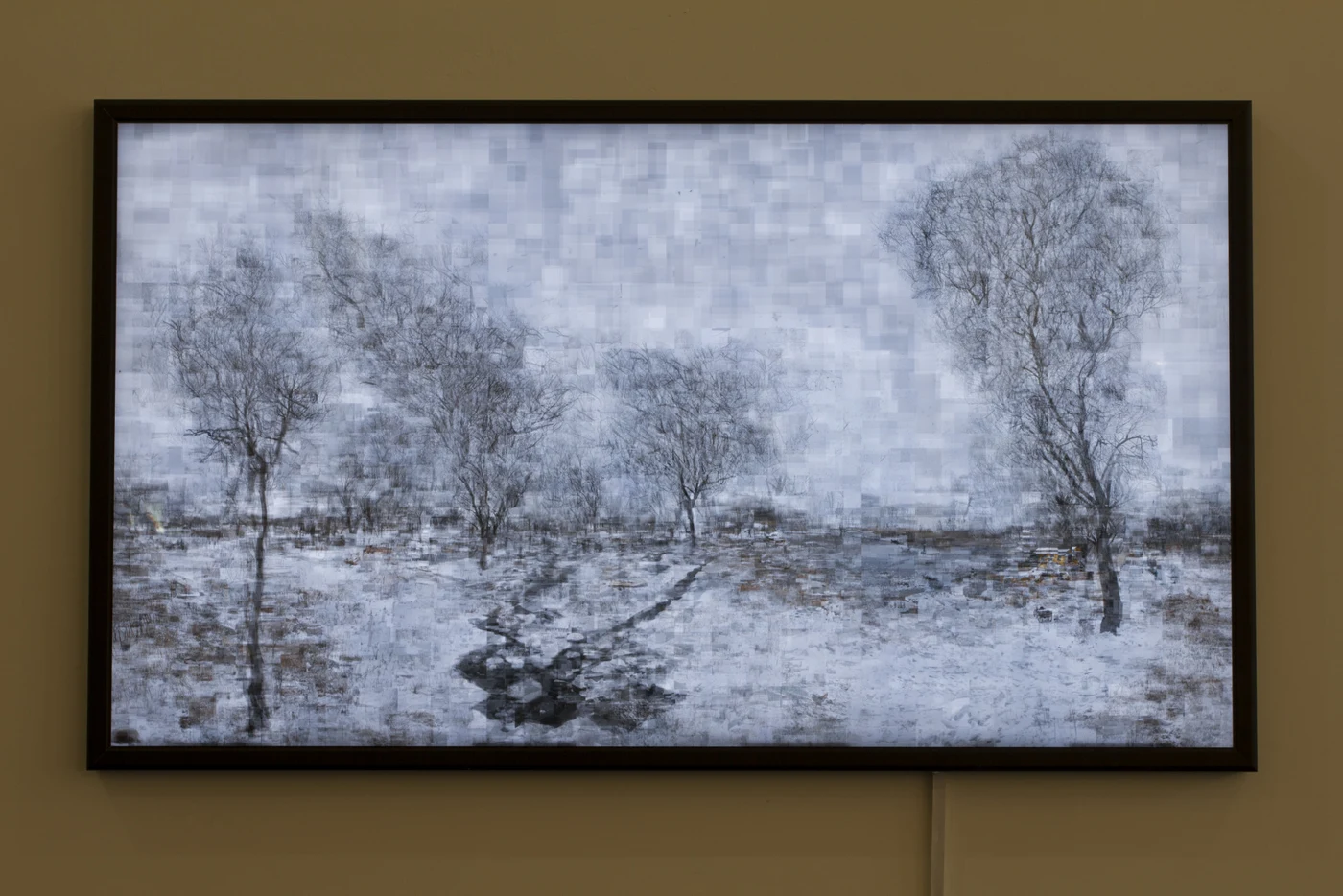
Artwork: He Fa; image source: materials retained by the artist · Open image ↗
Collage is more than one operation
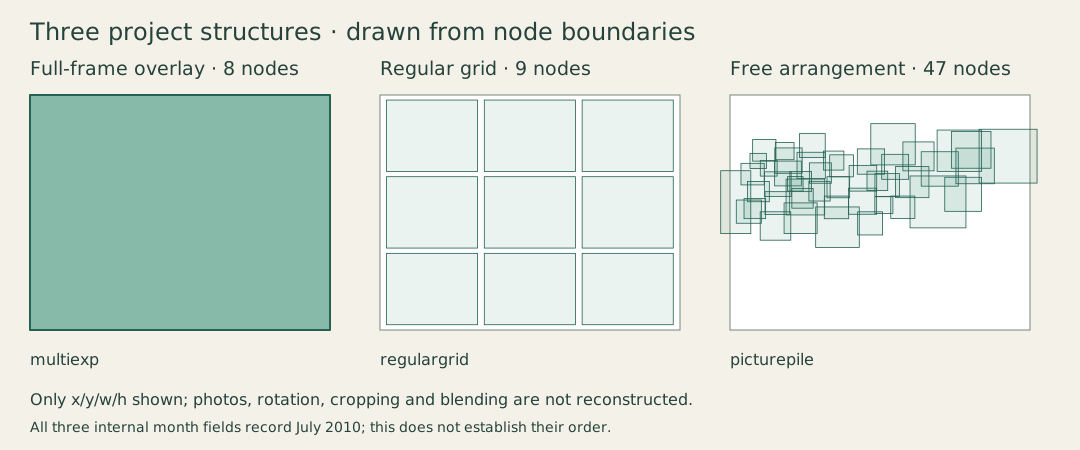
Three CXF project files whose internal month fields all record July 2010 preserve three ways of arranging images: eight nodes fill the same canvas, nine form a regular grid, and forty-seven are freely placed at their own positions and sizes. Their theme names are multiexp, regulargrid and picturepile, respectively.
Full-frame superimposition makes photographs occupy the same position; a grid divides space before accommodating images; a free arrangement can retain the edges of individual photographs. These structures change overlap, separation and adjacency. Differences in complexity do not establish three successive stages of improvement.
The parameters show how the files arrange images, but do not establish which project generated each JPEG stored alongside them. This unresolved connection remains part of the research.
EDITORIAL DIAGRAM
Editorial research diagram; based on early materials provided by the artist · Open image ↗
Scroll horizontally to read the diagram, or open it at full size.
Between a whole cloud and its individual photographs
Experimental files provisionally called “Cloud” and “Collage 36” suggest another choice: a photograph can preserve a scene or become a unit of colour within another image. A cloud’s outline may remain similar while its interior becomes recognisable small photographs of skies, smoother colour blocks, or fragments arranged around black gaps.
Denser photographic units do not necessarily make more information legible. From a distance, individual photographs may recede into an overall tone; coarse units or gaps can instead bring the construction into view. This is an analysis of the surviving images, not an account of why the artist chose each gap. These are working names used during cataloguing; formal titles and the boundaries between versions remain unresolved.
An output can become the material for another operation
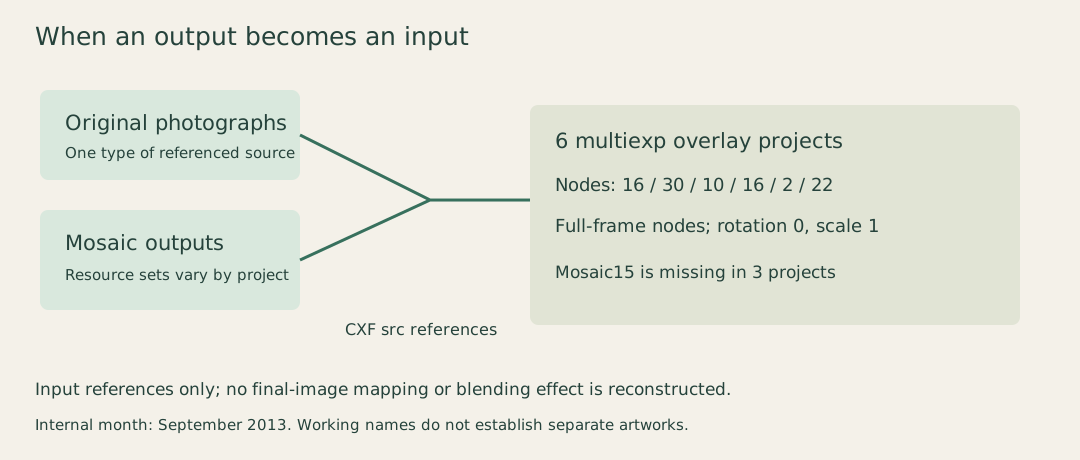
Six portrait CXF projects whose internal fields record September 2013 offer more specific evidence of a process. They refer both to original photographs and to processed outputs with Mosaic in their filenames; every node fills the canvas, with rotation set to 0 and scale to 1. At the level of the project descriptions, processed images can therefore be shown entering another full-frame superimposition.
This does not involve placing each mosaic tile again: several already processed images overlap as wholes. A recomposed image need not be a final output; it can become a new input. The six projects have different node counts and sets of resources. Three still lack one referenced image, so their final appearance cannot be claimed to have been fully reconstructed.
This can be compared with the same type of superimposition in the 2010 files. The evidence supports a correspondence between types of operation, but does not establish continuous use or a definite relationship of influence.
EDITORIAL DIAGRAM
Editorial research diagram; based on early materials provided by the artist · Open image ↗
Scroll horizontally to read the diagram, or open it at full size.
Space is not an endpoint
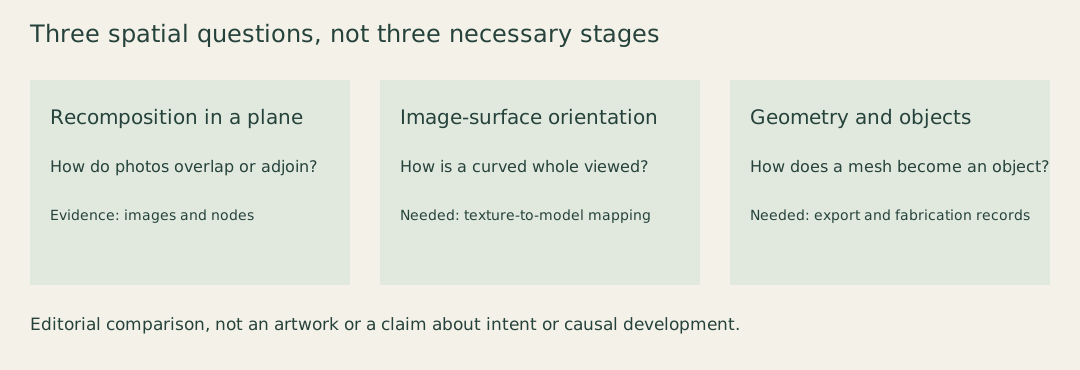
When photographs are placed on a ring-shaped or twisted surface, the question shifts from what is in front or behind within the image to the orientation of the surface that carries it. Viewers may need to change position to understand the whole. The surviving renders propose this spatial condition; they are not proof that a physical installation was made or exhibited.
Parametric forms introduce other questions: how a model is exported as a mesh, whether rendered and fabrication versions agree, and how an object can be held or worn. These questions can be considered alongside the spatial presentation of photographs. Similarities of repetition, curvature or variation do not establish that photographic collage developed into a particular product.
A more useful way to organise the material is to retain choices that can be revisited: should the whole remain recognisable? Should the edges of its units be visible? Does a unit represent a scene, a colour or a geometry? Is an output final, or an input for another operation? These questions connect the early materials while allowing their paths to diverge.
EDITORIAL DIAGRAM
Editorial research diagram · Open image ↗
Scroll horizontally to read the diagram, or open it at full size.
Source notes
- Shanshui statement, text retained by the artist, second Chinese paragraph.
- Internal CXF fields recording July 2010 and September 2013; inspected statically, without running the historical software.
- Relationships between image experiments and versions are described separately through surviving files, visual observation and project references.
The analysis and diagrams were prepared with AI assistance during the site’s editorial process. They are not artist statements; the single direct quotation is identified as coming from the work’s statement.