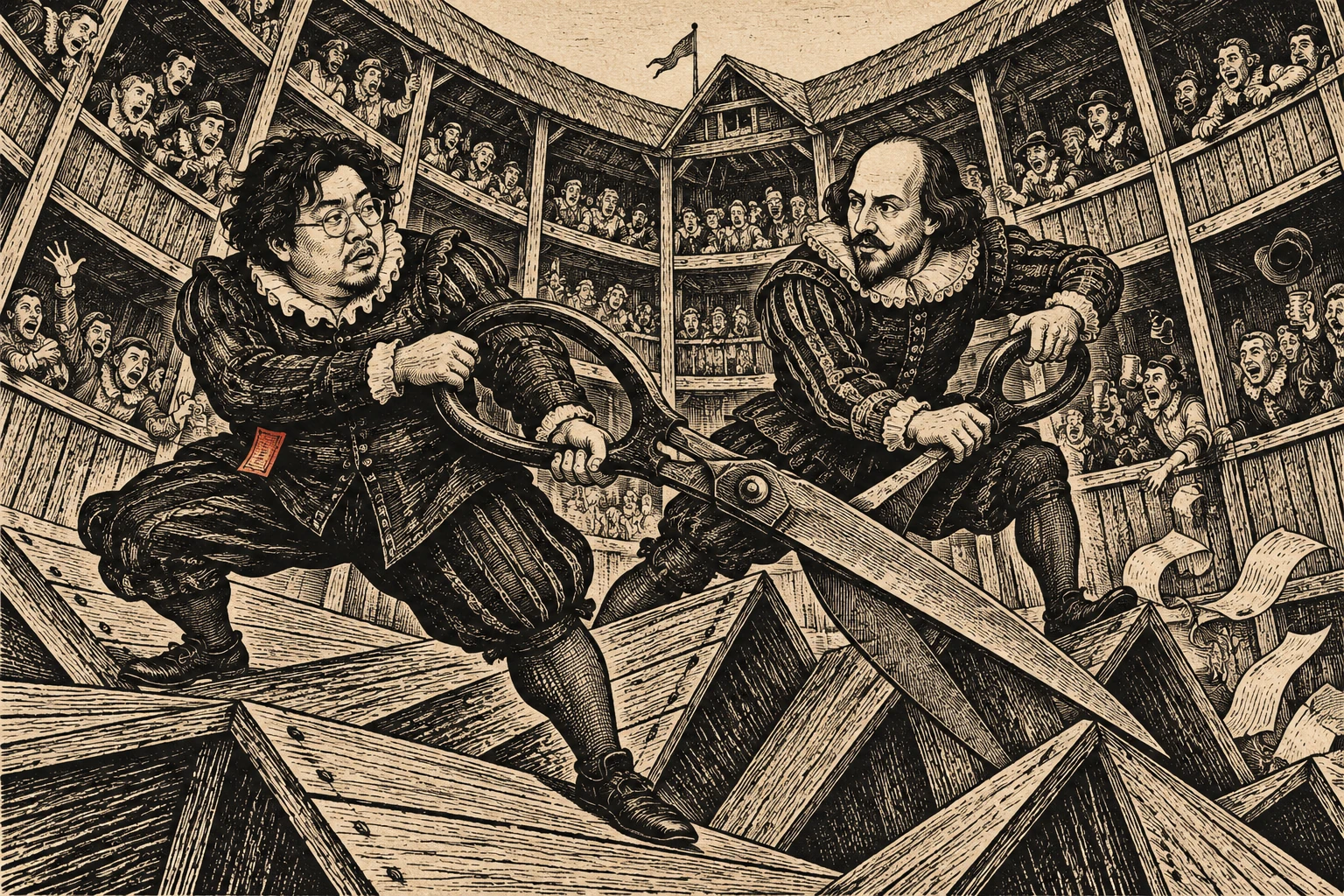
Shakespeare pushed a sheet into my hand. They were one person short; I should go on and read it. I said I did not understand. Just read what is there. That instruction had got me into plenty of performances. I had not expected it to be in use in 1601.
On the Globe's stage, I read “Bring a chair.” A chair promptly fell out of my mouth onto my foot. The audience applauded. Through the pain, I asked Shakespeare what this paper was. He drew it slightly back. Something new, he said.
Once spoken, the lines grew into solid objects. I said sword. A sword hung from my tongue. I quickly closed my mouth and broke it in two. A child near the stage collected one half. Shakespeare crouched to inspect the break and complained that I had shortened his monologue.
The actor playing the king arrived and ordered me off. I read “Exit” from the paper. The floor suddenly withdrew. The front row's toes touched the stage. The second gallery bent towards the first. The theatre squeezed inward, fold after fold, like an accordion. The cheapest standing tickets soon acquired private-box accommodation.
Shakespeare grabbed my collar and jumped a closing gap. Who told you to read the stage direction? You did not mark it, I said. It was written for someone who could read. As I began to object, a beam folded down above us. We dropped together.
The words on the sheet queued to enter my mouth, impatient to finish the evening's work. I clenched my teeth but swallowed one “door.” Knocking immediately sounded inside my stomach. Shakespeare put his ear against it. How many are in there? This is no time to sell tickets, I said.
The final “Dismiss the audience” had already risen into the air like a pair of enormous iron scissors, ready to cut the compressed theatre apart. Shakespeare caught one end; I caught the other. Whoever let go would have to swim home through the Thames.
I remembered the red ticket stub in my pocket: no returns or exchanges. I did not dare read it aloud. Lying on floorboards that now stood upright, we each bit one side of the final line and chewed the ending back into our mouths. It tasted of ink and unpaid wages.
The theatre slowly flattened. The chairs returned beneath their occupants. The child still had the sword. The king complained about the delay and called for the next scene. I shook my head and held my stomach. Someone inside knocked three times. Shakespeare had already sat down with his pen, waiting to hear who it was.