Contents
- Before We Begin
- Chapter 1 · Starting with a Photograph
- Chapter 2 · The Person Who Says “I Love You”
- Chapter 3 · Once More
- Chapter 4 · The Body Sets Conditions
- Chapter 5 · Who Can Tell the Director to Leave the Stage?
- Chapter 6 · The Camera Separates Us
- Chapter 7 · Behind the White Cloth
- Chapter 8 · How Long Does an Ending Take?
- Chapter 9 · A Work Cannot Live Someone’s Life for Them
Relational Image Theory · He Fa
Chapter 1 · Starting with a Photograph
I studied photography, yet for a long time I pointed my camera at landscapes and streets. Facing a person changed things. As soon as I raised the camera, they began to consider how they would appear, and I began to feel the weight of their expectations for the photograph. Before I had pressed the shutter, being photographed had already changed both of us.
¶At the time, I described this difficulty as being unable to photograph the real person. I felt there was always a layer of posing in front of the lens, blocking what I wanted to see. Reading those words again, I also recognize the photographer’s presumption: because I wanted the other person to be natural, I treated their nervousness in front of the camera as a disguise. I wanted to get close to them, yet I had already decided what they had to look like to count as themselves.
¶Why must a person be natural in front of me?
¶When I raise the camera, they have reasons to be nervous, to choose their clothes, and to withhold a particular expression from me. If a photograph is allowed to preserve only the truth its photographer approves of, then taking photographs remains a job of asking others to conform to me. P4 began with this difficulty. What we wanted to do gradually extended beyond taking a good photograph of someone.
¶The Room Is Part of the Camera Too
Zhang Shaohua was my university classmate. After graduating, he worked as an independent photographer, while I went into a 3D-printing venture. When we began talking about photography again, neither of us was satisfied with what we were doing. He complained that models stiffened in front of the lens, then asked to be retouched to look especially beautiful. We began to try out a method of photography that we called ‘a performance of not performing.’[1-2]
¶There was a contradiction in that phrase. If we were asking someone not to perform, why organize a shoot? If being natural was already possible, why talk, prepare a space, or arrange lights? Our practice was already ahead of our explanation. How the photographer spoke, what the two people had discussed beforehand, and how the room allowed someone to sit down or stand up all affected the photograph. Looking only at the subject’s face could mean missing the conditions that allowed that face to appear.
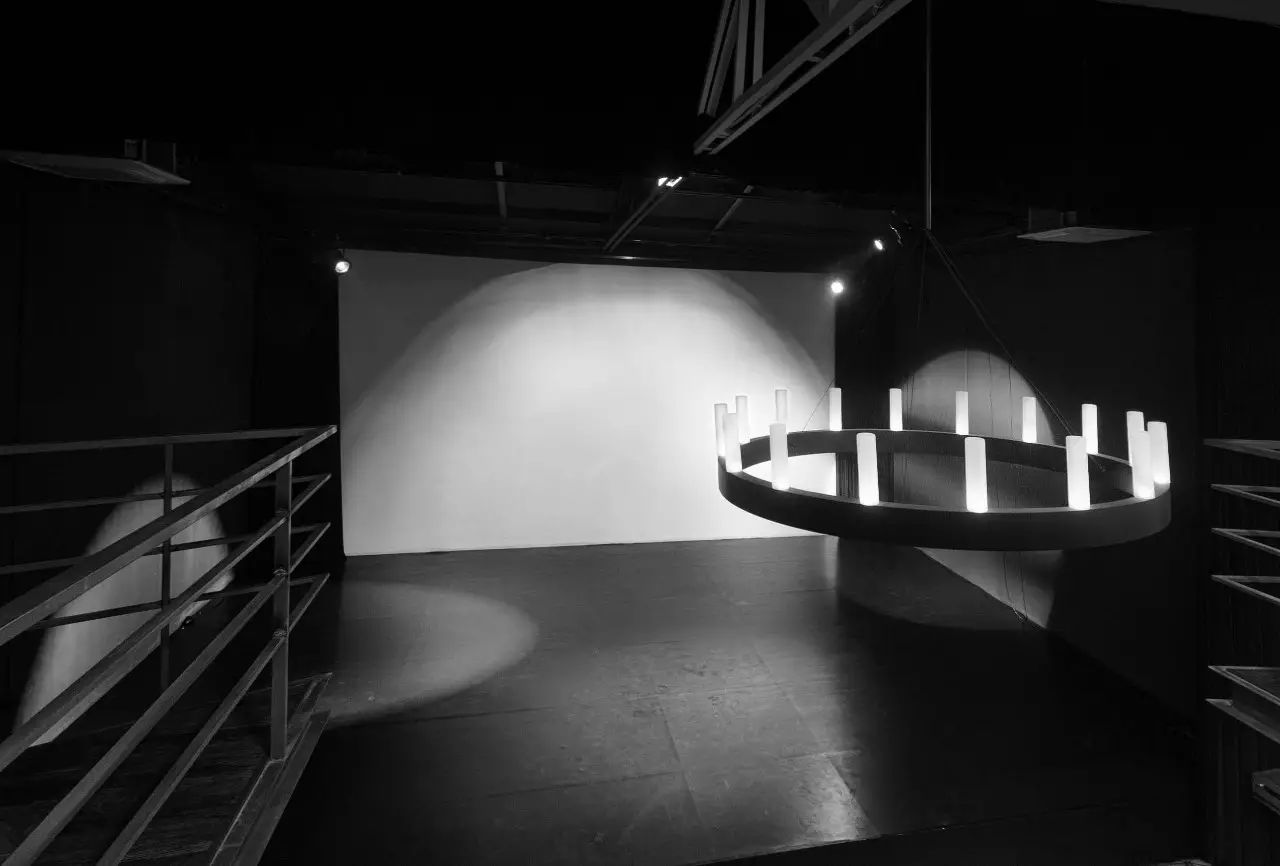
¶In 2015, work began on turning a studio in Tiantongyuan into P4. Shaohua took charge of moving the design and construction forward. During our discussions about the space, Ao Shuang proposed making it a theater. I designed the visual identity. Several of us made this place together. Half of it was a black stage; the other half was a white work area and audience seating. On entering the stage, the black velvet curtains closed around you, hiding the edges of the original room.[1-2]
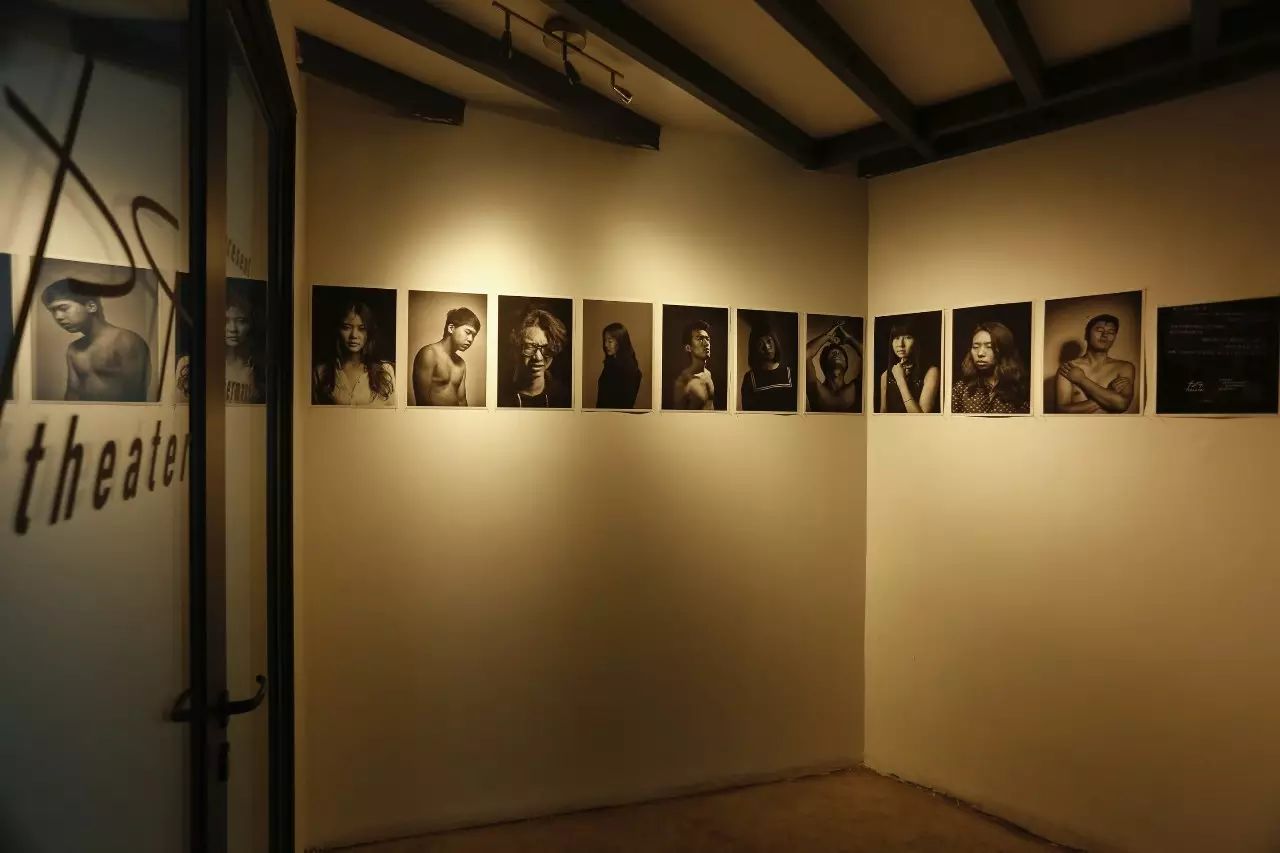
I later came to think of it as an enormous camera, with people entering the space between its light and dark chambers. The value of this image was that it pushed the scope of photography a little further outward. A photograph is, of course, formed through light and photosensitive material. But taking it also depends on a room that can hold two people, and on their willingness to remain there. A photographer cannot declare themselves absent just because they are outside the frame. Each time they say ‘Relax a little,’ they give the other person one more thing to deal with at that moment.
¶A black space does not automatically make people free, either. It can reduce distractions from the surroundings, but it can also intensify the feeling of being watched. Light illuminates the body, and may also make someone more conscious of the parts of themselves they find unattractive. The space gave us conditions in which to work. What happened next still had to be done by people.
The Moment Nervousness Returns
Xiao Xiang took part in Shixiang in 2020 and later wrote about her experience. On the day of the shoot, she tried on her clothes again and again, looking for an outfit that felt most like her, but none seemed right. When she entered P4, the photographer poured her some water and explained the process. As they talked, she was still assessing whether her answers were interesting and how the photographer would see her. Only as she gradually began to speak about that day’s worries, her hopes for the shoot, and her past experiences did she grow calmer.[1-3]
¶She then entered the black stage. A photographic light stood in the middle; a rose lay on a small table to the left. She wrote that the moment she stood before the camera, her worry, nervousness, and expectations for the photographs all returned. Her muscles tightened too.
¶I want to pause here. The earlier conversation had not been wasted, and her nervousness before the lens was not false. Both states occurred in the same person. To describe the experience as taking off a mask and finally finding her true self would erase its most concrete change: a person who had just been able to talk was now worrying again about how she looked. The demands she faced had changed.
¶In her account, the photographer asked her to close her eyes, adjust her breathing, and return her attention to her body. He played recordings of natural environments, then guided her through imagined scenes. She began to ask herself why she needed to look beautiful, whom the shoot was for, and whether she could face an imperfect version of herself. She did not find every answer, but felt able to accept the emotions that were emerging. She opened her eyes. The shutter sounded.
¶At the end, she wrote that she was no longer worried about how the photographs would turn out, because they were ‘a record and proof of this process.’[1-3]
¶This sentence changes what is being judged. A photograph can look beautiful, and it can also remind someone of how they came to stand before the camera. The second use does not cancel the first, but adds another layer of meaning to the photograph. She had begun to bring what happened during the shoot into her judgment of its images.
¶I cannot extend that moment into a permanent change on her behalf, nor do I want to treat her experience as a result everyone ought to obtain. Her willingness to write about it already offers a concrete answer: a shoot can change the criteria by which we judge images of ourselves. To understand that change, we have to allow nervousness to return and questions to remain unanswered.
Bringing the Photograph Back
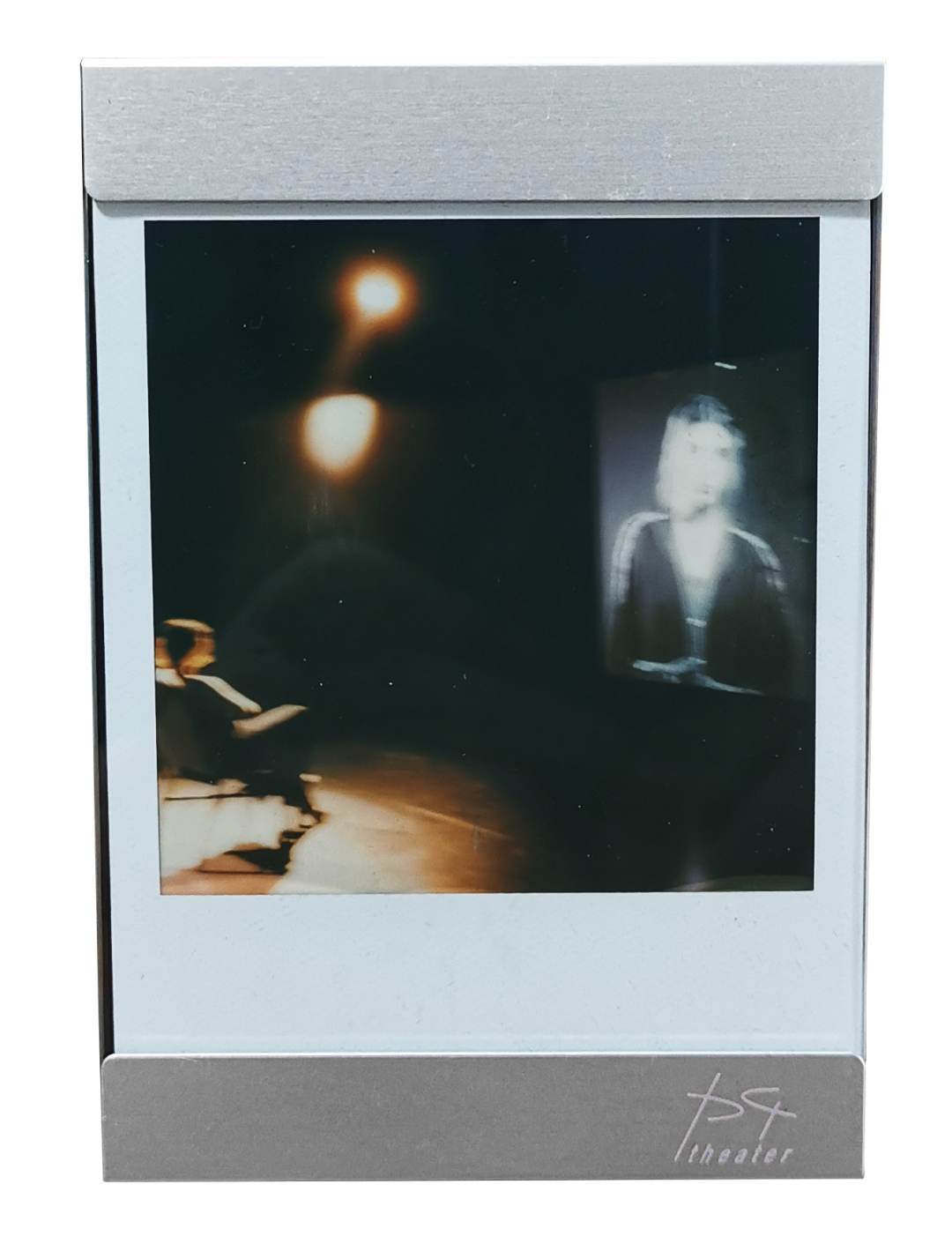
In 2020, we called our new Shixiang plan ‘Eight and a Half.’ Odd-numbered sessions centered on taking photographs; even-numbered sessions centered on looking and expressing oneself. We left time between each meeting.[1-2]
¶This arrangement placed the photograph between two meetings. What had been photographed on the first occasion had to be faced again on the second. A participant might discover that they liked a particular picture, or fail to recognize themselves in the one the photographer thought best. What they were willing to say last time might be something they no longer wanted to say today. A detail that mattered today might have gone unnoticed before. A photograph preserves one appearance, but cannot guarantee that a person will always understand it in the same way.
¶Alternating between taking and viewing photographs allowed this difference to enter the next stage of work. The photographer could no longer simply hand over the finished product and wait to be told it was satisfactory. The subject, too, had a chance to say how the image corresponded to their experience and where it missed the mark. The photograph remained a photograph, and the shoot that had already happened could not be rewritten. But the next encounter could begin somewhere different.
¶The ‘formation of relations’ that interests me is, first of all, something this simple: the result of an earlier action changes the conditions of the next one. A photograph has not said everything there is to say about this person. Nor can a photographer decide, on the strength of a single shoot, that they have understood them.
¶This also asks more of the photograph. The process may have been precious, while the resulting images remain thin. Two people may have enjoyed their time together and still produced only a familiar pose. An image needs its own organization: how the body and space relate, where a posture is held, and what differences between several photographs make them irreplaceable by one another. The participant’s appreciation of the process cannot do this work for the photographer.
¶Conversely, a powerful photograph cannot prove that the process of making it benefited the person involved. The photograph and the experience are connected, but each still has its own questions to answer.
¶Leaving Room to Appear Again
In my early writing, I repeatedly spoke of the ‘true self’ and of ‘performing for and watching one another.’ These two wishes were always entangled. On the one hand, I hoped to photograph someone who had not yet been seen. On the other, the encounter itself changed the person. Rewriting this history does not require me to invent a straight line of progress for my younger self.
¶I still care whether the person is present in the photograph. Some images cover them with a beautiful, generic face. Some explanations attribute everything they do to their surroundings. Both make the particular person disappear. People bring their memories, habits, likes, dislikes, and judgments. A shoot brings these things into contact with the demands before them. They can agree, hesitate, or say, ‘That photograph doesn’t look like me.’ Their response can put the photographer’s original idea in difficulty.
¶That difficulty is worth keeping. It makes taking a photograph something two people do, rather than one person proving the depth of their own insight.
¶P4 later moved from photography involving two people to rehearsals with more participants. Speaking, watching, performing, and recording crossed paths in the same space. Who made demands, and who was asked to perform, began to change continually. We still wanted images to come from this, but what those images had to face now exceeded a single person’s face: how a request reached another person, what answer it received, and how that changed the next step.
¶I want strangers to enter my work through these small actions. First, look at how two people come to stand before a camera; then ask what happened between them. Truth can begin to be tested here.
¶Chapter Sources
[1-1] He Fa, ‘The Story of Shoot Self with You—Will the Aliens Return?’, 18 August 2023. The opening account of his experience with photography and the production remarks at the end.
[1-2] He Fa, ‘What Is Shixiang?’, 21 June 2020. Passages including ‘The Painted-Over Virtual Image,’ ‘P4 Theater: A Large Black Box,’ and ‘Shixiang: Eight and a Half.’ The account of the space’s construction and the early practice follows the author’s retrospective account at the time. Eight and a Half is discussed in this chapter as a proposed method.
[1-3] Xiao Xiang (Evelyne), ‘Participant No. 0039: A Personal Experience of Shixiang’, 25 June 2020. ‘Before the Shoot,’ ‘Step One: How to Present Myself?,’ ‘Step Two: An Encounter and Exchange with the Subconscious,’ and the conclusion. This remains her personal account of a single shoot.